Carl Jung
89% Profile Match
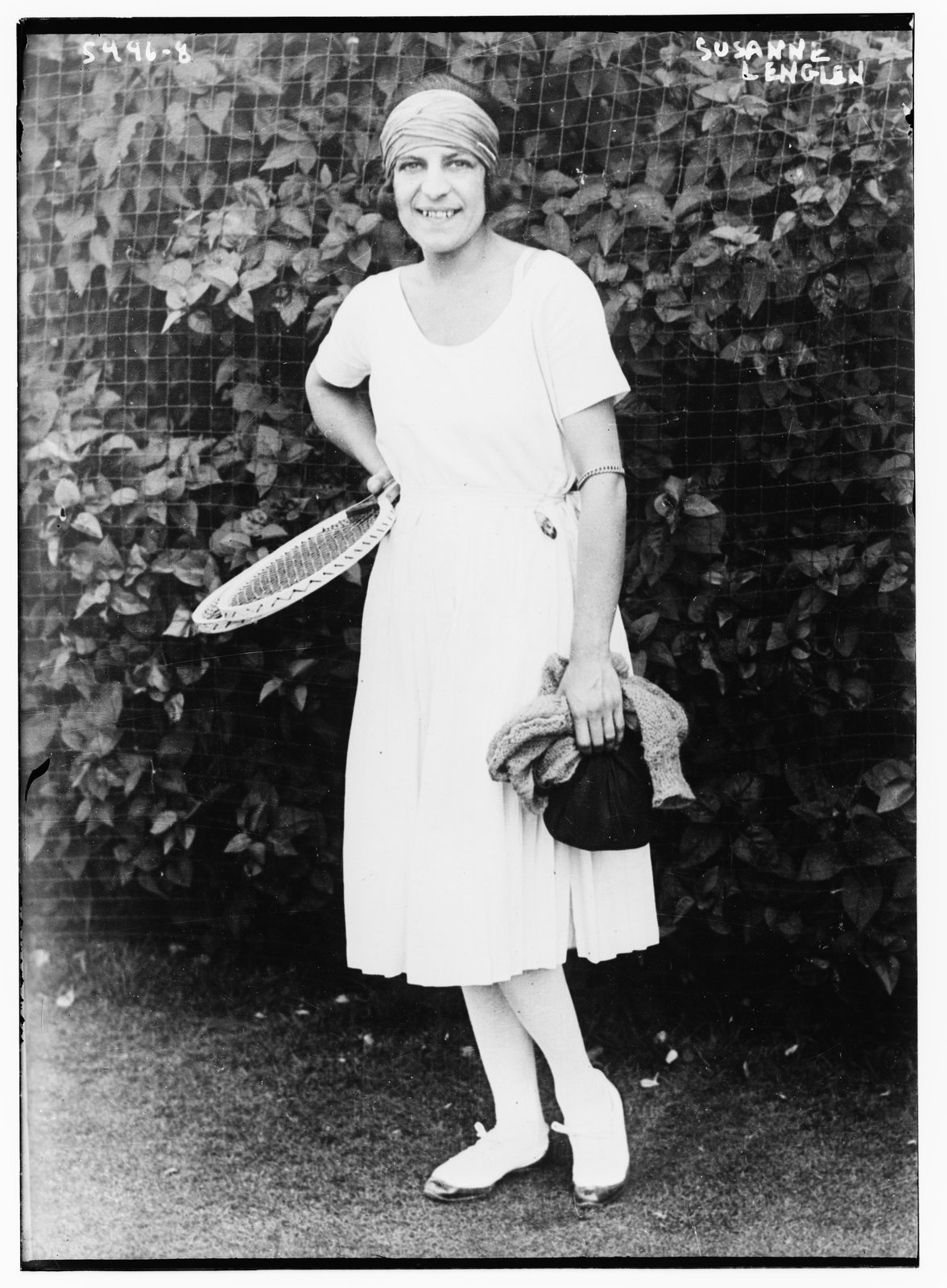
Bain News Service, 'Susanne Lenglen', glass negative, undated (the LOC catalogue date of 1900 is a placeholder and cannot be right for this sitter); Library of Congress Prints and Photographs Division, George Grantham Bain Collection, no known restrictions on publication · Library of Congress Prints and Photographs Division, George Grantham Bain Collection, LCCN 2014712853 (negative no. 5496-8, glass negative), via Wikimedia Commons 'Susanne Lenglen LCCN2014712853.jpg' · Public domain
Lenglen won the Wimbledon ladies' singles in 1919-1923 and 1925, beating the seven-time champion Dorothea Lambert Chambers 10-8, 4-6, 9-7 in the 1919 final. The All England Club records 15 Wimbledon titles for her (six singles, six doubles and three mixed) and 91 wins in the 94 matches she played there.
At the 1920 Antwerp Olympics Lenglen won gold in women's singles and in mixed doubles with Max Decugis, and bronze in women's doubles with Elisabeth d'Ayen. Olympedia lists her as French singles champion in 1920-1923 and 1925-1926; the tournament was open only to French players until 1925.
In 1926 Lenglen signed a $50,000 contract with the promoter C. C. Pyle and toured the United States against Mary K. Browne, a three-time US champion. The Tennis Hall of Fame calls it the first women's professional series and says she won all 38 matches. Professionals could not enter Wimbledon, and Sports Illustrated reports that the club rescinded her membership.
Lenglen played in short-sleeved silk dresses with hemlines above the calf and without the bulky undergarments then usual, and had Jean Patou make her a pleated white silk skirt, a sleeveless cardigan and a tulle hair band; from 1922 she wore bright colours. The Hall of Fame and the Roland-Garros site both present her as a change in what women wore on court.
On 16 February 1926 Lenglen met Helen Wills, then a three-time US champion, at the Carlton Club in Cannes, the only time they played. Spectators watched from rooftops and neighbouring windows. At 6-5 in the second set an umpire overruled what Lenglen took for a winner, Wills levelled at 6-6, and Lenglen won 6-3, 8-6 after 59 minutes.
Winning the second set after the call went against her is consistent with competitiveness; the accounts also describe her as visibly nervous, so the match shows the drive and the strain together, and it is one match. Competitiveness
After retiring from competition, Lenglen ran a tennis school in Paris. Having heard Margaret Morris lecture on movement, she invited Morris to adapt her exercises for tennis, and the two worked on them at Lenglen's Paris flat. Pupils had to do the exercises before they were allowed to pick up a racket, and the pair published Tennis by Simple Exercises in 1937.
Seeking out an outside specialist and rebuilding her pupils' first lessons around the method is consistent with a mastery orientation; the account comes from the Margaret Morris archive and reflects Morris's side of the collaboration. Mastery Orientation
At the 1926 Wimbledon, Lenglen's second-round singles was rescheduled so that Queen Mary could watch, and she arrived late. The club's own history cites a scheduling mix-up and a failure to inform her properly; a contemporary United Press report says she refused to play. She was booed the next day, withdrew from the championships and never played at Wimbledon again. Later that year she signed with C. C. Pyle and turned professional.
Accepting the loss of Wimbledon to play on her own terms is consistent with a need for autonomy: in a 1926 interview she called the amateur rules 'ridiculous' and said players should meet whom they liked. Sources disagree on who was at fault on the day, so no trait is read from the incident itself. Need for Autonomy
People whose overall profiles resemble theirs.
Not a rival — a different profile shape worth a look.