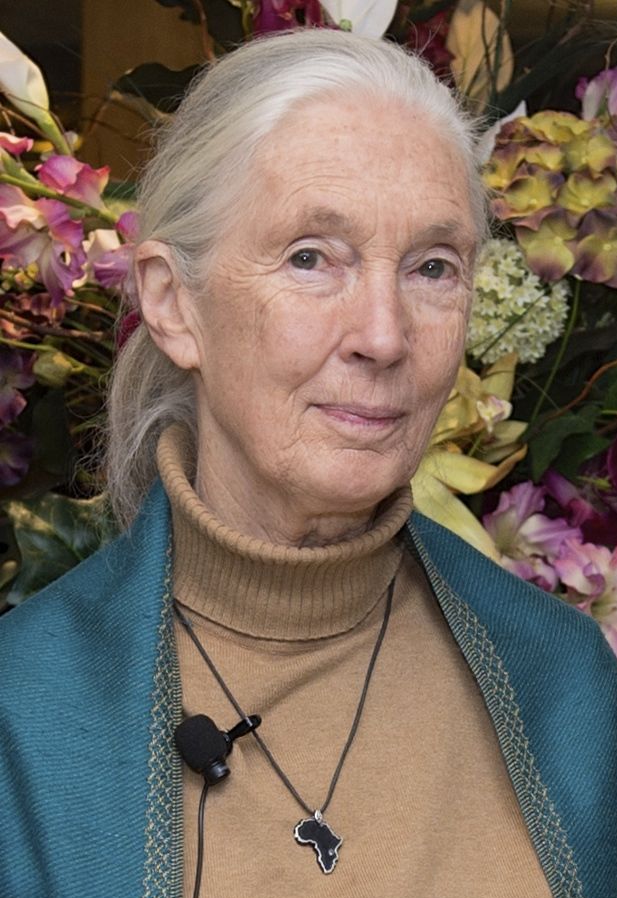
Jane Goodall
90% Profile Match
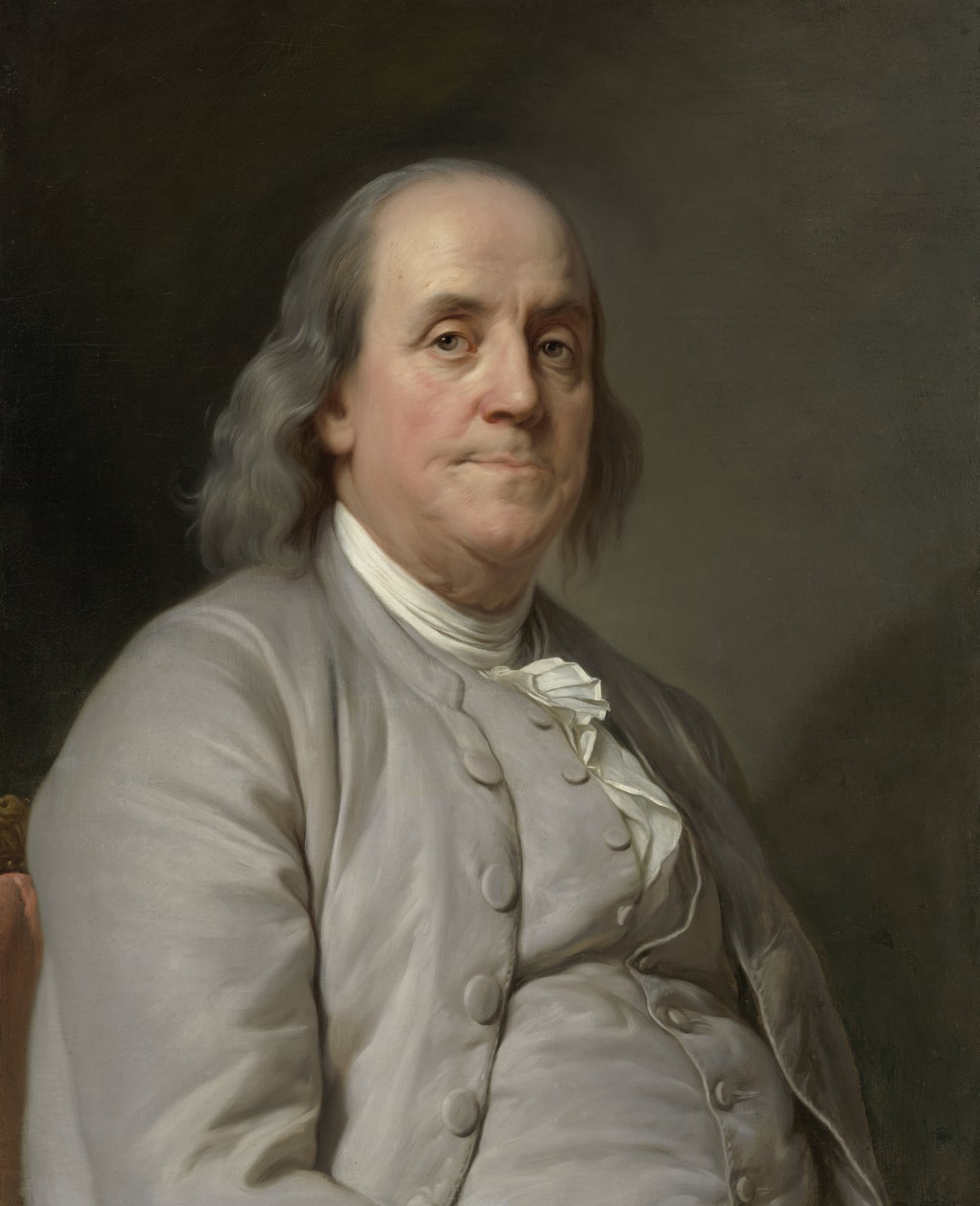
Joseph-Siffred Duplessis, c. 1785 · Wikimedia Commons (hosted locally by this app as a resized/compressed derivative; see licenseUrl for the full-resolution original) · Public Domain (published before 1931; artist died 1802)
statesman · Early Modern
1706–1790
1706 — Born.
1752 — His kite experiment showed lightning was electrical, leading to his invention of the lightning rod.
1754 — Proposed the Albany Plan of Union, decades before independence became a live political question.
1774 — After the humiliating "Cockpit" hearing, shifted from seeking reconciliation with Britain toward independence.
1776–1785 — Represented the United States in France; helped secure the Treaty of Alliance and the Treaty of Paris.
1790 — Died.
In 1754, proposed the Albany Plan of Union — a framework for unified colonial governance that read a structural need others hadn't yet judged urgent — decades before independence became a live political question. It was rejected at the time, but has since been seen historically as prescient.
Founded, on his own initiative rather than through any official appointment, a discussion club (the Junto), the Library Company of Philadelphia, a volunteer fire department, and the American Philosophical Society — a pattern of self-organized civic institution-building his own Autobiography returns to repeatedly.
In June 1752, Franklin's kite experiment provided evidence that lightning and electricity were the same phenomenon — using a kite, a metal key, and a Leyden jar to draw a charge induced by a nearby storm cloud, rather than a direct lightning strike. The work led directly to his invention of the lightning rod, a practical safety device adopted on buildings across Europe and America, and made him a major figure of the American Enlightenment and in the history of physics.
From 1776, Franklin represented the United States in France, where his diplomatic efforts helped secure the February 1778 Treaty of Alliance — French recognition of American independence and a formal military partnership that brought French troops, ships, and financing into the war. He went on to serve as United States Minister to France (1779–1785) and was among the American negotiators of the 1783 Treaty of Paris that ended the war; he remains the only person to have signed the Declaration of Independence, the Treaty of Paris, and the Constitution.
Arrived in Philadelphia essentially penniless after leaving his Boston apprenticeship, and built his own printing business from that starting position — an episode he recounts in his own Autobiography.
This offers one example of the profile's resourcefulness score: a documented account, in his own words, of building a functioning business from close to nothing. Resourcefulness
For years sought reconciliation between the colonies and Britain as a loyal subject of the Crown, but shifted decisively toward supporting independence after the 1774 "Cockpit" hearing humiliation — one of several failed reconciliation efforts that preceded the change in his position.
This helps explain the profile's belief_updating score: a political reversal documented as a tracked change over time against accumulating evidence of British intransigence, not one dramatic conversion. Belief Updating
People whose overall profiles resemble theirs.