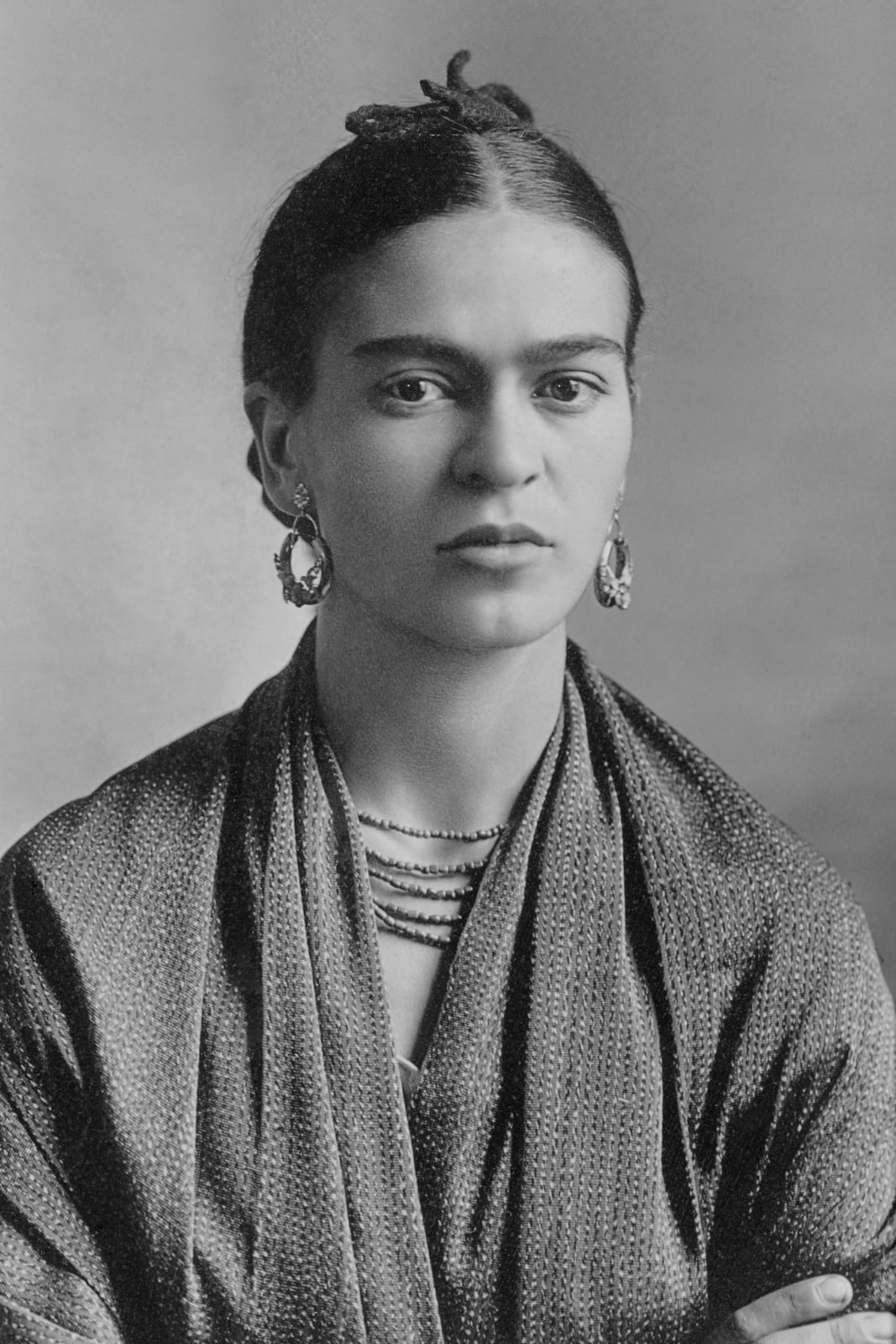
Frida Kahlo
95% Profile Match
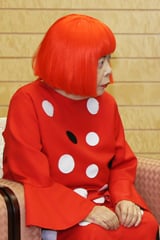
Cabinet Public Relations Office, Japan, 2013 · Wikimedia Commons (hosted locally by this app as a recompressed derivative; see licenseUrl for the original) · CC BY 4.0
1929 — Born in Matsumoto, Japan, into a family running a plant nursery and seed business.
1957–1958 — Moved to the United States in 1957–1958 after corresponding with Georgia O'Keeffe, settling in New York.
1960s — Became part of New York's avant-garde art scene, developing her Infinity Net paintings, soft sculptures, and Infinity Mirror Rooms.
1973 — Returned to Japan in 1973.
1977 — Took up permanent, voluntary residence at a Tokyo psychiatric hospital in 1977, continuing to work at a nearby studio.
1993–2026 — Represented Japan at the 1993 Venice Biennale; died in Tokyo in August 2026 at age 97.
From the early 1960s, developed a body of immersive, participatory installation work — most enduringly the mirrored "Infinity Mirror Room" installations she began in 1965, alongside recurring polka-dot and pumpkin motifs — that helped establish a mode of installation art built around infinite, participatory visual space. A 2017 Hirshhorn Museum retrospective of six of these rooms drew record attendance and traveled to five more North American museums.
Represented Japan at the 1993 Venice Biennale and, after roughly two decades of comparative international obscurity following her 1973 return to Japan, became one of the world's top-selling living artists at auction, ranked among the top 50 artists in Sotheby's 2023 market survey.
In 1957, after corresponding with the American painter Georgia O'Keeffe for advice, moved first to Seattle and then, in 1958, to New York with very limited money, supporting herself with odd jobs and by sewing her own clothes while working to establish herself in a country and an art scene where she had no prior standing.
After Kusama exhibited a soft sculpture covered in protruding forms at New York's Green Gallery in June 1963, fellow artist Claes Oldenburg began exhibiting visually similar sewn soft sculptures that September; an art historian's later scholarship on the period concluded Oldenburg was likely influenced by Kusama's work, and Kusama has said she found the episode depressing at the time. A similar pattern — Andy Warhol covering an exhibit space with repeated photographic imagery not long after Kusama had covered gallery walls with photographs in her own installation — has since been cited as a further example of her underrecognized influence on artists more widely credited for ideas she originated first.
In 1977, after a difficult reception on returning to Japan in 1973 and a period of declining health, Kusama took up residence, by her own choice, at a psychiatric hospital in Tokyo, continuing to work daily at a studio near the hospital for the rest of her life. She has said that making art was what allowed her to keep going through this period.
This is consistent with the profile's high autonomy_need score: rather than stopping work, she restructured her entire living arrangement so that making art could continue on her own terms. Need for Autonomy
In October 2023, ahead of a major U.S. museum retrospective, Kusama apologized after decades-old passages in her own published writing — including a 2003 memoir — describing Black people in derogatory and racially essentializing terms drew renewed public criticism. She said in a statement that she deeply regretted the language and that her work's message had always been about universal love and respect. The episode is now part of how critics and institutions discuss her work alongside her artistic influence.
Kusama's Infinity Mirror Rooms and polka-dot motifs became among the most widely recognized and reproduced images in contemporary art, and by the 2010s she was regularly named among the world's most-exhibited and highest-selling artists — a striking reversal of the international obscurity she faced for roughly two decades after leaving New York in the 1970s.
People whose overall profiles resemble theirs.
Not a rival — a different profile shape worth a look.