Warren Buffett
86% Profile Match
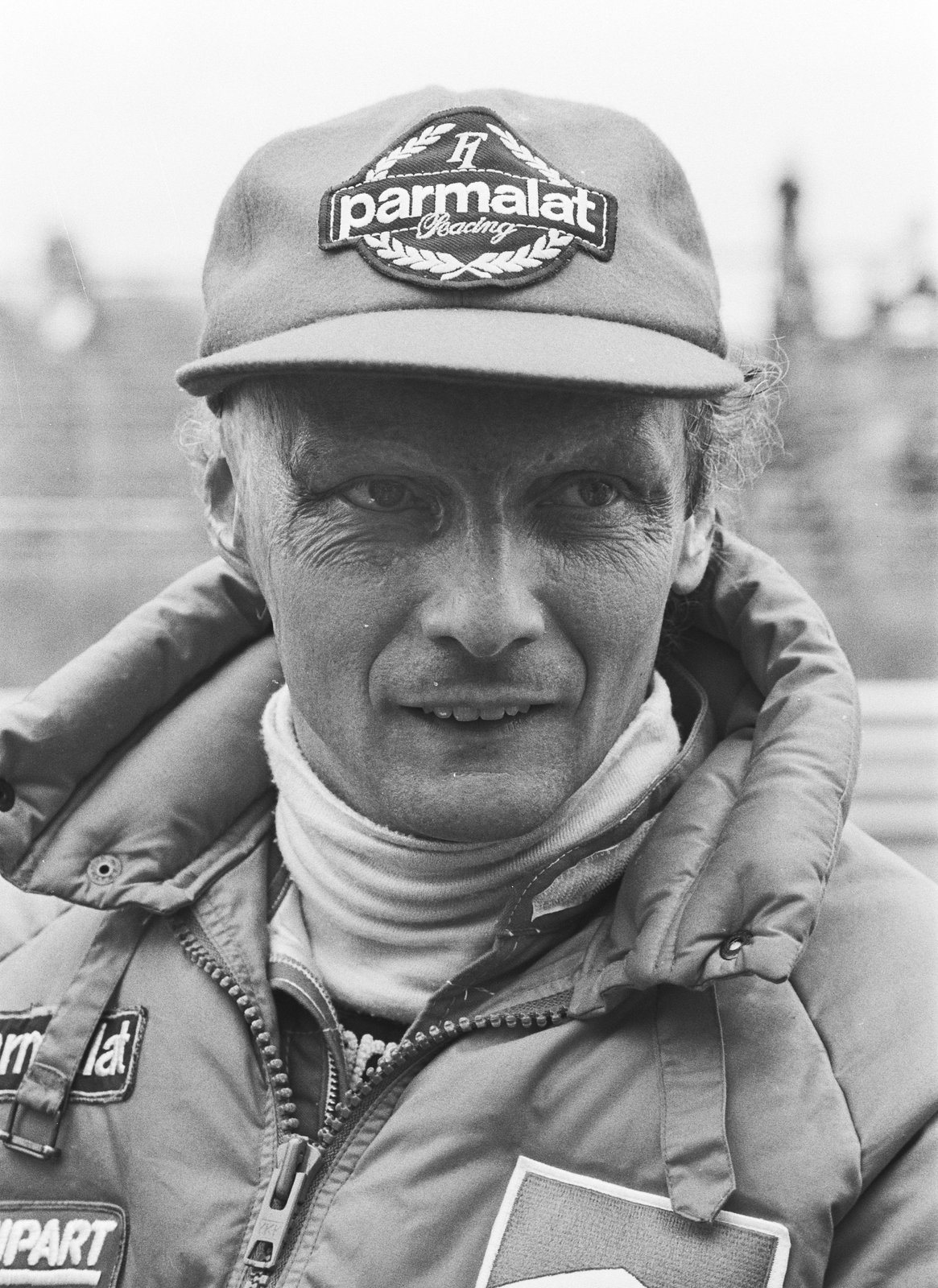
Hans van Dijk for Anefo / Nationaal Archief, 1 July 1982 (first practice day, Dutch Grand Prix, Zandvoort), CC0 1.0 (resized from the archive photograph on Wikimedia Commons) · Nationaal Archief (Fotocollectie Anefo, item number 932-2315), via Wikimedia Commons · CC0 1.0
Lauda won three Formula One drivers' world championships: in 1975 and 1977 with Ferrari and in 1984 with McLaren, the last by half a point from his team-mate Alain Prost.
A 2019 Austrian newspaper chronology says Lauda founded the charter airline Lauda Air on 23 April 1979 with two Fokker 27 aircraft. He later launched the Niki airline in 2003-04 and, in 2016, bought the charter firm Amira Air and renamed it Laudamotion, which WirtschaftsWoche called his third attempt in the airline business.
In September 2012 the Mercedes Formula One team named Lauda non-executive chairman of its board, in the same announcement that confirmed Lewis Hamilton's signing. Autosport's Adam Cooper says his role included liaising with the Daimler board and helping to headhunt Hamilton.
During the 2012 Singapore Grand Prix weekend Lauda went to Lewis Hamilton's hotel room to raise a move from McLaren to Mercedes; in his own account, given to Reuters in 2013, the meeting ran between 2 and 4 a.m. and Hamilton objected that Mercedes' car was not winning. Autosport's Adam Cooper says Lauda did not start the talks and that Ross Brawn's push was also important, and Hamilton recalls Lauda phoning him to argue the case; the Mercedes deal was announced on 28 September 2012.
The episode illustrates the profile's persuasiveness score, though the move involved several people and Lauda's own account of the meeting is the source for its detail. Persuasiveness
Historian Jon Saltinstall writes that Lauda had decided some weeks before the 1977 Dutch Grand Prix to leave Ferrari, and that he secretly signed for another team, Brabham, that weekend; he announced his departure ten days before the Italian Grand Prix. After the United States Grand Prix he opted out of the Canadian race, which Saltinstall attributes to three grievances: the sacking of his mechanic Ermanno Cuoghi, a third Ferrari for Gilles Villeneuve, and Mauro Forghieri's histrionics at races.
The sequence is consistent with the profile's autonomy_need score; the grievances come from one author's account, and Ferrari gave a different official reason at the time. Need for Autonomy
At the 1979 Canadian Grand Prix, Brabham team manager Herbie Blash recalls, Lauda told him after first practice that he was not getting back in the car and was going to buy an aeroplane, and then told team owner Bernie Ecclestone the same. Motor Sport's race report at the time says he drove ten laps of the new car, left for his hotel and had broken his contract; Lauda Air had been founded in April of that year, and he returned to Formula One with McLaren in 1982.
Acting within a single practice day on a plan he had already set in motion is consistent with the profile's decisiveness score, and the abrupt exit is why that row is marked dual-edged. Decisiveness
People whose overall profiles resemble theirs.