Nelson Mandela
94% Profile Match
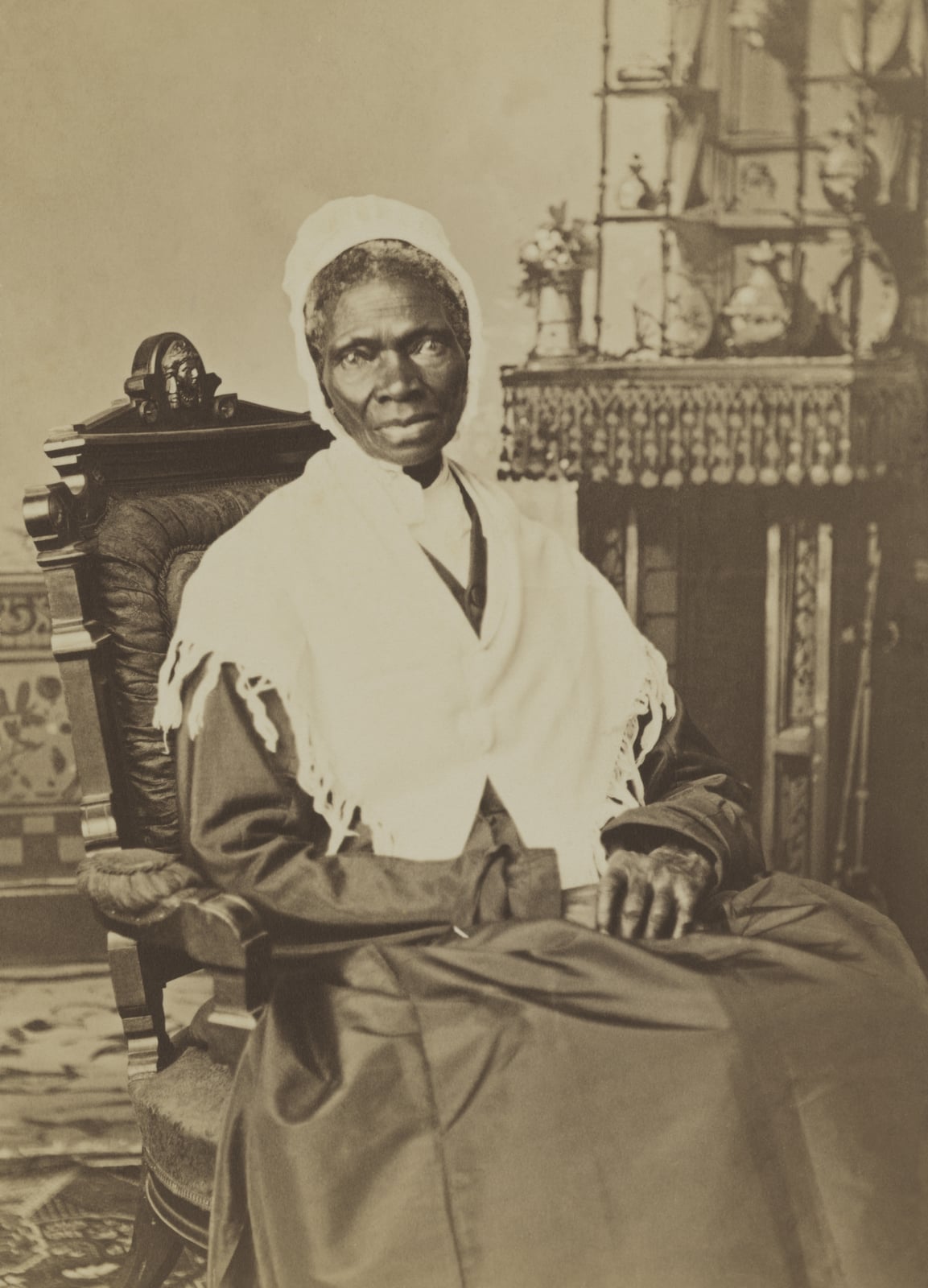
Randall Studio, circa 1870, National Portrait Gallery, Smithsonian Institution (NPG.79.220), Public Domain · Wikimedia Commons (hosted locally by this app as a resized/compressed derivative; see licenseUrl for the full-resolution original) · Public Domain
c. 1797 — Born into slavery in New York.
1826 — Walked away from her enslaver to freedom with her infant daughter, rather than wait for New York's emancipation law to take effect.
1828 — Sued in court to recover her illegally sold son, and won.
1843 — Renamed herself Sojourner Truth, framing it as a chosen spiritual and political mission.
Following decades — Became a nationally sought-after speaker across the abolitionist and suffrage circuits.
1883 — Died, having continued touring and speaking into her 80s.
In 1828, she sued a white man in court to recover her illegally sold son and won — a specific, legally recorded case, extraordinarily rare for a Black woman in that era.
Became a nationally sought-after extemporaneous speaker across the abolitionist and suffrage circuits for decades; multiple independent eyewitness accounts corroborate her powerful oratory, even though the exact wording of her most famous speech is separately disputed among historians — the sustained speaking career itself, not any one disputed transcript, is what's documented here.
Continued touring and speaking into her 80s, decades after emancipation had already been achieved.
In 1843, she chose to rename herself from Isabella Baumfree to Sojourner Truth, explicitly framing the new name as her own chosen spiritual and political mission rather than an inherited identity.
Choosing a new name is one thing; the profile's independent_thinking score is picking up on how explicitly she framed it as her own chosen mission rather than an inherited one. Independent Thinking
She sold cartes de visite of her own portrait, captioned "I Sell the Shadow to Support the Substance," as a documented, self-devised method of funding her activism.
In 1826, she made a documented decision to walk away from her enslaver to freedom, taking her infant daughter with her rather than waiting for New York's gradual emancipation law to take effect the following year.
The profile's decisiveness score is anchored in this one dated choice not to wait for the law to catch up, separate from the more familiar public career that followed. Decisiveness
People whose overall profiles resemble theirs.