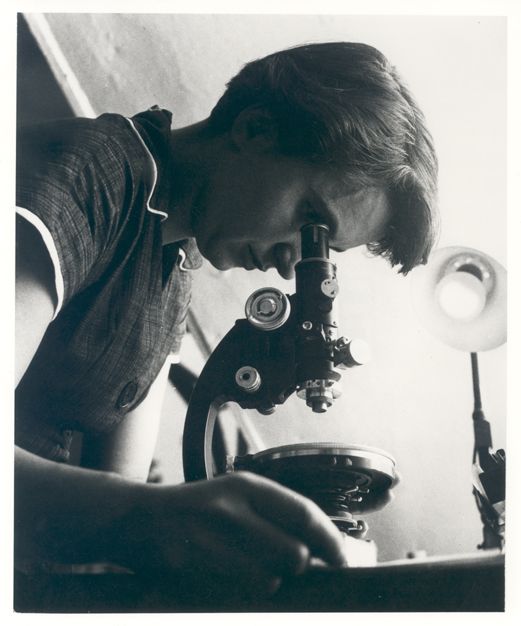
Rosalind Franklin
90% Profile Match
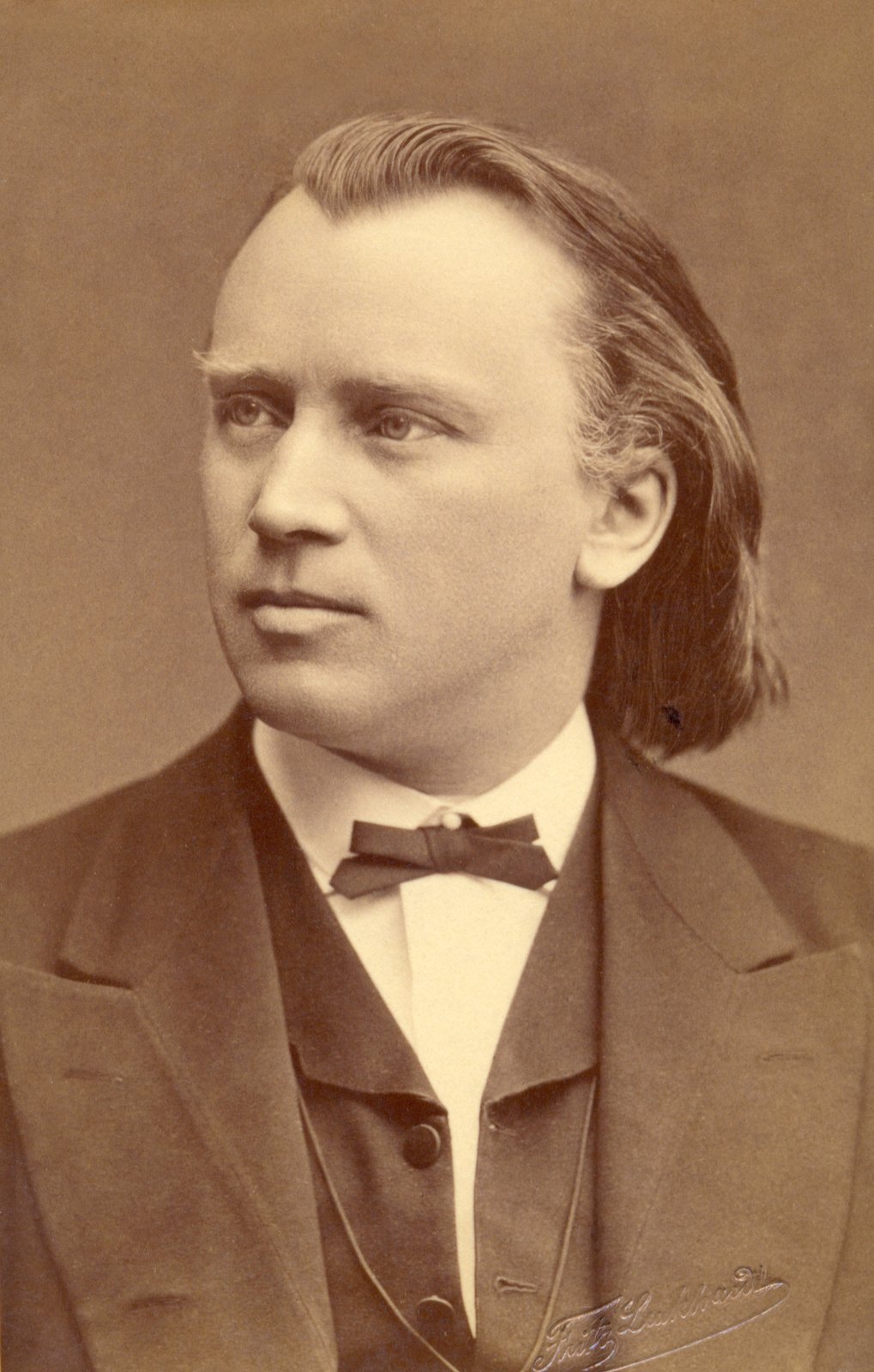
Fritz Luckhardt (1843-1894), Vienna, cabinet-card portrait of Johannes Brahms in younger years (undated; photographer active 1867-1894); Austrian National Library, Bildarchiv Austria, inventory Pf 394:B(4) (image ID 10362903) · Austrian National Library (Osterreichische Nationalbibliothek), Bildarchiv Austria, photograph 'Brahms, Johannes 1833-1897' by Fritz Luckhardt, inventory Pf 394:B(4), via Wikimedia Commons · Public domain
Brahms completed four symphonies, the first premiered at Karlsruhe on 4 November 1876 and the fourth at Meiningen on 25 October 1885, extending the Haydn-Beethoven symphonic tradition at a time when the New German school of Liszt and Wagner championed the symphonic poem and music drama. The first symphony's opening movement dates from about 1862, and some in Germany called the finished work 'Beethoven's Tenth'; Hans von Bulow's phrase 'Bach, Beethoven, Brahms' placed him in that line.
A German Requiem, a large work for soloists, chorus and orchestra, sets scriptural texts that Brahms chose himself rather than the Latin Mass. Performed in Bremen Cathedral on Good Friday, 10 April 1868, it carried his name across Europe, though part of the Vienna audience had hissed three of its movements in December 1867.
Beyond the symphonies he wrote two piano concertos (No. 1, first heard in January 1859, and No. 2, published in 1882) and a Violin Concerto first performed at Leipzig on 1 January 1879 with Joseph Joachim as soloist and Brahms conducting. His output also includes major chamber music, about two hundred songs for solo voice and the Hungarian Dances for piano duet, the first books of which appeared in 1869.
On 27 January 1859 Brahms played his new D minor piano concerto at the Leipzig Gewandhaus. Scattered applause at the end was drowned by audible hissing, and the critic Bernsdorf wrote that the work offered 'waste, barren dreariness'. The next day Brahms wrote to Joachim that 'this failure has made no impression at all upon me' and that the concerto 'will please some day when I have improved its construction'.
Keeping to the same work after a public rejection, as he did again after the hissing of part of the German Requiem in 1867, is consistent with the sustained persistence recorded in his profile. Persistence
In 1853 Brahms withdrew a string quartet that Schumann had recommended to a publisher. Florence May reports that the second and third of his violin sonatas were rejected after completion and the manuscripts destroyed by his own hand, and the Neue Deutsche Biographie records that he destroyed several of the works he had shown Schumann, against Schumann's wish.
Holding back or destroying finished work, recorded by a pupil-biographer and by a modern scholarly entry, is consistent with the exacting standards for his own music that his profile shows. Perfectionism
In 1863 the Hamburg Philharmonic chose Julius Stockhausen as its conductor rather than Brahms, though Joachim had pressed the committee on his behalf, and in 1867, when the post fell vacant again, it passed him over a second time in favour of Julius von Bernuth. Florence May judged that this repeated slight from his native city led him to settle permanently in Vienna, where he had conducted the Singakademie in 1863-64 and later directed the Gesellschaft der Musikfreunde concerts from 1872 to 1875.
Building his working life in Vienna, where he repeatedly took and then gave up conducting posts, is consistent with the preference for control of his own time recorded in his profile. Need for Autonomy
People whose overall profiles resemble theirs.