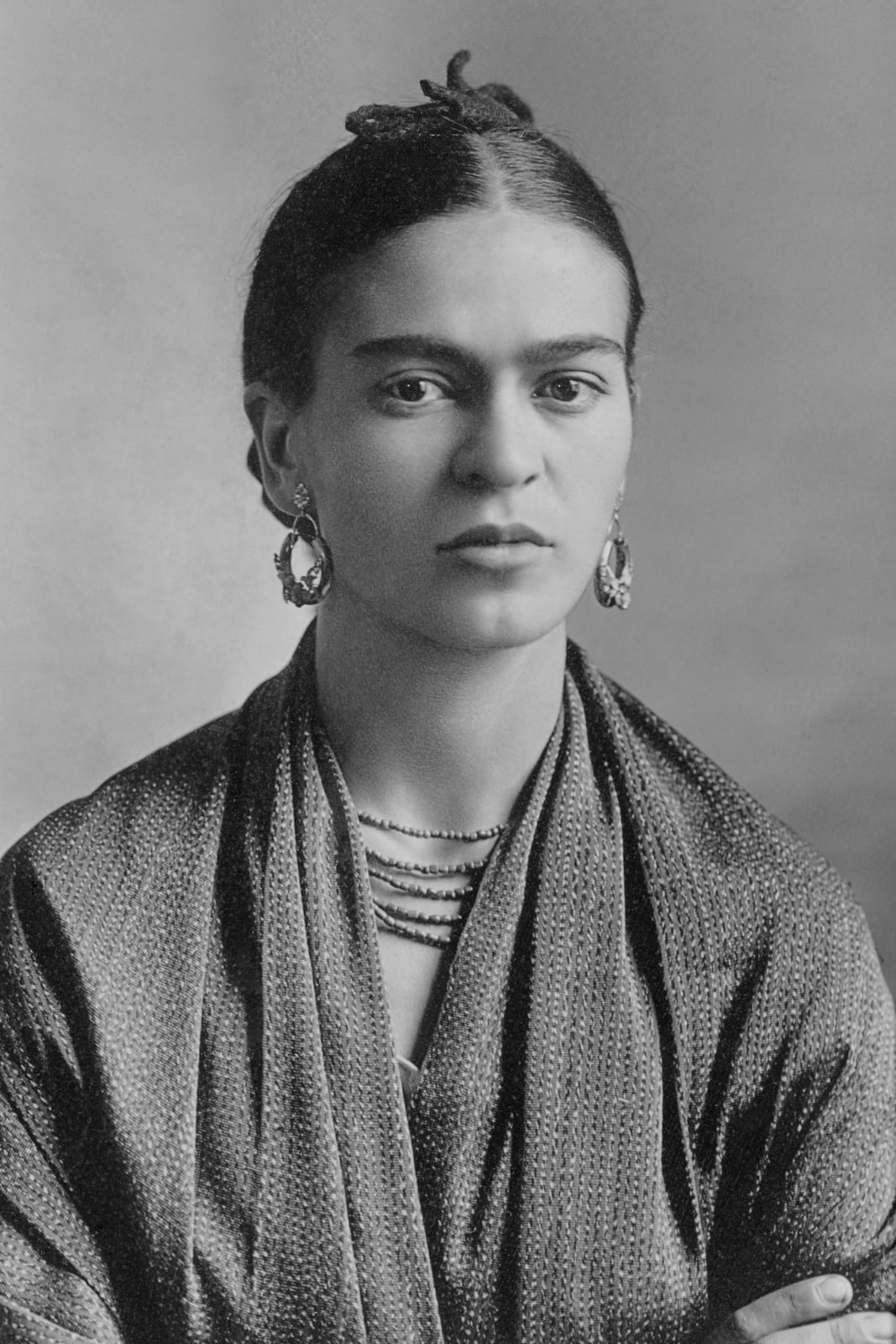
Frida Kahlo
95% Profile Match
1207 — Born in Wakhsh, in Persian-speaking Greater Khorasan (present-day Tajikistan).
c. 1215–1220 — As Mongol invasions swept Central Asia, his father led the family west through Iran, Baghdad, and Damascus.
c. 1228 — The family settled in Konya, Anatolia, where Rumi inherited his father's position as a jurist and teacher.
1244 — Met the mystic Shams-e Tabrizi, an encounter that transformed him from scholar to mystic poet.
1273 — Died in Konya.
Wrote the Masnavi, a six-volume spiritual epic of roughly 27,000 lines often called "a Qur'an in Persian," alongside the Diwan-e Shams-e Tabrizi, roughly 35,000 Persian couplets — a body of work that ranks him today among the most widely read poets in the world.
After his death, his followers founded the Mevlevi Sufi order, which developed the whirling-dervish sema ceremony — a devotional practice combining music, movement, and recitation that remains central to Mevlevi Sufism and is still performed today.
As Mongol invasions swept Central Asia in the 1210s and 1220s, Rumi's father led the family west through Iran, Baghdad, and Damascus, eventually settling in Konya, Anatolia, around 1228. There Rumi inherited his father's position as an Islamic jurist and teacher, issuing legal opinions and preaching in mosques — a conventional scholarly role, well before he became known as a mystic poet.
On November 15, 1244, Rumi met the wandering mystic Shams-e Tabrizi in Konya, an encounter that transformed him from a respected jurist and teacher into a devotee of intense mystical practice. Their relationship was close but brief: on December 5, 1248, Shams disappeared, with several competing explanations circulating, including murder, none established with certainty. Rumi's grief and search for Shams afterward became the wellspring of the lyric poetry later collected as the Diwan-e Shams-e Tabrizi.
This matches the profile's belief_updating score, the strongest such case in this cohort: a documented, repeatedly attested reorientation from formal legal and scholarly religious authority toward direct mystical experience, reflected extensively in his own later poetry rather than inferred from silence. Belief Updating
The Mevlevi order his followers founded, and its sema ceremony, carried his teaching forward as a living devotional practice rather than only a text. His global popularity today, however, rests heavily on English versions — most famously Coleman Barks's — that are loose interpretive paraphrases rather than literal translations, distinct from the more rigorous scholarly translations by Arberry, Nicholson, and Lewis; much of what circulates in Western popular culture as a "Rumi quote" should be read with that distinction in mind rather than taken as his own exact words.
People whose overall profiles resemble theirs.



Not a rival — a different profile shape worth a look.