Marie Curie
88% Profile Match
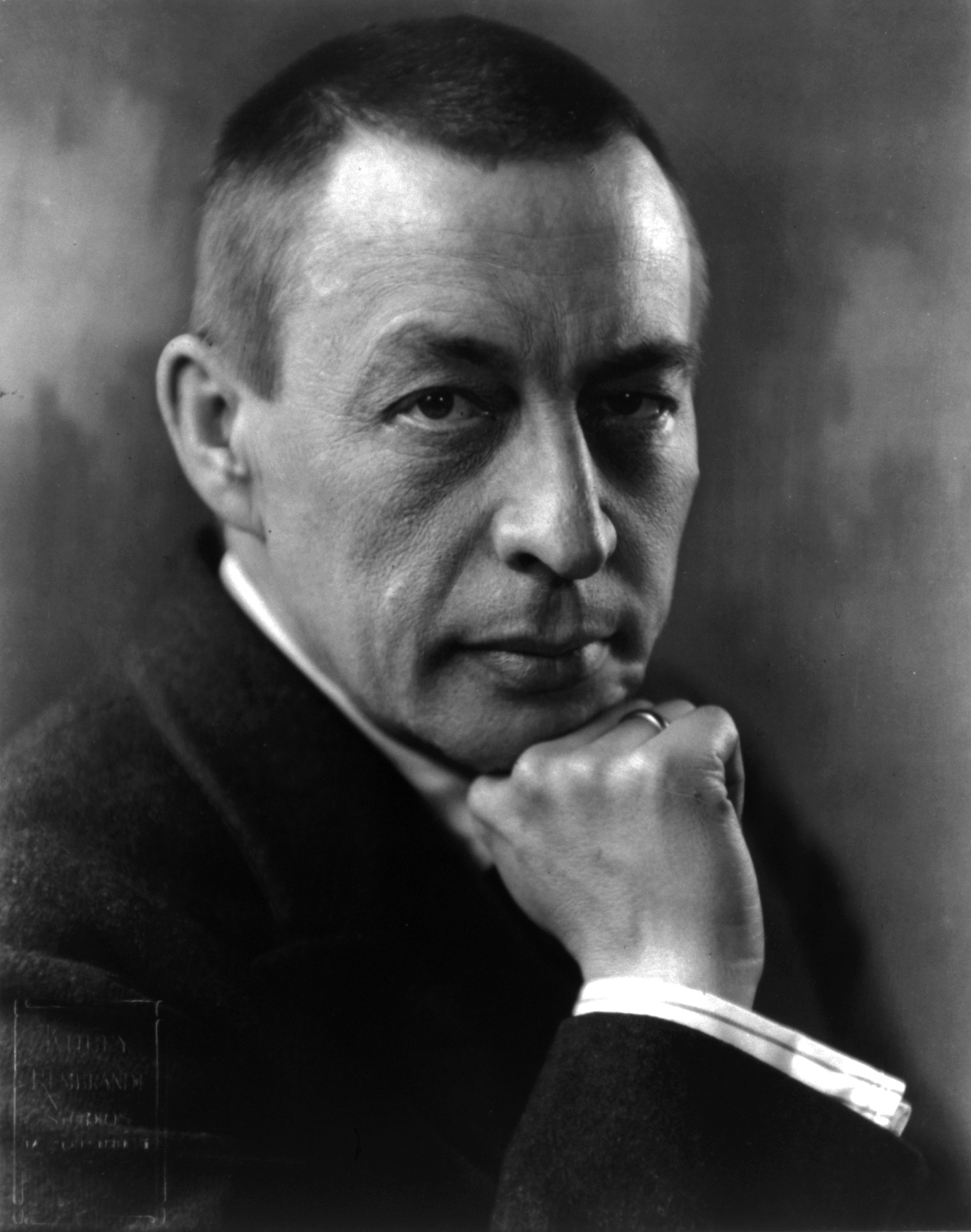
Kubey-Rembrandt Studios (Philadelphia), head-and-shoulders portrait, c1921 (LOC record: 'c1921', note 'Photo by Kubey Rembrandt, 1732 Chestnut St., Phila., Pa.'); Library of Congress Prints and Photographs Division, rights status not evaluated by LOC; a c1921 copyright date indicates publication before 1923 · Library of Congress Prints and Photographs Division, BIOG FILE (LC-USZ62-40236; hdl.loc.gov/loc.pnp/cph.3a40575), via Wikimedia Commons 'Sergei Rachmaninoff cph.3a40575.jpg' · Public domain
Rachmaninoff's Piano Concerto No. 2 was composed between June 1900 and April 1901 and premiered in full in Moscow on 9 November 1901 with Alexander Siloti conducting. His Piano Concerto No. 3, written in the summer of 1909, had its world premiere in New York on 28 November 1909 with Walter Damrosch conducting the New York Symphony Society and the composer as soloist. His Prelude in C-sharp minor, from the Op. 3 Morceaux de fantaisie that Tchaikovsky praised, became so widely played that it was demanded as an encore for decades.
Rachmaninoff composed the Second Symphony in 1906-07 and conducted its premiere in Saint Petersburg on 26 January 1908; the symphonic poem The Isle of the Dead was written in the same Dresden years. In the winter of 1915 he wrote the Vesper Mass (the All-Night Vigil), setting Russian Orthodox chant melodies for unaccompanied choir. In 1934 he wrote the Rhapsody on a Theme of Paganini at his Swiss villa and played its premiere in Baltimore on 7 November 1934 with Leopold Stokowski and the Philadelphia Orchestra.
Rachmaninoff reached New York on 10 November 1918 and built a career as a concert pianist, working with the managers Charles Ellis and C. J. Foley and with Steinway & Sons; his programmes centred on Beethoven, Schumann, Liszt and above all Chopin. The Associated Press obituary of 1943 called him second only to Paderewski among pianists and said he had been before the public for half a century. He also held conducting posts in Moscow, including at the Bolshoi, before leaving Russia.
In 1905-06 Rachmaninoff, who offered to coach Chaliapin in the bass parts of his own two operas, said that when preparing other composers' operas with him he 'showed no mercy', keeping the singer at the piano for two or three hours, or longer, until he knew his part and the whole opera 'down to the last detail of orchestration'. He called himself 'positively cruel' in those rehearsals. Chaliapin remembered the same partnership as one in which, with Rachmaninoff at the piano, 'we are both singing'. The coaching account is Rachmaninoff's own, told to Riesemann.
Drilling a leading singer until every detail was secure, and describing himself as 'cruel' about it, is consistent with perfectionism; the account is his own, and Chaliapin's memoir records the warmth of the partnership rather than the drills. Perfectionism
In autumn 1906, when his Imperial Theatre contract ended, Rachmaninoff did not renew it despite offers of 'almost unlimited authority' as chief conductor, and took his family to Dresden to compose in quiet. Arriving there, he told an acquaintance in the street, 'I have escaped from my friends.' He wrote the Second Symphony and The Isle of the Dead in these Dresden years.
Giving up a powerful post to protect his time for composing is consistent with a strong need for autonomy; the account comes from his own recollections as recorded by Riesemann. Need for Autonomy
Rachmaninoff's First Symphony was premiered in Saint Petersburg in 1897 under Alexander Glazunov. The performance went badly, César Cui's review was scathing, and Rimsky-Korsakov told him at rehearsal that he did not find the music agreeable. Rachmaninoff later said he agreed that the work's faults were real, withdrew the score, and wrote little for a time. In 1900-01 he composed the Second Piano Concerto, helped by two years of support from his cousin Siloti, and its Moscow premiere in 1901 was a success.
Accepting that the criticism of the symphony was partly right, rather than defending the work, is consistent with belief updating; the judgment of the symphony's faults is his own recollection, and Rimsky-Korsakov's memoir only records the work's performance. Belief Updating
People whose overall profiles resemble theirs.