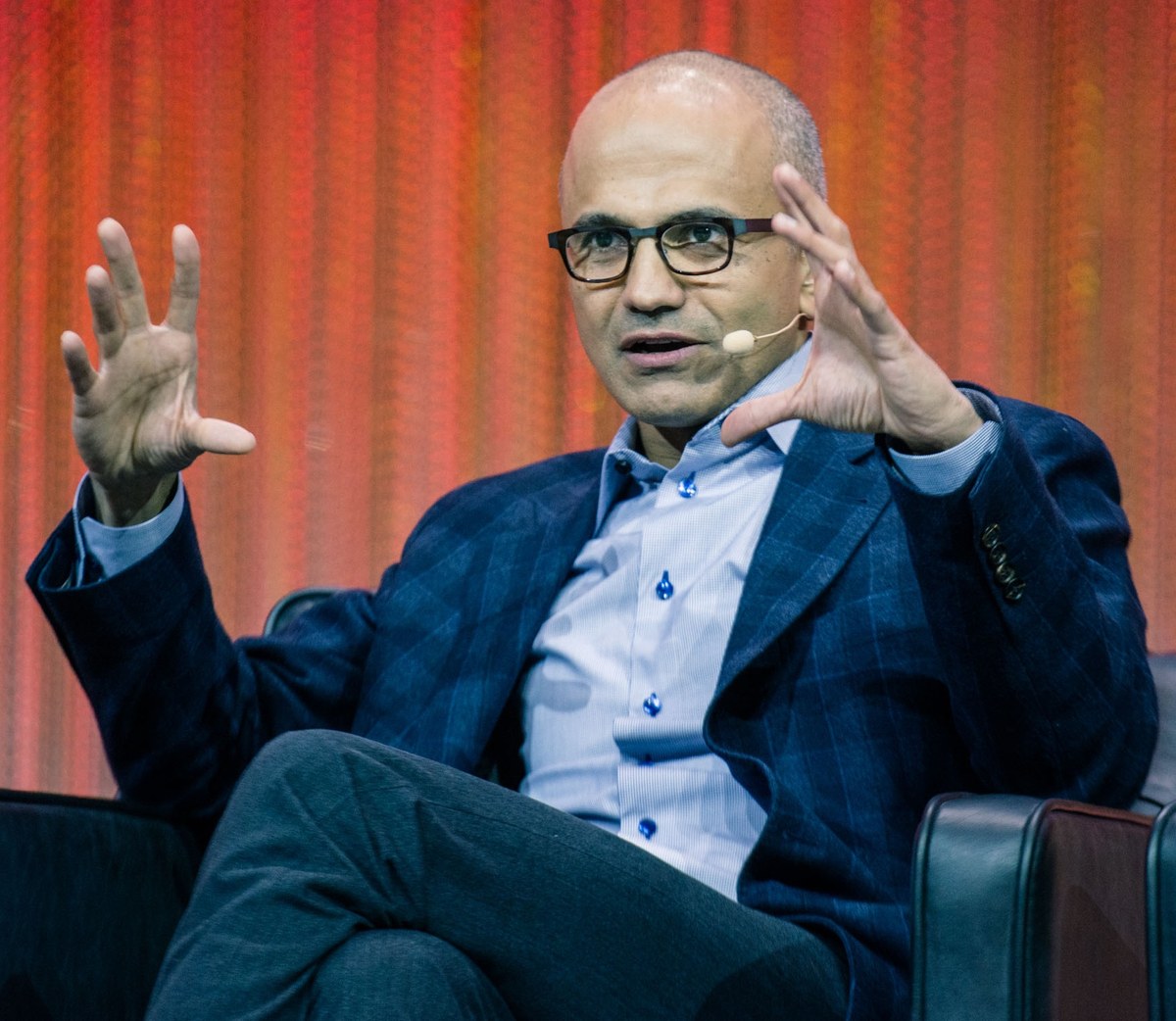

Photo: LeWeb / OFFICIAL LEWEB PHOTOS, 10 December 2013, CC BY 2.0, downscaled from the original · Wikimedia Commons, 'Satya Nadella.jpg' -- photograph by OFFICIAL LEWEB PHOTOS (the LeWeb conference's Flickr account) taken 10 December 2013 at LeWeb Paris, plenary session; Commons Flickr-upload-bot record with CC BY 2.0 licence tag, and the Flickr page (photos/86704644@N00/11315186824) checked directly showing 'Some rights reserved', CC BY 2.0; Commons file 1731 x 1503 pixels, downscaled once to 1200 x 1042 (never upscaled). · CC BY 2.0
executive · Contemporary
Satya Nadella
b. 1967
Known For
Not yet included in personality matching — the documented evidence doesn't yet cover enough of the personality model. Everything else on this page is fully available.
Trait Constellation
Key Achievements
He became Microsoft's CEO in February 2014, after leading the transformation of its cloud infrastructure and services business as head of the Cloud and Enterprise group, according to the company's own biography.
He replaced the stack-ranking system and internal-competition culture he inherited with a growth-mindset programme, after an executive off-site that led to a 17-leader culture cabinet.
He bought GitHub for $7.5 billion in 2018, saying Microsoft was 'all in on open source', and Microsoft invested $1 billion in OpenAI in 2019.
Moments That Reveal Them
In July 2015 Microsoft wrote down $7.6 billion on the Nokia phone business and cut about 7,800 more jobs, and Nadella's memo said the company was moving away from growing a standalone phone business.
This is consistent with a leader willing to write off a costly predecessor's bet rather than keep defending it. Decisiveness
After a public remark about pay raises drew criticism, he emailed employees admitting he had 'answered that question completely wrong', according to a business-school account.
This is consistent with publicly acknowledging a mistake and adjusting course. Belief Updating
Turning Points
On becoming CEO in 2014 he spent his first year listening and then, in 2015, set a new mission and began replacing the internal-competition culture, per a London Business School account.
This is consistent with a leader who changed how the company worked together before changing its products. Collaboration
Similar People
People whose overall profiles resemble theirs.
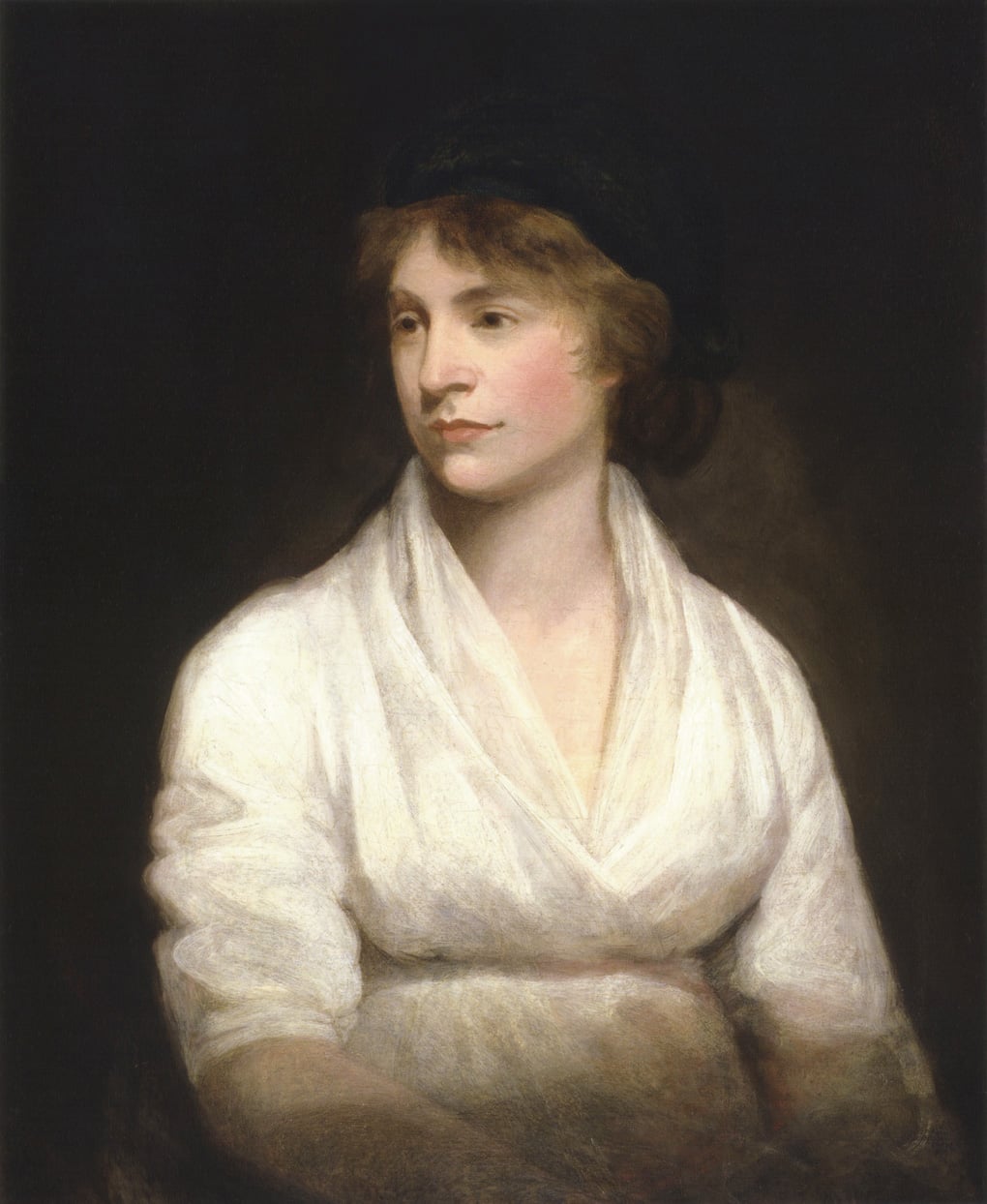

Mary Wollstonecraft

Benjamin Banneker

Nelson Mandela

Wilbur Wright

Ernest Shackleton
Opposite Profile
Not a rival — a different profile shape worth a look.

Albert Einstein
Sources
- Satya Nadella (Q7426870) -- verified live via the Wikidata API (2026-10-11): English label 'Satya Nadella', description 'Indian-American business executive and CEO of Microsoft', born 19 August 1967, no date of death, citizenship India and United States, Korean label present. Orientation only; not used as support for any row.
- Microsoft News Center, 'Satya Nadella' executive biography -- the company's own profile: joined Microsoft in 1992, named CEO in February 2014, previously executive vice president of the Cloud and Enterprise group where he 'led the transformation to the cloud infrastructure and services business', earlier roles in Online Services R&D and the Business Division, education. CANONICAL SIGNIFICANCE SOURCE (institutional orientation to his role and the cloud emphasis; self-published by his employer, so promotional and never used as support for a behavioural row; the Britannica entry was tried but returned HTTP 403). Read in full.
- Herminia Ibarra and Aneeta Rattan (London Business School), account of Nadella's culture change at Microsoft, 9 June 2019 -- describes the Ballmer-era culture of internal competition and six-monthly stack ranking, his first year spent listening, the July 2015 mission statement, a 180-executive off-site that led to a 17-leader culture cabinet defining 'growth mindset', abolition of stack ranking for continual feedback, a leaders' habit of closing meetings by asking whether it was a growth or fixed-mindset meeting, and his emailed admission that he had 'answered that question completely wrong' after a public remark about pay raises. Business-school case-style article; largely favourable, built on Nadella's and his executives' own statements with no before-and-after culture metrics, and it admits that the financial gains are not causally tied to the culture change. Read in full.
- Dina Bass and Eric Newcomer, Bloomberg, 4 June 2018, 'Microsoft Buys GitHub for $7.5 Billion, Going Back to Its Roots' (republished by Data Center Knowledge) -- news report on the all-stock purchase, Nadella's statements that Microsoft is 'all in on open source' and must earn GitHub users' trust, the contrast with Steve Ballmer calling open source a 'cancer', analyst views (Moody's, Bernstein), and sceptics including a coder who deleted his GitHub account, and GitHub's own losses. Independent business reporting with sceptical voices. Read in full.
- Swati Khandelwal, 'Confirmed: Microsoft Buys GitHub For $7.5 Billion', The Hacker News, 4 June 2018 -- security-and-developer news article on the same deal: the move away from near-total dependence on Windows, projects released as open source (PowerShell, .NET, the Edge JavaScript engine), Ubuntu on Windows 10 with Canonical, the developer-community fear of the acquisition and Bloomberg's unnamed-source report that GitHub sold partly because it was impressed with Nadella's leadership. Secondary retelling of the Bloomberg story with its own commentary, so not an independent perspective on the same incident; its Bloomberg link was broken. Read in full.
- Gregg Keizer, 'Microsoft writes off $7.6B, admits failure of Nokia acquisition', Computerworld, 8 July 2015 -- news report on the $7.6 billion impairment on the Nokia phone business, about 7,800 further job cuts, Nadella's memo that Microsoft was moving away from a strategy to grow a standalone phone business, analyst Jack Gold calling the deal a 'monumental mistake' while crediting Nadella for 'stepping up' to write it down, and noting that Nadella had been among those who objected before he became CEO. Independent trade reporting with an analyst voice. Read in full.
- Greg Sterling, 'Microsoft CEO Nadella Rebukes Ballmer With Nokia Write-Down', Martech, 9 July 2015 -- commentary on the same write-down and restructuring, placing it after the earlier 'tough choices' memo and the sale of map-imaging operations to Uber and display advertising to AOL, reading it as a repudiation of Ballmer's Nokia strategy, crediting Nadella for candour and decisive action while arguing it does not by itself strengthen Microsoft's mobile position. Independent commentator with a mixed verdict; the same event as the Computerworld report, so not counted as a second independent account of it. Read in full.
- Sam Varghese, ITWire, 2 May 2024, 'Microsoft decision to invest in OpenAI was taken in a hurry, email shows' -- report on the June 2019 'Thoughts on OpenAI' email from Microsoft's CTO to Nadella and Bill Gates (made public in the US Justice Department's antitrust trial against Google, crediting Ars Technica for the details), Nadella forwarding it to the CFO recommending that its ideas be implemented, Microsoft investing $1 billion in OpenAI a few weeks later, and Nadella's testimony about the email. Independent but derivative of other outlets' reporting of court documents, so one story rather than several. Read in full.
- Flickr photo page 'LE WEB PARIS 2013 - CONFERENCES - PLENARY 1 - SATYA NADELLA' by OFFICIAL LEWEB PHOTOS, taken and uploaded 10 December 2013, licence shown as Creative Commons Attribution 2.0 -- page checked for the portrait's licence. Not used for any scoring.