Warren Buffett
93% Profile Match
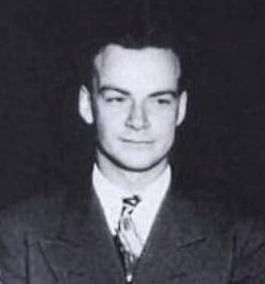
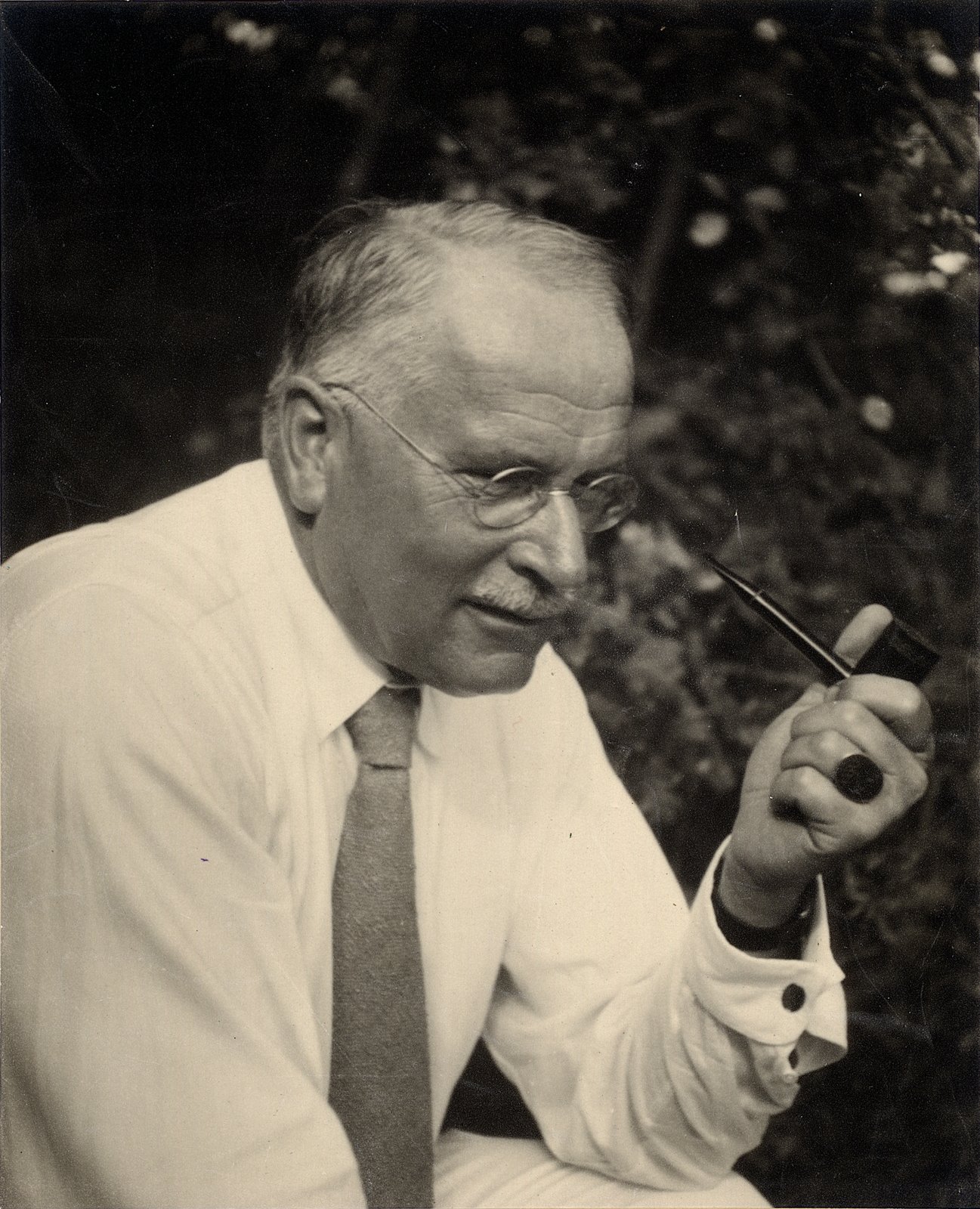
Los Alamos National Laboratory archive, photographer unknown · Wikimedia Commons · Public Domain (US federal government work, Los Alamos National Laboratory)
1918 — Born in Queens, New York.
1943–1945 — Worked on the Manhattan Project at Los Alamos in Hans Bethe's Theoretical Division, present at the July 1945 Trinity test.
1950s–1960s — Joined Caltech, where he developed his diagrammatic approach to quantum electrodynamics and delivered the lecture course later published as The Feynman Lectures on Physics.
1965 — Shared the 1965 Nobel Prize in Physics with Julian Schwinger and Sin-Itiro Tomonaga.
1986 — Served on the Rogers Commission investigating the 1986 Challenger disaster.
1988 — Died in Los Angeles.
Developed, alongside Julian Schwinger and Sin-Itiro Tomonaga, the modern formulation of quantum electrodynamics — including the diagrammatic technique now called Feynman diagrams and a path-integral approach to quantum mechanics — for which the three shared the 1965 Nobel Prize in Physics.
His undergraduate lecture course at Caltech (1961–1964) was transcribed and published as The Feynman Lectures on Physics, which has remained in wide use as a physics teaching resource for more than six decades.
During the Manhattan Project at Los Alamos, Feynman spent off-hours testing the combination locks on colleagues' filing cabinets, found many left at factory-default settings, and left notes inside as pranks — one of several anecdotes later collected in his memoir Surely You're Joking, Mr. Feynman!
While a visiting professor in Brazil from 1949 to 1952, Feynman learned to play the frigideira, a metal percussion instrument, and became an enthusiastic amateur bongo and conga player, later sitting in with pit orchestras for musicals — a hobby he kept alongside his physics career for the rest of his life.
At a 1986 Rogers Commission public hearing into the Space Shuttle Challenger disaster, Feynman placed a piece of the shuttle's O-ring material in a clamp and submerged it in a glass of ice water on live television, demonstrating that the material lost its resilience at low temperature — the specific mechanical failure investigators would identify as a cause of the disaster. It was his own initiative, conducted outside the commission's planned proceedings.
This matches the profile's high proactive_agency score: a specific, unauthorized act that went around an official process he judged too slow, and one that shifted his public standing from a physicist known within his field to a nationally recognized figure. Proactive Agency
Feynman's own published writing about his personal life — most notably his memoir Surely You're Joking, Mr. Feynman! — recounts episodes of his own conduct toward women that later readers and commentators have increasingly scrutinized, including pretending to be an undergraduate to deceive younger women he wanted to date and holding some work-related meetings in strip clubs. These are his own accounts of his own behavior, not allegations from others, and they complicate a straightforwardly admiring modern reading of a figure otherwise remembered primarily for his scientific and teaching legacy.
Feynman diagrams and the path-integral formulation remain standard tools throughout theoretical physics, and The Feynman Lectures on Physics is still assigned or consulted by physics students decades after it was recorded. His public role in identifying the Challenger disaster's cause also established a model, still cited today, of a working scientist communicating a technical finding directly and demonstrably to a general public audience.
People whose overall profiles resemble theirs.