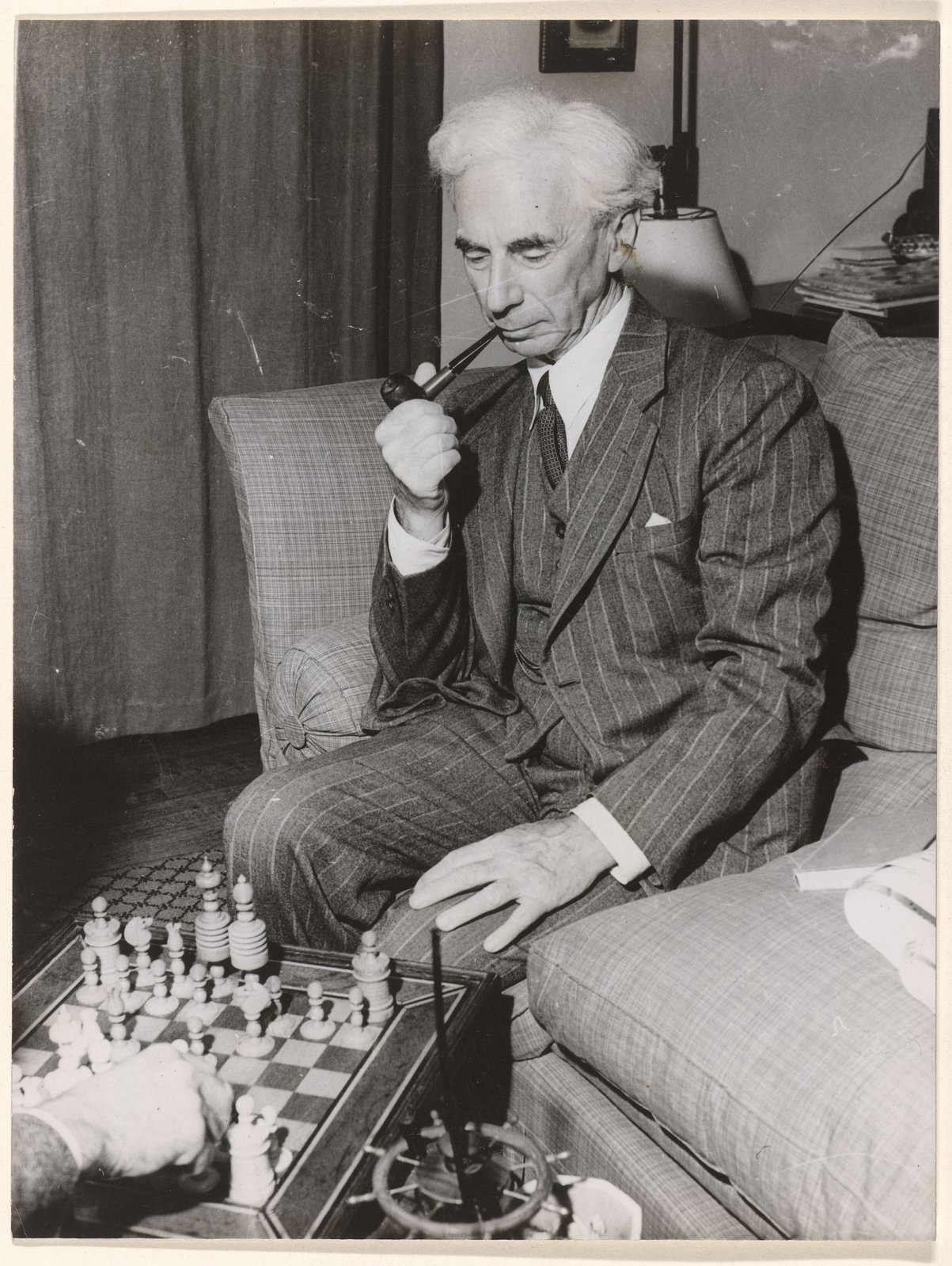
Bertrand Russell
94% Profile Match
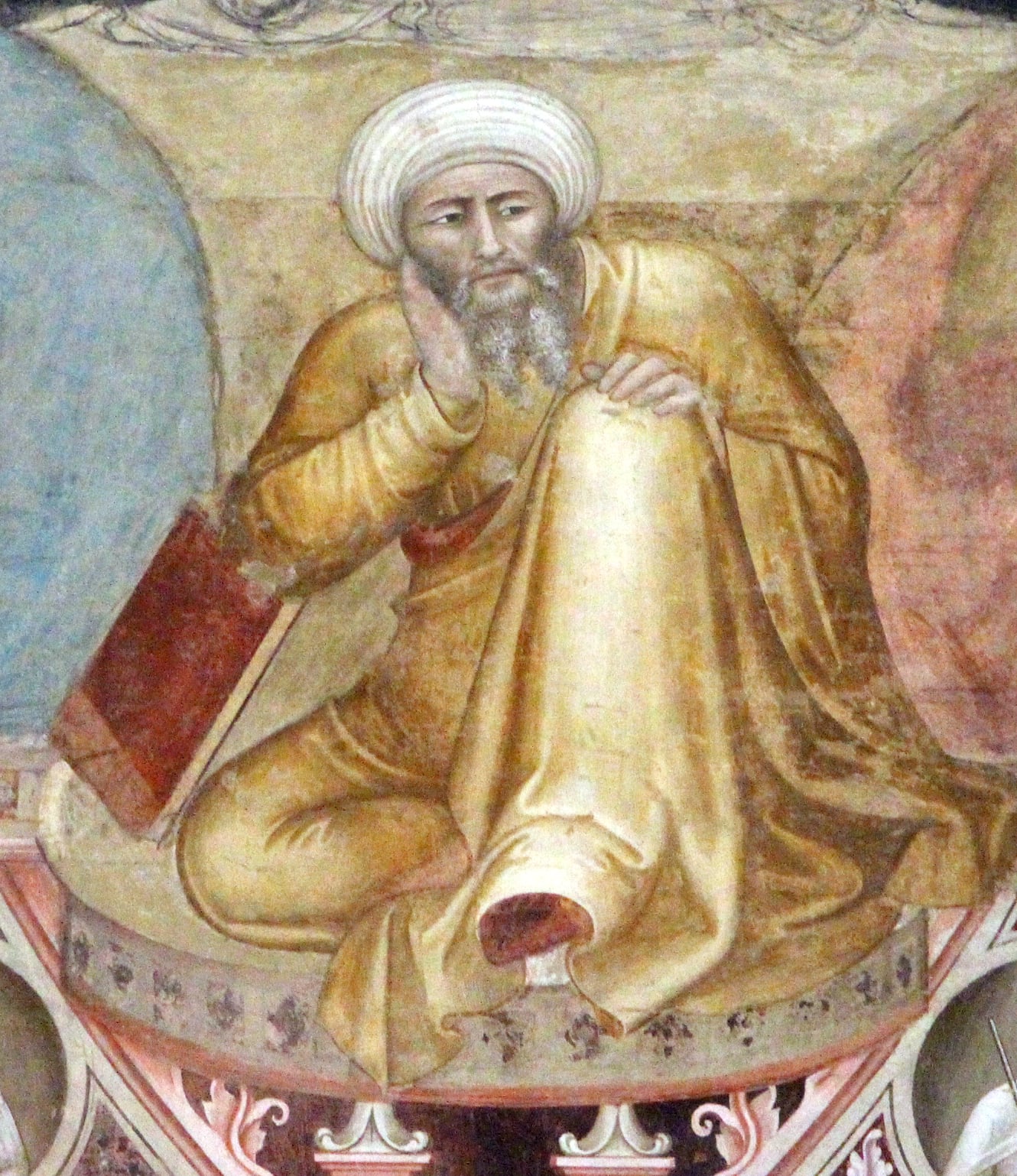
Andrea di Bonaiuto, fresco, 1366 — photograph by Sailko (CC BY 3.0); locally hosted image is a cropped derivative of the photograph isolating Averroes; later traditional depiction, not a lifetime likeness · Wikimedia Commons · CC BY 3.0
1126 — Born in Córdoba into a family of jurists; his father and grandfather both served as qadis.
Early career — Trained in law, medicine, and philosophy in Córdoba; the surviving record documents his teachers in medicine but is thinner on the rest of his education.
Under Caliph Abu Yaqub Yusuf (r. 1163–1184) — Introduced by the philosopher Ibn Tufail to the Almohad Caliph Abu Yaqub Yusuf, who commissioned him to write systematic commentaries on Aristotle. Across a career spanning multiple Almohad rulers, he also served as a judge — first in Seville, later as chief qadi of Córdoba — and eventually as a royal physician.
Over the following decades — Produced short, middle, and long commentaries on nearly the entire surviving Aristotelian corpus, alongside other major philosophical works including The Incoherence of the Incoherence.
Late in his life — His philosophical works were formally condemned and burned under Almohad authority, and he was briefly exiled to Lucena, for reasons the surviving record does not fully explain.
1198 — Died in Marrakesh, according to the most commonly cited account.
Produced systematic short, middle, and long commentaries on nearly the entire surviving corpus of Aristotle over roughly three decades — a body of work that later shaped how Aristotle was read in medieval Europe as much as in the Islamic world.
Wrote The Incoherence of the Incoherence, a direct, sustained rebuttal of the influential philosopher al-Ghazali's earlier critique of philosophy itself — engaging the leading contemporary challenge head-on rather than working around it.
Served simultaneously as a qadi — first in Seville, later chief qadi of Córdoba — and as a royal physician, while continuing his philosophical commentary project across a career combining serious professional practice in more than one demanding field.
He was introduced to the Almohad Caliph Abu Yaqub Yusuf by the philosopher Ibn Tufail, who then personally commissioned Averroes's systematic Aristotle commentaries — the project that became his major life's work began under another scholar's referral and a ruler's patronage, not from isolated independent initiative.
Late in his life, under Almohad authority, his philosophical works were formally condemned and burned and he was briefly exiled — following decades in which the same rulers had themselves commissioned and supported his commentary project. By most accounts he continued philosophical work in the time that remained to him rather than recanting the positions that had drawn the condemnation.
This is consistent with the profile's persistence score: continuing a body of work despite institutional retaliation against it, though the surviving record does not document how he personally regarded the reversal at the time. Persistence
People whose overall profiles resemble theirs.


Not a rival — a different profile shape worth a look.
