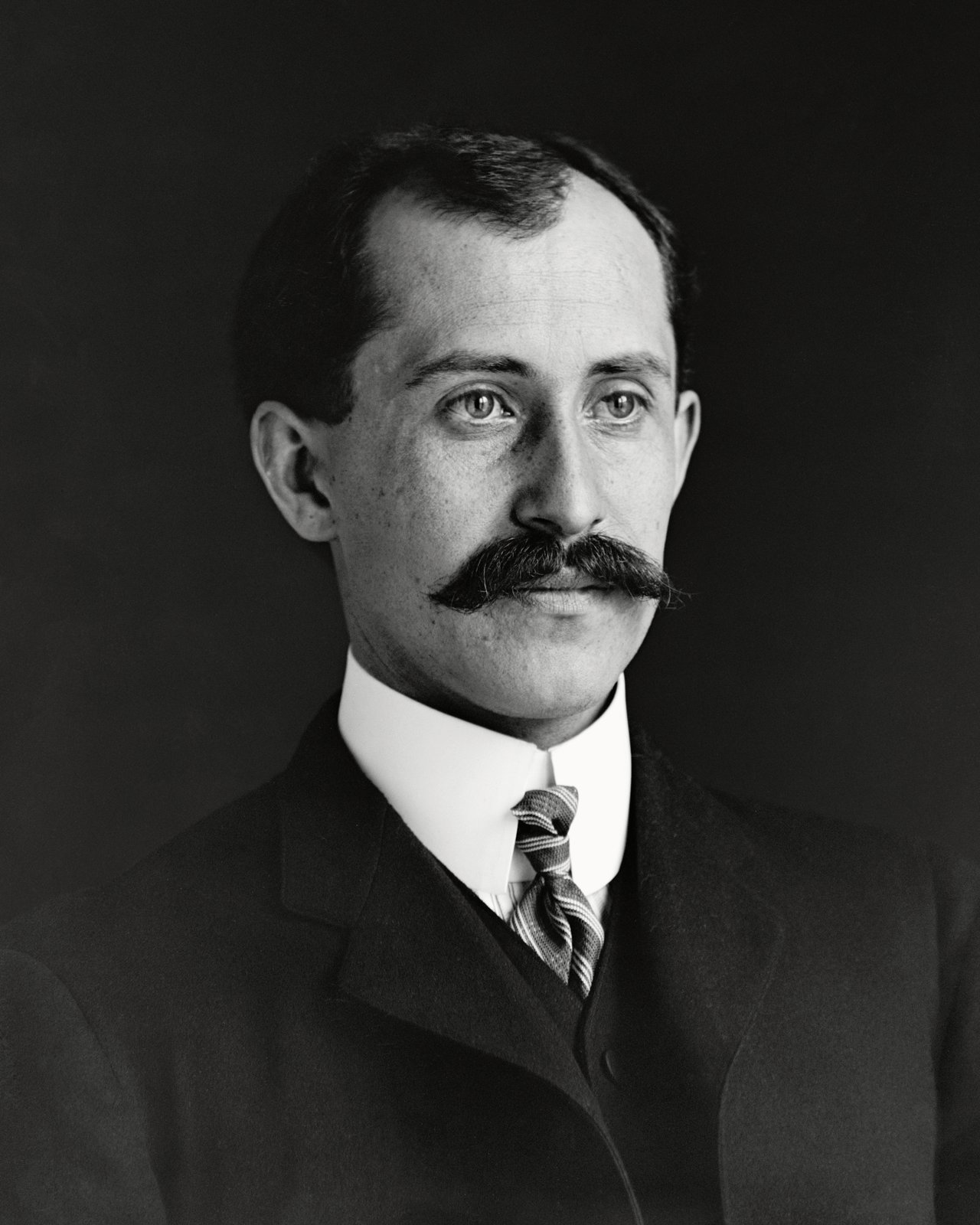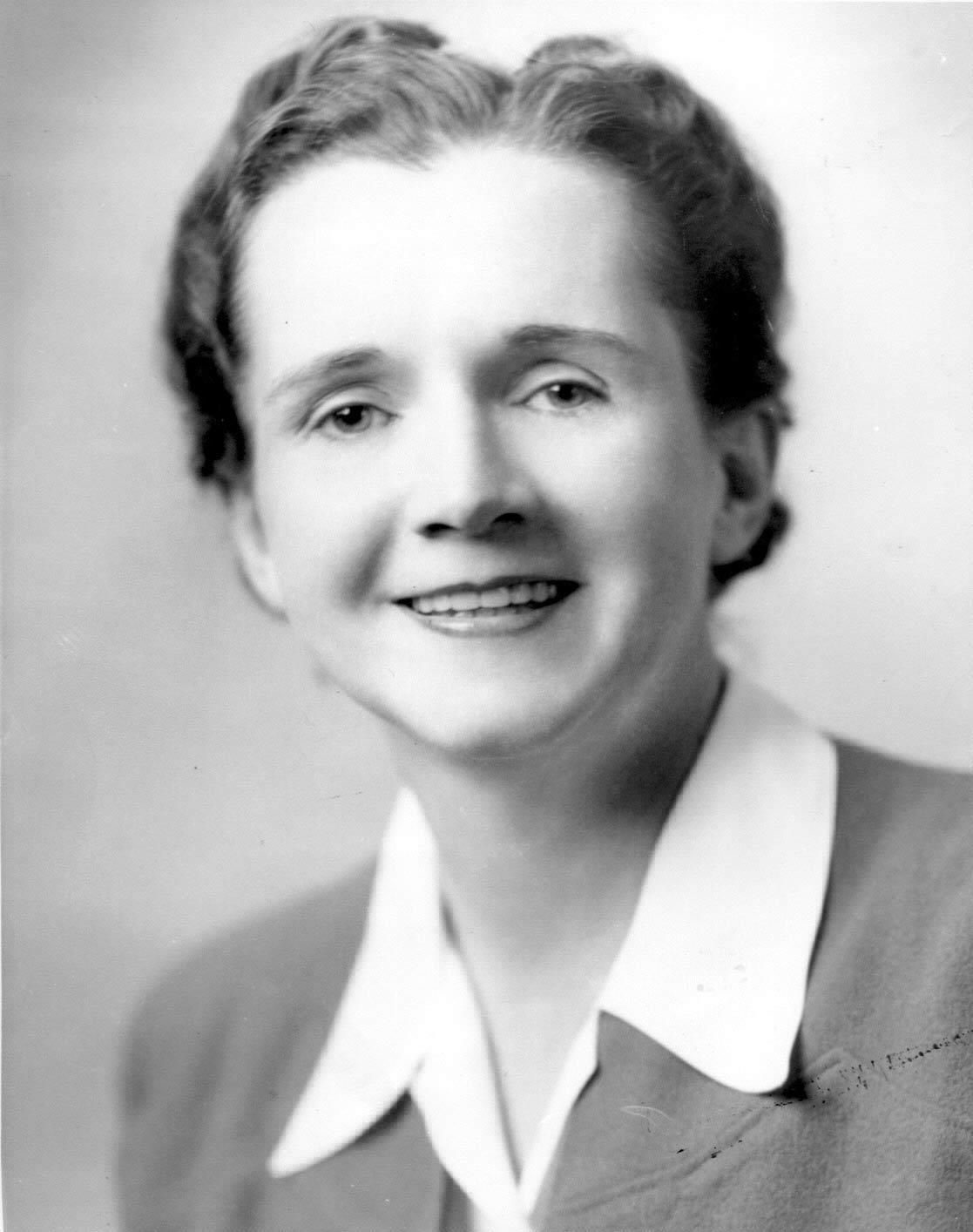

Attributed to Wilbur and/or Orville Wright, 'Orville Wright, age 34, head and shoulders, with mustache', glass negative, 1905; Library of Congress Prints and Photographs Division (LC-DIG-ppprs-00680), no known restrictions · Library of Congress Prints and Photographs Division, Glass negatives from the Papers of Wilbur and Orville Wright (LC-W86-89; LC-DIG-ppprs-00680), via Wikimedia Commons (retouched crop) · Public domain
inventor · 20th Century
Orville Wright
1871–1948
Known For
Not yet included in personality matching — the documented evidence doesn't yet cover enough of the personality model. Everything else on this page is fully available.
Trait Constellation
Key Achievements
On 17 December 1903, near Kitty Hawk, North Carolina, Orville Wright piloted the first of four flights made that day in the powered Wright Flyer he and his brother Wilbur had designed and built. The flight lasted about 12 seconds and covered 120 feet; Wilbur flew the longest of the four, 852 feet in 59 seconds.
Orville flew the U.S. Army acceptance trials at Fort Myer, Virginia, which began in September 1908 and were completed in July 1909. On 27 July 1909 he stayed aloft for over an hour with a passenger, and on 30 July he flew the cross-country speed test to Alexandria and back; the Army formally accepted the machine on 2 August.
Orville developed an automatic stabilizer for the Wright airplane and, on 31 December 1913, demonstrated it in 17 flights before an Aero Club of America committee, making seven turns in the last with his hands off the controls. In 1920 he developed a split wing flap with James Jacobs, patented in 1924.
Moments That Reveal Them
In his dispute with the Smithsonian, Orville reduced his case to a side-by-side list of 35 differences between Samuel Langley's 1903 Aerodrome and the rebuilt machine flown in 1914, from camber and guy-post positions to carburettor and floats, each tied to Langley's own published Memoir. When the Smithsonian printed the list in October 1942, its secretary wrote that the Institution accepted it 'as correct in point of facts'.
Answering a public controversy with a checkable, item-by-item list sits alongside the profile's high detail orientation score. The fact that his opponent accepted the list is what gives this episode its weight. Detail Orientation
In autumn 1903 Octave Chanute told the brothers that chain drives usually lost about 20 per cent of their power, far more than the 5 per cent they had allowed. In his own later account Orville describes how they hung a drive chain over a sprocket with bags of sand on each side and measured the extra weight needed to move it, which put the loss at about 5 per cent.
Testing an expert's warning with a simple measurement instead of simply accepting it or ignoring it is consistent with the profile's analytical rigor score. The account is Orville's own and describes joint work, which is why that row carries only moderate confidence. Analytical Rigour
Turning Points
In 1914 the Smithsonian had Langley's 1903 Aerodrome rebuilt and flown by Glenn Curtiss, the Wrights' opponent in patent litigation, and then described it as the first airplane capable of carrying a man. After his efforts to get the claim corrected failed, Orville shipped the 1903 Wright Flyer to the Science Museum in London in January 1928. It stayed abroad until after his death; in 1942 the Smithsonian published a statement correcting the record, and in 1948 the Flyer went on display in Washington.
Sending the country's most famous aircraft overseas to press a factual correction offers one example of the profile's conflict tolerance, marked dual-edged. Historian Tom Crouch places most of the fault with the Smithsonian, while noting that Charles Lindbergh also found Orville 'not an easy man to deal with'. Conflict Tolerance
Similar People
People whose overall profiles resemble theirs.

Wilbur Wright

John D. Rockefeller

Rosalind Franklin

Joan of Arc

Rachel Carson
Opposite Profile
Not a rival — a different profile shape worth a look.
Charles Dickens
Sources
- Orville Wright (Q494455) -- verified live via wbgetentities (2026-09-26): en label 'Orville Wright', description 'American aviation pioneer (1871–1948)', P569 19 Aug 1871, P570 30 Jan 1948, citizenship United States (Q30), instance of human, ko label '오빌 라이트', P18 'Orville Wright 1905-crop.jpg'. Orientation only; not used as support for any row.
- Fred C. Kelly, The Wright Brothers: A Biography Authorized by Orville Wright (New York: Harcourt, Brace, 1943), Internet Archive full text (wrightbrothersbi00kell_1) -- INSIDER-LEANING authorized biography: the preface states Orville read the manuscript and corrected it, with his secretary Mabel Beck supplying documents; partisan on the Smithsonian dispute. Read locally: Ch. III 'Printing -- and Bicycles' (pp. 29-44) in full; Orville-specific passages of Chs. V-VI (1901 starch-box tunnel test, 1902 rudder explanation, 1903 motor letters, propeller arguments, shaft trip, telegram); Chs. XIII-XVI Orville passages (1908 Kitty Hawk, Fort Myer Sept 1908 and June-July 1909 trials, Berlin/Potsdam 1909); Ch. XVII 'In Aviation Business' (pp. 268-286), Ch. XVIII 'Patent Suits' (pp. 287-299) and Ch. XIX 'Why the Wright Plane Was Exiled' (pp. 300-333, which reprints the Smithsonian's 24 Oct 1942 Abbot statement verbatim) in full. Its evaluative language about the Smithsonian and Curtiss is not used as evidence.
- Arthur G. Renstrom (Library of Congress reference librarian and member of the team that edited The Papers of Wilbur and Orville Wright), Wilbur & Orville Wright: A Chronology Commemorating the Hundredth Anniversary of the Birth of Orville Wright (Library of Congress 1975; reissued NASA SP-2003-4532, Monographs in Aerospace History 32, with foreword by NASM curator Peter Jakab), Internet Archive full text (NASA_NTRS_Archive_20040000754) -- documentary chronology (non-self, archival/scholar) compiled from the Wright Papers, diaries, patents and press; neutral dated entries. Read locally the entries for 1881-1903, 1908-1909 (Fort Myer, Berlin), 1910-1918 (Wright Company, school, stabilizer tests Dec 1912-Dec 1913, Curtiss suit and 1915 affidavits, sale of the company, 1916 laboratory, 1917-18 consulting), 1920-1925 (NACA appointment, split flap and Navy Report 184, toy patent), 1925-1948 (Smithsonian dispute, 1928 shipment of the Flyer, Abbot's 1928 publication and Orville's rejection, 1942-43 settlement, death). Its note that his health was a consideration in the 1915 sale is not used as trait evidence.
- Orville Wright, 'How We Made the First Flight' (Flying, December 1913) and Orville and Wilbur Wright, 'The Wright Brothers' Aeroplane' (Century Magazine, September 1908), as reprinted in The Early History of the Airplane (Dayton-Wright Airplane Co., 1922), Project Gutenberg eBook #25420 -- SELF perspective (Orville's own first-person account; the 1908 article is joint). Read in full: 1903 motor letters and building their own engine, chain-friction sandbag test after Chanute's objection, propeller-shaft failures and the tire-cement fix, his trip to Dayton for new shafts, the coin toss, the decision to fly in a 24-27 mph wind on 17 Dec 1903 and his account of the flights.
- Tom D. Crouch (NASM curator; author of The Bishop's Boys, 1989), 'The Feud Between the Wright Brothers and the Smithsonian', Invention & Technology vol. 2 no. 3, Spring 1987 (inventionandtech.com) -- SCHOLAR's account (non-self; written from inside the Smithsonian, i.e. by a historian of the institution Orville opposed, yet largely critical of Walcott) drawing on Smithsonian archives, Orville's correspondence, Abbot's letters and Lindbergh's 1939 diary (third-party assessment). Fetched with curl and read in full: the 1910 Walcott exchange, the 1914 Hammondsport tests, Orville's silence until 1921 and his stated reason, the 1925 announcement and 1928 loan, the 1933-35 Lindbergh/Abbot mediation, Orville's refusal of Abbot's committee and his 15 Mar 1935 specification of the required correction, Kelly's 1942 brokering, the 1937 will and the unpublicised 8 Dec 1943 letter recalling the Flyer.
- National Air and Space Museum, '1903 Wright Flyer' collection-object record (A19610048000), long description (curatorial text) -- institution/scholar (non-self). Fetched with curl and read in full. Used only for: Orville's 1916 repair and reassembly of the Flyer for MIT, his supervision of mechanic Jim Jacobs for later displays, and the 1926-27 refurbishment before the London loan.
- Wright Co. v. Herring-Curtiss Co., 204 F. 597 (W.D.N.Y., 21 Feb 1913, Hazel J.) and 211 F. 654 (2d Cir., 13 Jan 1914, per curiam), Caselaw Access Project (static.case.law) -- court records (non-self, adversarial proceeding). Read both opinions: the patent granted 22 May 1906 to Orville and Wilbur, the finding of pioneer status and infringement, and the sufficiency of the notice given to Curtiss. Used only to corroborate the dated course of the litigation, not for character.