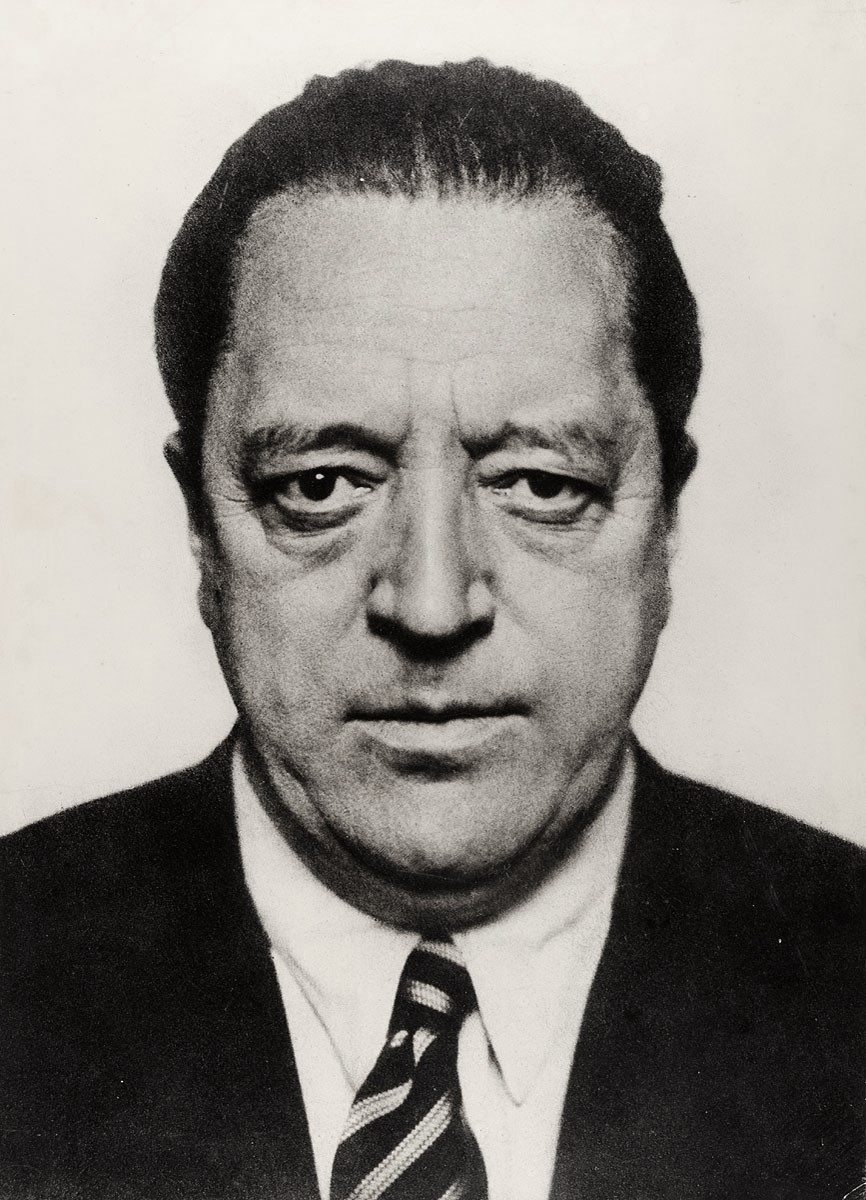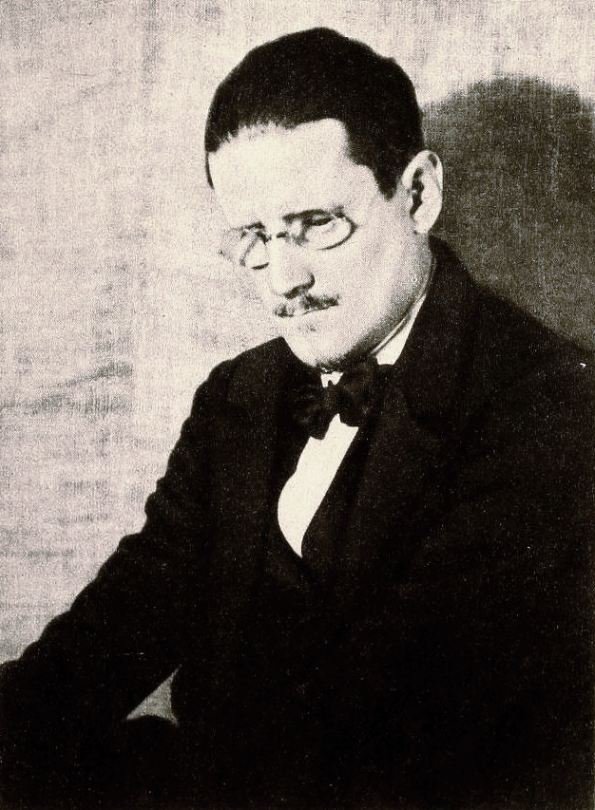

Hugo Erfurth, 1934; Museum fur Kunst und Gewerbe Hamburg, public domain · Museum fur Kunst und Gewerbe Hamburg (MK&G Sammlung Online), inventory P1991.5012, Hugo Erfurth, 'Ludwig Mies van der Rohe', oil print, Dresden, 1934, labelled Public Domain by the museum; Wikimedia Commons digital copy 'Hugo Erfurth - Portrait Ludwig Mies van der Rohe, 1934.jpg', 866 x 1200 pixels, unmodified. Hugo Erfurth died 14 February 1948 (life plus 70 years expired 2018). · Public domain (author died 1948)
architect · 20th Century
Ludwig Mies van der Rohe
1886–1969
Known For
Not yet included in personality matching — the documented evidence doesn't yet cover enough of the personality model. Everything else on this page is fully available.
Trait Constellation
Key Achievements
He championed a steel-and-glass International Style whose actual supports are the dominant feature of the building, and his 1919-21 glass-skyscraper designs set out the idea of 'skin and bones' construction.
He designed the German Pavilion at the 1929 Barcelona exposition and the cantilevered Barcelona chair made for it, which became a classic of twentieth-century furniture design.
In the United States he built the Farnsworth House (1951) and, with Philip Johnson, the Seagram Building in New York, while heading the architecture school at the Illinois Institute of Technology until 1958.
Moments That Reveal Them
When the Seagram chairman said no one would see a brick firewall at the back, Mies insisted on bronze for it, saying 'God would see it,' according to the building's planning director.
This is consistent with applying the same level of finish to places no visitor would notice. Detail Orientation
At the Farnsworth House he ground rivet heads off the steel junctions and polished the welds smooth to make the connections invisible, while leaving the weekend house without closets and with only two small operable windows.
This is consistent with putting the visual ideal ahead of practical convenience, which produced both a celebrated house and a difficult one to live in. Perfectionism
Turning Points
In 1938 he took over the architecture school at the Armour Institute in Chicago (soon renamed the Illinois Institute of Technology) and drew its campus master plan, his first chance to design a group of buildings in an urban centre.
This is consistent with a working life in which teaching a drafting-based curriculum and his own large commissions were closely linked. Collaboration
Similar People
People whose overall profiles resemble theirs.


Wolfgang Amadeus Mozart

Leonardo da Vinci

Franz Kafka

Jane Austen

Rosalind Franklin
Opposite Profile
Not a rival — a different profile shape worth a look.

Benjamin Franklin
Sources
- Ludwig Mies van der Rohe (Q41508) -- verified live via the Wikidata API (2026-10-10): English label 'Ludwig Mies van der Rohe', description 'German architect (1886-1969)', born 27 March 1886, died 17 August 1969, instance of human, citizenship Germany and United States. Orientation only; not used as support for any row.
- Stephen Bayley, 'The magnificent fiasco of Mies van der Rohe's Farnsworth House', The Spectator, 10 April 2021 -- critic's review of Alex Beam's 'Broken Glass', combining admiration for the house's detailing with a sharp account of its habitability, cost and Mies's handling of the client. Personal relationship, drinking and similar passages and the Nazi-era remarks were not used. Read in full.
- Stephen Bayley, 'The man who gave the world (but not London) the glass skyscraper', The Spectator, 15 February 2014 -- critic's review of Detlef Mertins's Phaidon monograph 'Mies': on the perfectionism and refusal of decoration, the deliberately deep Seagram mullions, and criticism that his language was easy to imitate. The Bauhaus-closure and Nazi-era passages were not used. Read in full.
- Museum of Modern Art, collection entry for Mies's 'IIT Master Plan, Chicago, Illinois, aerial perspective' (c. 1940-41), with an essay excerpt by Terence Riley -- on his Armour/IIT curriculum patterned on the Bauhaus preliminary course and on drawings that students drafted to his specifications before he added the final touches. Institutional catalogue text. Read in full.
- The Cultural Landscape Foundation, 'Ludwig Mies van der Rohe' pioneer profile -- short biography: no formal architectural training, director of the Armour/IIT architecture school until 1958, International Style, Seagram Building and Plaza (with Philip Johnson), landscape collaboration with Alfred Caldwell on IIT, Lafayette Park and Toronto-Dominion Centre. Read in full.
- Chicago Architecture Center, 'Edith Farnsworth House' building profile -- Farnsworth House history: Mies as general contractor 'meticulously controlling every detail', the dispute over cost, and the court's finding in his favour on a 30 percent overrun. Read in full.
- Encyclopaedia Britannica, 'Farnsworth House' -- encyclopedia article on the 1951 house: eight I-beams, welds polished smooth, seams and fastenings removed, and the note that Mies ignored storage and closets 'in favour of an aesthetic perfectionism'. Read in full (rumoured romance passage not used).
- Wolf Von Eckardt, 'Ludwig Mies van der Rohe', Encyclopaedia Britannica biography -- early training (no formal architectural education, apprenticeships, Behrens, Schinkel and Berlage influences), the 1919-21 glass skyscraper projects, Weissenhof 1927 and the 1929 Barcelona Pavilion and chair. Read to the point where the Bauhaus years begin; the later sections were behind the free-access cutoff and were not read. Family and Bauhaus-closure passages not used.
- Paul Makovsky, '"I Was There": Phyllis Lambert on Mies and Building Seagram', Metropolis, 22 July 2013 -- interview with the Seagram building's planning director on choosing Mies and on how he approached the commission and other architects. Client-side first-hand witness, admiring of Mies. Read in full.
- Vladimir Belogolovsky, interview with Phyllis Lambert about Mies and the Seagram Building, The Architect's Newspaper -- detailed first-hand account of the design process: the plaza, the 1/8-inch model and the stilts exchange, the bronze on the back firewall, the associate architects' reaction, and how Lambert shielded Mies's decisions. Client-side witness, admiring but independent of Mies. Read in full.
- Zaida Garcia-Requejo, Pablo Rodriguez Rodriguez and Maria del Pilar Salazar Lozano, 'Mies's Convention Hall: Convergence of Teaching and Architecture', Cuadernos de Proyectos Arquitectonicos, no. 9, 2019 -- abstract only (the article PDF was not opened): Mies developed the 1953-54 Convention Hall project with his graduate students and engineer Frank Kornacker, and many accounts overlook the students' role. Abstract-level support only.