B. R. Ambedkar
86% Profile Match
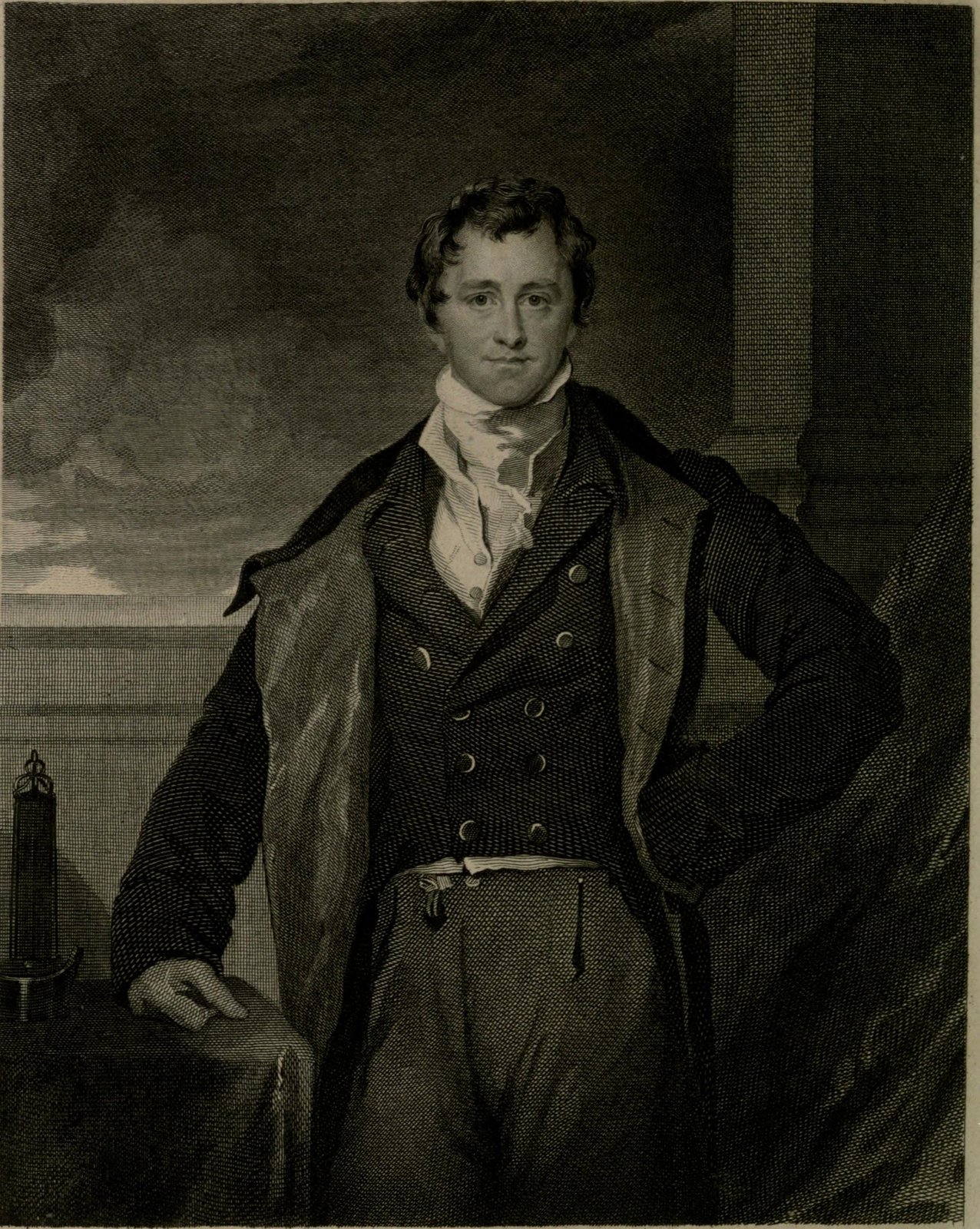
Engraving by W. H. Worthington after Sir Thomas Lawrence, marked 'Engraved by permission of the Council of the Royal Society from the original painting', London, 1831; Internet Archive metadata for this scan: NOT_IN_COPYRIGHT · Frontispiece engraving in John Ayrton Paris, The Life of Sir Humphry Davy, vol. 1 (London: Henry Colburn and Richard Bentley, 1831), via Internet Archive (University of California Libraries copy), page image leaf n5 cropped to the plate and downsized to 1600 px · Public domain (published in London in 1831; engraver W. H. Worthington and painter Sir Thomas Lawrence both died before 1850)
chemist · 19th Century
1778–1829
Not yet included in personality matching — the documented evidence doesn't yet cover enough of the personality model. Everything else on this page is fully available.
In October 1807 Davy obtained the first decisive result in decomposing potash with a large voltaic battery, and on 19 November 1807 he delivered his Bakerian lecture to the Royal Society on the decomposition of the fixed alkalies and the new metal-like substances that form their bases: potassium and sodium. He went on to decompose the alkaline earths, and the Science History Institute lists calcium and magnesium among the elements he isolated; Paris adds boron from boracic acid.
In his Bakerian lecture of 1810 and a memoir read in February 1811, Davy argued that the gas then called oxymuriatic acid contains no oxygen but is a simple substance, which forms muriatic acid (hydrochloric acid) by combining with hydrogen. Paris says the view went against the belief of European chemists for nearly thirty years and set off an acute controversy, and David Knight credits Davy with establishing chlorine as an element and showing that hydrochloric acid contains no oxygen, which undercut Lavoisier's idea that oxygen is in all acids.
After the Rector of Bishopwearmouth, Dr Gray, invited him to look into explosions in Northumberland and Durham collieries, Davy visited the mines in August 1815, took samples of fire-damp, and wrote to Gray on 30 October 1815 that he had found a safe lamp. The wire-gauze lamp was tested in the mines in 1816 and found to work in practice, and the Science History Institute says it substantially reduced coal-mine deaths per ton of coal in the following years.
In 1798 Davy became superintendent of Thomas Beddoes's Medical Pneumatic Institution in Bristol, where he investigated the effects of nitrous oxide ('laughing gas'). In 1801 he was appointed to the Royal Institution in London, where, in the Science History Institute's words, he became the most popular scientific lecturer in London in the 1800s; he also lectured on chemistry to the Board of Agriculture.
At Bristol, Cottle records, Davy tried to breathe nitrous gas, a deadly one. To keep its oxygen from forming nitric acid in his lungs, he first emptied his lungs with several breaths of nitrous oxide from a second bag, then took a single breath of the nitrous gas. It burned his throat and caused a spasm, he stopped at once, and he wrote of it, 'I never design again to repeat so rash an experiment.' Cottle says he had warned Davy of the danger of his gas trials.
Deliberately breathing an untested gas, with a precaution of his own design, is consistent with a high tolerance for risk in the laboratory; stopping at once and recording that he would not repeat it shows the risk was weighed, not ignored. The account comes through his friend Cottle, who also recorded his own warnings. Risk Tolerance
In autumn 1815, after Davy had tried the lamp in mines with the colliery manager John Buddle, Buddle told him he might have made five or ten thousand pounds a year by patenting it. According to Paris and Thorpe, Davy answered that he had never thought of it and that his object was to serve humanity. The coal-owners later gave him a service of plate worth about 2,500 pounds, which he asked to be made as a dinner service.
Declining a patent is consistent with a motive to have the invention used, but the account comes from Buddle's letter and Davy's own words as repeated by two admiring biographers, and he accepted the owners' plate, so the motive is shown as mixed rather than purely disinterested. Impact Motivation
In 1808 Davy held that muriatic acid contained a large share of water and that oxymuriatic acid contained oxygen. Paris says he began to doubt it when charcoal, freed of hydrogen and moisture and heated white-hot by the voltaic battery in oxymuriatic or muriatic acid gas, produced no change. He retraced his steps and, in his 1810 Bakerian lecture, argued that oxymuriatic acid is a simple body, which led to one of the sharpest controversies in chemistry of the period.
Reversing his own published position when an experiment failed to give the expected result is consistent with updating beliefs on evidence; the source is a secondary account of his papers. Belief Updating
People whose overall profiles resemble theirs.