Marie Curie
93% Profile Match
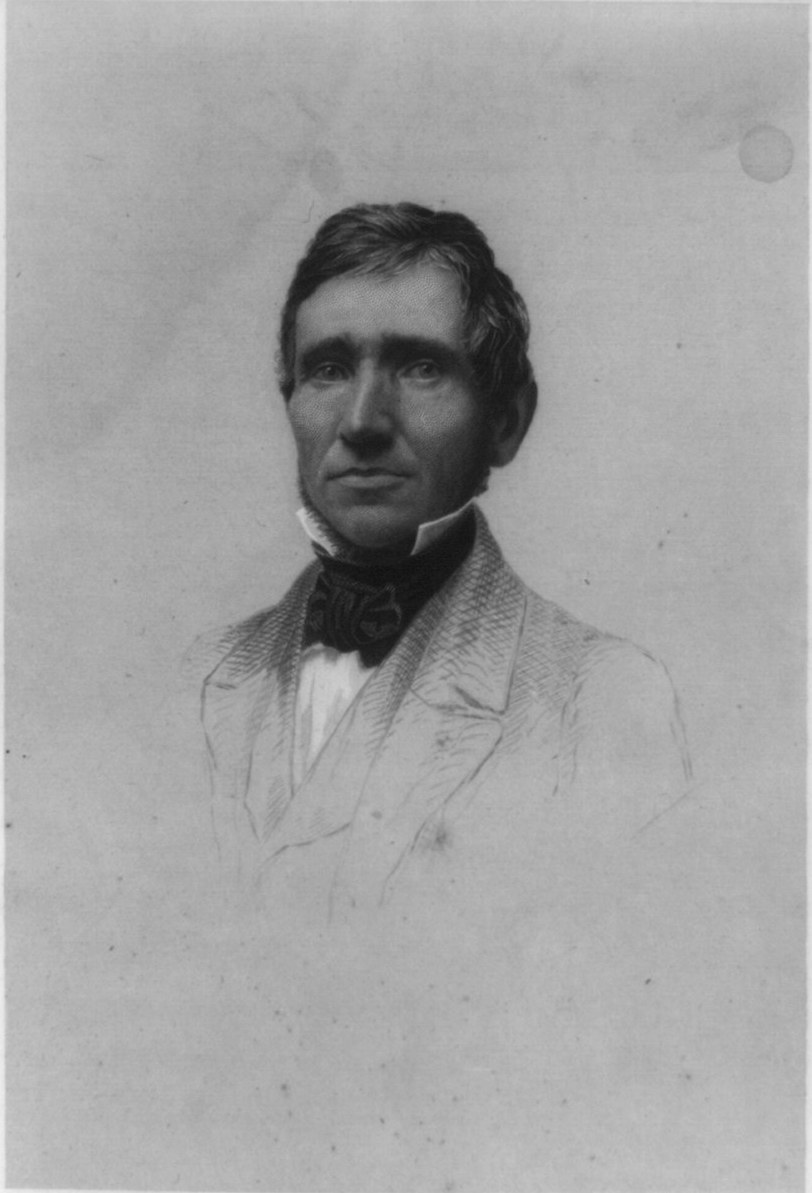
William G. Jackman, 'Charles Goodyear', engraving, published by D. Appleton & Co., New York (date not recorded on the Library of Congress caption card; a nineteenth-century print); Library of Congress Prints and Photographs Division, record reads 'No known restrictions on publication' · Library of Congress Prints and Photographs Division, BIOG FILE - Goodyear, Charles (reproduction numbers LC-USZ6-7162 and LC-USZ6-57), engraving by W. G. Jackman published by D. Appleton & Co., New York, via Wikimedia Commons 'Charles Goodyear LCCN2002717061.jpg'; plate cropped to the engraved portrait (blank caption margins removed) · Public domain
inventor · 19th Century
1800–1860
Not yet included in personality matching — the documented evidence doesn't yet cover enough of the personality model. Everything else on this page is fully available.
Goodyear developed vulcanization, the heating of India rubber with sulphur so that it no longer melts in heat or stiffens in cold. Biographers date the key observation to the winter or spring of 1839, when a lump of rubber-and-sulphur compound touched a hot stove at Woburn, Massachusetts, and charred instead of melting. Accounts differ on details of that scene, and Goodyear said the result came from close observation rather than luck. It took him years more to find the right proportions and temperature, and his United States patent issued on 15 June 1844.
Goodyear patented the process and licensed it to manufacturers, and worked out applications for the new material: rubber cloth with fibre mixed in, shoes, shirred elastic goods and hard rubber for items such as combs. Peirce, quoting Parton, reports that by 1865 American makers were producing about 1.5 million pairs of rubber shoes a year. At the 1851 Great Exhibition in London he showed rubber goods, including hard-rubber furniture, in a display court.
Goodyear's patent was tested in court. In the 1852 case Goodyear v. Day, argued by Daniel Webster for Goodyear and Rufus Choate for the defendant, Judge Grier held that others had tried sulphur and heat without perfecting anything and that Goodyear was the original inventor of the vulcanizing process. In England, Thomas Hancock's patent, sealed on 21 November 1843, was held valid, and Goodyear's English patent of 30 January 1844 did not give him the same footing there.
In 1838 Goodyear met Nathaniel Hayward, a former rubber-factory foreman in Woburn who dried rubber with a little sulphur and said the method had come to him in a dream. Parton writes that Goodyear saw the sulphur give the same result as his own nitric-acid process, though he did not at first realise the two shared the same chemistry. He bought Hayward's patent, which Judge Grier dates 24 February 1839, and employed him.
Connecting another man's overlooked process to his own result and buying the rights is consistent with opportunity sensing. The sources also say he did not yet understand why it worked, so this is a move on a signal, not on an explanation. Opportunity Sensing
After the stove observation, Goodyear tested what heat and time did to the compound. Witnesses in the later patent trials, quoted by Parton, described him baking batches in his wife's oven for one, three or six hours, boiling samples, burying them in hot sand and asking factory foremen for oven time after hours. Having no suitable oven, he and his family built one of brick in a factory yard and paid the mason in aprons made of his own rubber cloth.
Varying time, temperature and proportions batch by batch and building his own apparatus is consistent with experimentation; the details come from trial witnesses as retold by his biographers. Experimentation
Goodyear received a government order for 150 rubber mail bags and made the order public, hoping it would prove his nitric-acid process. The bags were left hanging in the factory over a summer and began to soften and drop from their handles, because the treatment had cured only the surface. Peirce reports Goodyear blamed the lead and colouring he had mixed in. The failure ended that business, and friends and family urged him to stop experimenting. He kept working with sulphur, which led to the 1839 observation.
Carrying on with sulphur after a public failure and advice to stop is consistent with persistence; the two biographies differ on the cause of the failure, and both rest largely on Goodyear's own account. Persistence
People whose overall profiles resemble theirs.