Ada Lovelace
94% Profile Match
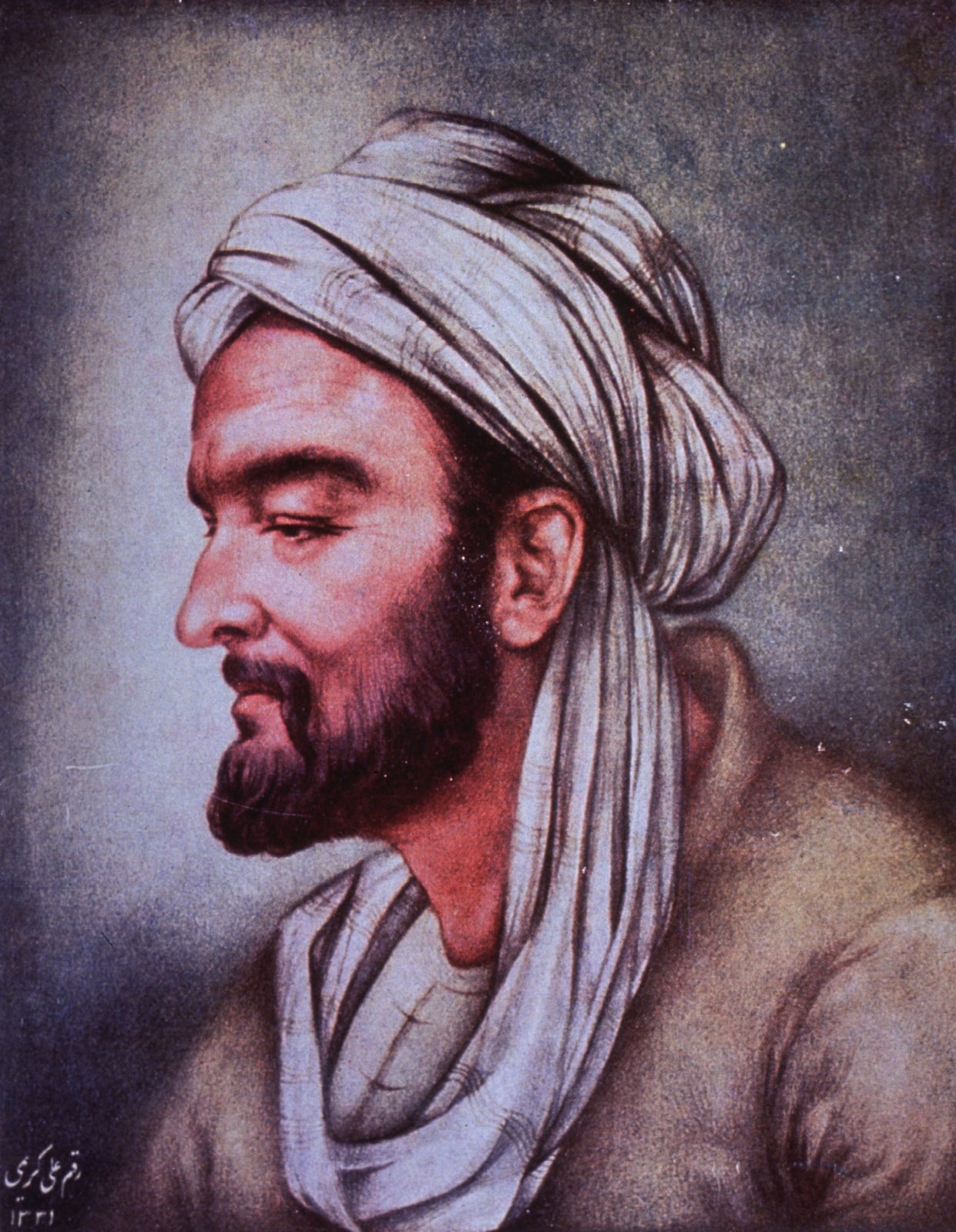
U.S. National Library of Medicine — painted profile portrait, colorized halftone reproduction dated 1952 (not a lifetime likeness) · Wikimedia Commons (hosted locally by this app as a resized/compressed derivative; see licenseUrl for the full-resolution original) · No known copyright restrictions
980 — Born.
Teens — By his own account, treated the Samanid ruler Nuh ibn Mansur and gained access to the royal library.
Young adulthood — By his own account, a commentary by al-Farabi gave him the key to understanding Aristotle's Metaphysics.
c. 1020s — Completed his two major works: the Canon of Medicine and Kitab al-Shifa (The Book of Healing).
1037 — Died in Hamadan.
His Canon of Medicine organized then-known medical knowledge — diseases, their causes, and their treatments — into a single, structured taxonomy rather than a loose compilation of case notes, and the resulting text was used as a standard medical reference in both the Islamic world and Europe for several centuries.
Alongside medicine, he produced a separate philosophical encyclopedia, Kitab al-Shifa (The Book of Healing), covering logic, physics, mathematics, and metaphysics in its own deliberate book-and-section structure — a second, independently organized body of work rather than a byproduct of his medical writing.
A surviving bibliography attributes him with more than 240 works across medicine, philosophy, logic, astronomy, and poetry — sustained written output he produced alongside a separate, demanding career as a court physician and, later, as vizier to a ruling court.
By his own account, he successfully treated the Samanid ruler Nuh ibn Mansur as a young physician still in his teens, and used the resulting favor specifically to gain access to the ruler's extensive royal library — a named, dated episode rather than a general claim about early ambition.
The sequence is the interesting part for the profile's opportunity_sensing score: the medical success came first, and by his own account the library access was something he deliberately pursued using the goodwill it created, not a passive perk that simply followed from being a talented young physician. Opportunity Sensing
Historical accounts describe him escaping a period of imprisonment in disguise during one of the political upheavals of his career — a single vivid episode, not part of a broader documented pattern of similar escapes.
For an extended period, he worked closely with his student and secretary al-Juzjani, who assisted with his later writing and personally preserved the autobiography Ibn Sina dictated — nearly everything known about his early life comes down to us through this one working relationship.
By his own account, he reread Aristotle's Metaphysics roughly forty times as a young man without fully grasping it, until a short commentary by al-Farabi, encountered almost by chance, gave him the key to understanding it. Only after that breakthrough did he move on to writing his own original philosophical work, rather than remaining stalled on someone else's text.
Worth reading as more than a simple persistence anecdote: forty readings show real staying power, but what actually broke the impasse was someone else's short commentary, not further repetition of his own approach — a reminder that a high persistence score describes effort sustained, not necessarily the method that finally works. Persistence
People whose overall profiles resemble theirs.