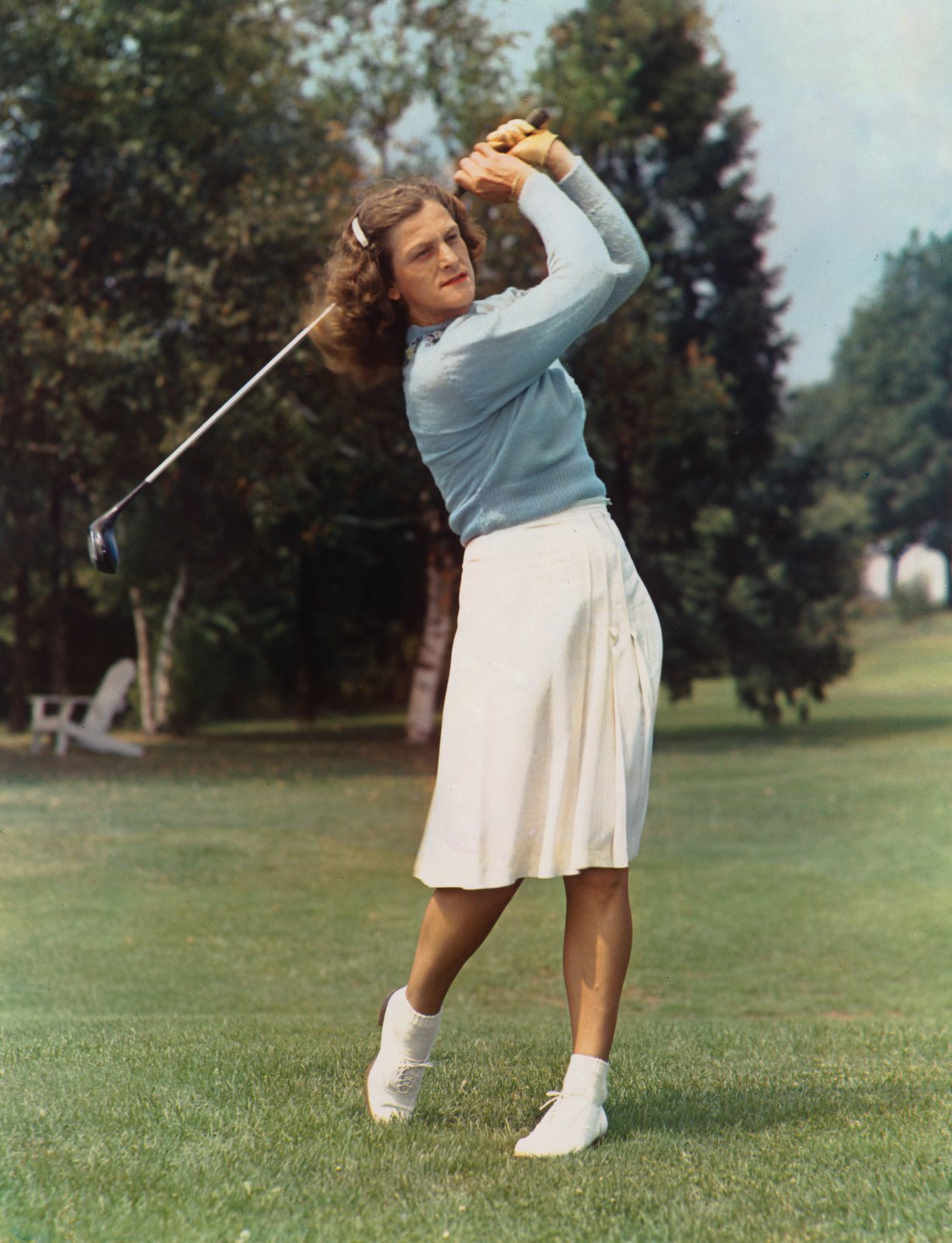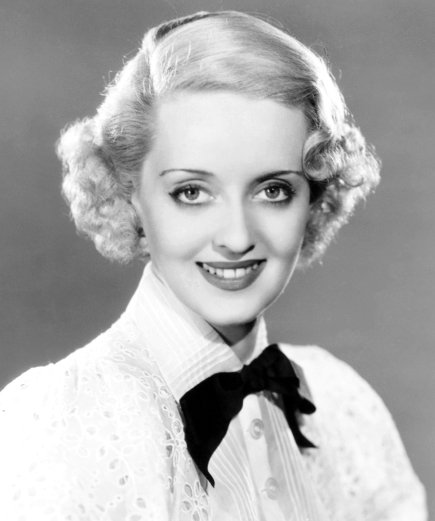

Harry Warnecke, with Robert F. Cranston and August 'Gus' Schoenbaechler, '"Babe" Didrikson', color carbro print, 13 Aug 1947; National Portrait Gallery, Smithsonian Institution (NPG.97.211), CC0 · National Portrait Gallery, Smithsonian Institution (NPG.97.211), Smithsonian Open Access, via Wikimedia Commons · CC0 1.0
athlete · 20th Century
Babe Didrikson Zaharias
1911–1956
Known For
Not yet included in personality matching — the documented evidence doesn't yet cover enough of the personality model. Everything else on this page is fully available.
Trait Constellation
Key Achievements
At the 1932 national AAU track and field championships in Evanston, Didrikson was the only athlete entered for the Employers Casualty Company team of Dallas. She competed in eight events, won five, tied for first in the high jump and placed fourth in the discus, scoring 30 points; the runner-up team scored 22.
At the 1932 Los Angeles Olympics she won the javelin with a world-record throw on her first attempt and the 80-metre hurdles in a world-record 11.7 seconds. In the high jump she cleared the same height as Jean Shiley, but officials ruled her head-first technique illegal in the jump-off, and she received the silver medal.
Turning to golf, she won the 1947 British Ladies Amateur, the first American to take that title, and then turned professional. In 1948-49 she helped found the Ladies Professional Golf Association, led its money list from 1949 to 1951, served as its president from 1952 to 1955 and won the U.S. Women's Open three times.
Moments That Reveal Them
Fellow professionals interviewed by golf historian Rhonda Glenn described her on the 1950s tour. Barbara Romack recalled that in 1951, after being outdriven on the first holes, Didrikson told her it 'might be better if you didn't outdrive me'; Betsy Rawls said she had never seen anyone take losing less gracefully. Friends told Sports Illustrated in 1975 that she would lend a club in a practice round and take it back once it started working for them.
These recollections, from rivals and friends alike, are consistent with a strong drive to beat other players specifically, a drive that some of those players resented. Competitiveness
Her sister recalled her in Dallas hitting golf balls after dark, with tape over her torn hands, refusing to stop. Gene Sarazen, who toured with her in 1935, told Sports Illustrated that she learned by watching him from a few feet away and then practising for hours, and that he knew of only one golfer, Ben Hogan, who practised more. Her 1956 New York Times obituary also reported practice sessions of up to 1,000 balls a day.
This practice record offers one example of mastery orientation: for years she kept drilling the skills of a sport that was new to her, well beyond what her exhibition schedule required. Mastery Orientation
Turning Points
In 1935, soon after she won the Texas women's championship, the U.S. Golf Association ruled her ineligible to compete as an amateur, which shut her out of almost every women's tournament. She played paid exhibitions, including a 1935 tour with Gene Sarazen, then in 1940 gave up professional golf and waited out the required three years. Her amateur status was restored in January 1943.
The eight years between the ban and her later amateur titles sit alongside other evidence of persistence in her record: she kept pursuing tournament golf through a long institutional setback rather than leaving the sport. Persistence
Similar People
People whose overall profiles resemble theirs.

Marcus Aurelius

Warren Buffett

Muhammad Ali

Sojourner Truth

Gertrude Bell
Opposite Profile
Not a rival — a different profile shape worth a look.

Ludwig Wittgenstein
Sources
- Babe Didrikson Zaharias (Q231983) -- identity verified live via wbgetentities (2026-10-02): label 'Babe Didrikson Zaharias', description 'American golfer and athlete', P569 26 Jun 1911, P570 27 Sep 1956, citizenship United States (Q30), instance of human; ko label and kowiki sitelink '베이브 디드릭슨'; P18 'Babe Didrikson Zaharias 1938.jpg' and 'Mildred "Babe" Didrikson Zaharias, 1911-1956 (portrait) (cropped).jpg'. Orientation only; not used as support for any row.
- Susan E. Cayleff (historian; author of Babe: The Life and Legend of Babe Didrikson Zaharias, 1995), 'Zaharias, Mildred Ella Didrikson [Babe]', Handbook of Texas Online, Texas State Historical Association -- scholar's encyclopaedia entry (non-self, secondary). Fetched with curl and read in full. Used: 1930 recruitment by Employers Casualty, the 1932 AAU championships as a one-woman team (8 events entered, 30 points), the 1932 Olympic results and the head-first high-jump ruling, the AAU suspension and turn to professional exhibitions 1932-34, golf lessons with Stan Kertes 1933, the 1935 Texas Women's Amateur and USGA ineligibility ruling, reinstatement 1943, LPGA founding and presidency 1952-55, and its summary that her 'self-congratulatory manner' irritated some fellow athletes. Its passages on her private relationships, her illness and her death are NOT used.
- William O. (Bill) Johnson and Nancy Williamson, 'Babe' (three-part series, Sports Illustrated, 6, 13 and 20 Oct 1975; the vault shows the byline 'SI Staff'; authorship confirmed by the 6 Oct 1975 'Letter from the Publisher', which also records that the authors found her autobiography of little use ('a bomb') and drew on a cache of her letters kept by friends; read via Wayback Machine captures because the live vault URLs redirect) -- journalists' reconstruction (non-self) from interviews with people who knew her (sister Lillie Grimes, PE teacher Beatrice Lytle, Ruth Scurlock, schoolmate Raymond Alford, Olympic team-mates Evelyne Hall and Jean Shiley Newhouse -- both adversarial -- Gene Sarazen, Patty Berg, Peggy Kirk Bell, Bertha Bowen, Braven Dyer, Emory Olive, Fred Corcoran, George Zaharias, Betty Dodd) and her 1930-34 letters to Beaumont sports editor Tiny Scurlock (self). All three parts read in full from the local text. Used: the 1930-31 Scurlock letters (training plan, pay ploy), the 1932 AAU meet and Olympic train trip (Hall, Shiley), the 1932 Olympic hurdles and high jump, golf practice (Lillie Grimes, Sarazen), the 1935 Texas championship and USGA ban, the 1940-43 reinstatement, the LPGA founding, the appearance-money dispute (Hicks), on-course gamesmanship (Dodd, Bell). Its private-life, marriage, Betty Dodd relationship, family-money, illness and death passages are NOT used; its 'greatest' judgements and its own editorial adjectives ('braggart', 'prima donna') are not used as evidence.
- Xth Olympiade Committee, The Games of the Xth Olympiad Los Angeles 1932: Official Report (1933), pp. 476-490 (Track and Field Athletics -- Women: narrative summary, records table, 80 m hurdles, high jump and javelin result pages) -- organising committee's official record (non-self, institutional), read as page full-text from the LA84 Foundation Digital Library (CONTENTdm collection p17103coll8, compound object 8040) after the Internet Archive copy (los-angeles-olympics-report) proved to have only partial OCR. Used for event facts only: she entered three events; won the javelin with a world record on her first throw (43.68 m); won the 80 m hurdles final in 11.7 s ahead of Evelyne Hall in what the report calls one of the two closest finishes of the Games; in the high jump she 'jumped as high as the winner, being tied for first place, but she was ruled out in the jump-off for illegal jumping' (the results table lists her 2nd at 1.64 m against Shiley's 1.67 m). Supports no behavioural row on its own.
- 'Babe Zaharias Dies; Athlete Had Cancer', The New York Times, 28 Sep 1956 (Special to The New York Times; NYT Learning Network 'On This Day' reprint) -- CONTEMPORARY journalist's obituary (non-self), carrying her own remarks (self) and Eisenhower's statement. Fetched with curl and read in full. Used: that when she turned to golf she drove 'as many as 1,000 golf balls a day' and played until her hands had to be taped; her 'As long as I am improving I will go on' remark (self); that in her younger days she goaded rivals with 'Yep, I'm gonna beat you' and later encouraged younger players; her 1947 professional turn. Its health, treatment and death passages are NOT used; its 'greatest female athlete' heading (an AP poll) is not used; its birth date (1914) is wrong and is not used.
- Rhonda Glenn (USGA; women's golf historian), 'The Triumph Of Her Life', USGA.org, 25 Jun 2011 (read via a Wayback Machine capture because usga.org returned 'Access Denied' to curl) -- golf historian's narrative account (non-self) of the 1954 U.S. Women's Open with interview testimony from fellow professionals Betsy Rawls, Louise Suggs (a rival; adversarial), Mickey Wright and Barbara Romack, and from Bertha Bowen and Peggy Kirk Bell. Read in full from the local text. Used ONLY for quoted testimony and documented actions: Rawls ('I don't think I've ever seen anybody that took losing less gracefully'), Suggs ('Babe had to win and she didn't give a damn how'), Wright ('She had no intention of having a youngster do as well as she did'), the 1951 Romack 'better if you didn't outdrive me' remark, the Bowens' 1935 attempt to have the USGA ruling rescinded, and her demanding appearance money. Its reconstructed inner thoughts and its illness, colostomy, marriage and Betty Dodd passages are NOT used.