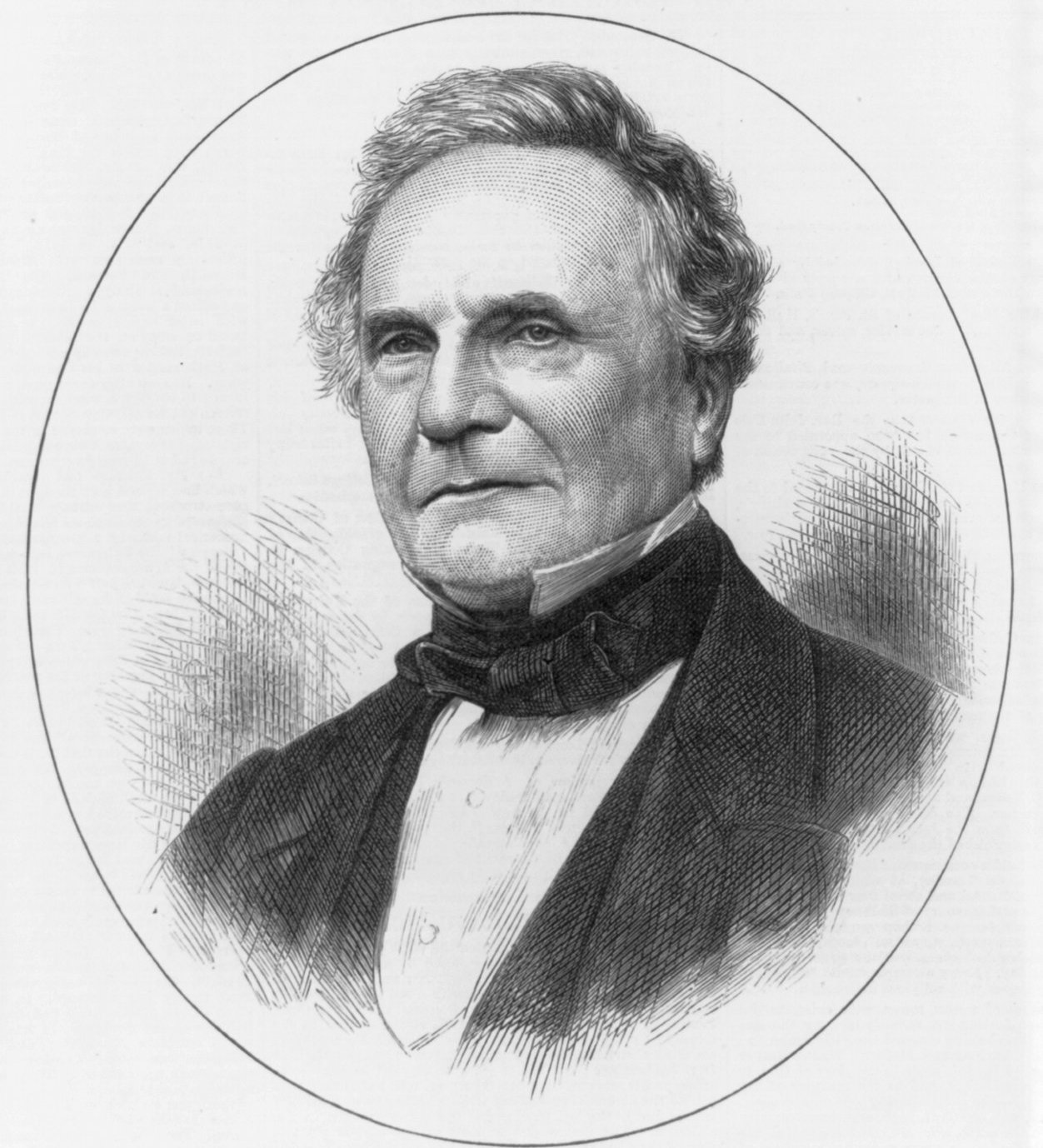

'The late Mr. Babbage', wood engraving (attributed on Commons to Thomas Dewell Scott) after an 1860 photograph, The Illustrated London News, 4 November 1871, p. 424; Library of Congress Prints and Photographs Division, no known restrictions on publication; masthead and caption cropped · Library of Congress, Prints and Photographs Division (LC-USZ62-66023; wood engraving from The Illustrated London News, 4 Nov. 1871, v. 59, p. 424), via Wikimedia Commons · Public domain
핵심 특성
주요 업적
배비지는 1821년부터 차분법으로 수학표를 계산하고 인쇄하는 차분기관을 설계했으며, 재무부가 자금을 대고 공구 제작자 조지프 클레멘트가 부품을 만들었다. 작업은 1833년에 멈추어 기계는 끝내 완성되지 못했지만, 1832년에 조립한 시연용 부분은 지금도 작동한다. 1847~1849년에는 더 단순해진 차분기관 2호를 설계했다.
1834년부터 그는 천공 카드로 제어하는 범용 계산 기계인 해석기관을 설계했다. 수를 저장하는 '스토어'와 연산을 맡는 '밀'이 따로 나뉜 구조였다. 이 기계는 제작되지 않았다. 루이지 메나브레아가 토리노에서 들은 배비지의 설명을 바탕으로 1842년에 이 기계를 소개했고, 1843년 에이다 러브레이스는 이 글을 영어로 옮기며 방대한 주석을 직접 덧붙였다.
그는 1812년 무렵 케임브리지 학생 시절 유럽 대륙식 미적분 표기법을 보급하려는 해석학회 창립에 참여했다. 1820년에는 존 허셜, 조지 피콕과 함께 라크루아의 미적분 교과서를 영어로 번역해 출간했고, 이후 1828년부터 1839년까지 케임브리지 대학교 루카스 수학 석좌교수를 지냈다.
삶의 장면들
1834년 『에든버러 리뷰』는 배비지가 차분기관에서 동시에 일어나는 모든 움직임을 기억만으로는 추적할 수 없었다고 전했다. 그는 1826년 논문에서 설명한 '기계 표기법'을 고안해, 각 움직임을 근원까지 거슬러 추적하고 모든 부품이 매 순간 무엇을 하는지를 도표로 나타냈다. 그 덕분에 부품끼리의 충돌을 실제 제작 전에 종이 위에서 찾아낼 수 있었다.
금속을 깎기 전에 기계 전체를 기호로 된 지도로 먼저 그려 둔 방식은 이 프로필의 높은 시스템 사고 점수와 부합한다. 시스템적 사고
1830년 배비지는 왕립학회의 운영 방식을 공개적으로 비판한 책 『영국 과학의 쇠퇴에 관한 고찰』을 펴냈으며, 이 책에는 학회 임원들을 실명으로 평한 대목도 있다. 경쟁자였던 조지 에어리의 자서전에 따르면 비슷한 시기에 배비지는 그리니치 천문대 감독위원회의 개편을 밀어붙인 '개혁파'의 일원이기도 했다.
과학계의 기성 권위에 실명을 들어 공개적으로 맞선 일은 이 프로필에 기록된 높은 갈등 감내 성향을 보여 주는 한 사례다. 컴퓨터 역사 박물관의 서술에 따르면 이런 태도 때문에 그는 훗날 필요했던 지지를 잃기도 했다. 갈등 감내
전환점
1833년 클레멘트는 대금 지급과 작업장 이전 비용 청구를 둘러싼 분쟁 끝에 차분기관 작업을 중단하고 직공들을 내보냈다. 1843년 배비지의 문서를 바탕으로 작성된 진술서과 새뮤얼 스마일스가 쓴 클레멘트 전기는 이 일을 서로 반대편에서 전한다. 결정을 내려 달라는 요청이 몇 해 동안 이어진 끝에 정부는 1842년 11월 사업에서 손을 뗐고, 배비지는 직접 비용을 대어 고용한 제도사들과 함께 해석기관 설계를 계속했다.
공적 자금이 끊긴 뒤에도 사비를 들여 작업을 이어 간 일은 이 프로필에서 평가한 끈기와 나란히 놓인다. 다만 같은 시기의 기록은 그 끈기가 생전에 기관의 완성으로 이어지지는 못했음도 보여 준다. 끈기
비슷한 인물
전체적인 프로필이 이 사람과 닮은 사람들이에요.
출처
- Charles Babbage (English Wikipedia) -- orientation only (identity, dates, occupations); not used as support for any scored row. The Korean Wikipedia page 'ko:찰스 배비지' was confirmed to exist via the Wikidata sitelink (title only).
- Charles Babbage (Q46633) -- identity verified live through the Wikidata API (wbgetentities: labels, descriptions, claims, sitelinks): en label 'Charles Babbage', description 'English mathematician, philosopher, and engineer (1791–1871)', ko label '찰스 배비지', born 1791-12-26, died 1871-10-18, citizenship United Kingdom of Great Britain and Ireland (Q174193), P18 'CharlesBabbage.jpg' and 'Charles Babbage - 1860.jpg', kowiki title '찰스 배비지'. Orientation only.
- Charles Babbage, Passages from the Life of a Philosopher (London, 1864), Project Gutenberg #57532 full text downloaded and read locally -- SELF (autobiography; one self perspective, written in old age and openly aggrieved). Read: ch. II (Childhood), ch. IV (Cambridge: Lacroix purchase 1811, Analytical Society), ch. V (Difference Engine No. 1: origin 1812-13 anecdote, 1819-22 models, the wheel-cutter episode), ch. VIII (Analytical Engine: workshops, forge and foundry, drawing office, carrying the tens by anticipation, retaining the chief draftsman), ch. XXV (Railways: the 1838-39 Great Western experimental carriage). Never the sole support for a row.
- 'Statement relative to the Difference Engine, drawn up by the late Sir H. Nicolas from the Author's Papers' (dated August 1843), reprinted as ch. VI of Passages from the Life of a Philosopher (1864), Gutenberg #57532, read in full (pp. 68-96 of the original) -- SELF/ADVOCATE perspective (compiled by the antiquary Sir Harris Nicolas from Babbage's own papers and letters to the Treasury 1823-42; it quotes Babbage's letters of 1830, 1836, 1838, 1841-42 and records the 1833 stoppage by the engineer Joseph Clement, the 1834-38 requests for a decision, the Government's 4 Nov. 1842 withdrawal and the 11 Nov. 1842 interview with Peel). Treated as part of the same self perspective as the autobiography; never sole support.
- Charles Babbage, Reflections on the Decline of Science in England, and on Some of Its Causes (London, 1830), Project Gutenberg #1216 full text -- SELF. Structure and the sections ch. IV 'State of the Royal Society in particular' (sections on the presidency, secretaryships, funds, medals, causes, plan for reforming the Society) and ch. V 'Of Observations' (hoaxing, forging, trimming, cooking) read. Used only as the dated public act itself (an 1830 book-length public criticism of the Royal Society's officers and management), with non-self corroboration from Airy and the Computer History Museum.
- 'Babbage's Calculating Engine', Edinburgh Review no. CXX (July 1834), Art. I, anonymous review-essay conventionally attributed to Dionysius Lardner (Gutenberg #71292 lists it under Babbage's name; the text speaks of 'Mr Babbage' in the third person and Smiles 1863 cites it as 'Dr. Lardner's account'). Full text read, especially the passages on the drawings and mechanical notation and the closing section on the 1829 Royal Society committee report and the 1833-34 suspension. CONTEMPORARY JOURNALIST/SCIENCE-WRITER perspective: sympathetic and evidently briefed ('upon authority on which the most perfect reliance may be placed'), but it openly criticises Babbage's withdrawal from dealing with Government; it also summarises the 1829 Royal Society committee report (Herschel, Baily, Brunel, Donkin, Rennie et al.), which was not opened directly.
- Samuel Smiles, Industrial Biography: Iron Workers and Tool Makers (London, 1863), ch. XIII on Joseph Clement, Project Gutenberg #404 full text; the Clement/Difference Engine passage and its footnote read -- INDEPENDENT VICTORIAN BIOGRAPHER writing Clement's life (the engineer's side of the 1833 dispute; admiring of Clement, not of Babbage). Gives the 1823 engagement of Clement, the 400 sq ft of drawings, the cost figures, the dispute over Clement's charges for moving the works and his withdrawal with the tools.
- Autobiography of Sir George Biddell Airy, ed. Wilfrid Airy (Cambridge, 1896), Project Gutenberg #10655 full text; every Babbage passage read (1819-20 Lacroix translation and Examples by Herschel, Peacock and Babbage; the 1826 Lucasian election; the c.1830 'reforming party' on the Greenwich Board of Visitors; Airy's 15 Sept. 1842 opinion to Goulburn that the engine was 'worthless'). CONTEMPORARY, ADVERSARIAL perspective (Airy, Astronomer Royal, was a rival and a critic; journal-based entries edited by his son). Used only for dated facts, not for his judgements of the engine.
- L. F. Menabrea, 'Sketch of the Analytical Engine invented by Charles Babbage' (Bibliothèque Universelle de Genève, Oct. 1842), trans. with Notes A-G by Ada Augusta, Countess of Lovelace (Taylor's Scientific Memoirs vol. III, 1843), Fourmilab transcription downloaded; Menabrea's memoir read in full, Lovelace's Note A read (including her passage on the two engines and the suspension), the remaining Notes only skimmed -- Menabrea: CONTEMPORARY SCHOLAR, non-self, writing from Babbage's explanations during his 1840 visit to Turin; Lovelace's Notes: CLOSE COLLABORATOR/SUPPORTER (insider, sympathetic). Used for the conception and generality of the Analytical Engine and for the fact that Babbage presented his designs in Turin; the Notes' defence of him on the suspension is treated as partisan.
- Computer History Museum, 'The Babbage Engine' web exhibit (curatorial text associated with the Difference Engine No. 2 replica project, Doron Swade), pages 'Charles Babbage (1791-1871)', 'The Engines' and 'A Brief History' read in full (downloaded) -- INSTITUTIONAL/SCHOLARLY perspective, independent of Babbage, openly critical of his conduct ('prickly', 'rotten publicist', 'virulent public criticism'); its 'first computer pioneer' framing is NOT adopted. Used for dated design facts (1821 start, 1832 demonstration piece, 1833 stoppage, 1834 Analytical Engine, 1847-49 Difference Engine No. 2, experimental Analytical Engine piece at his death) and for documented range of his inventions and interests. Personal bereavements described there are NOT used.