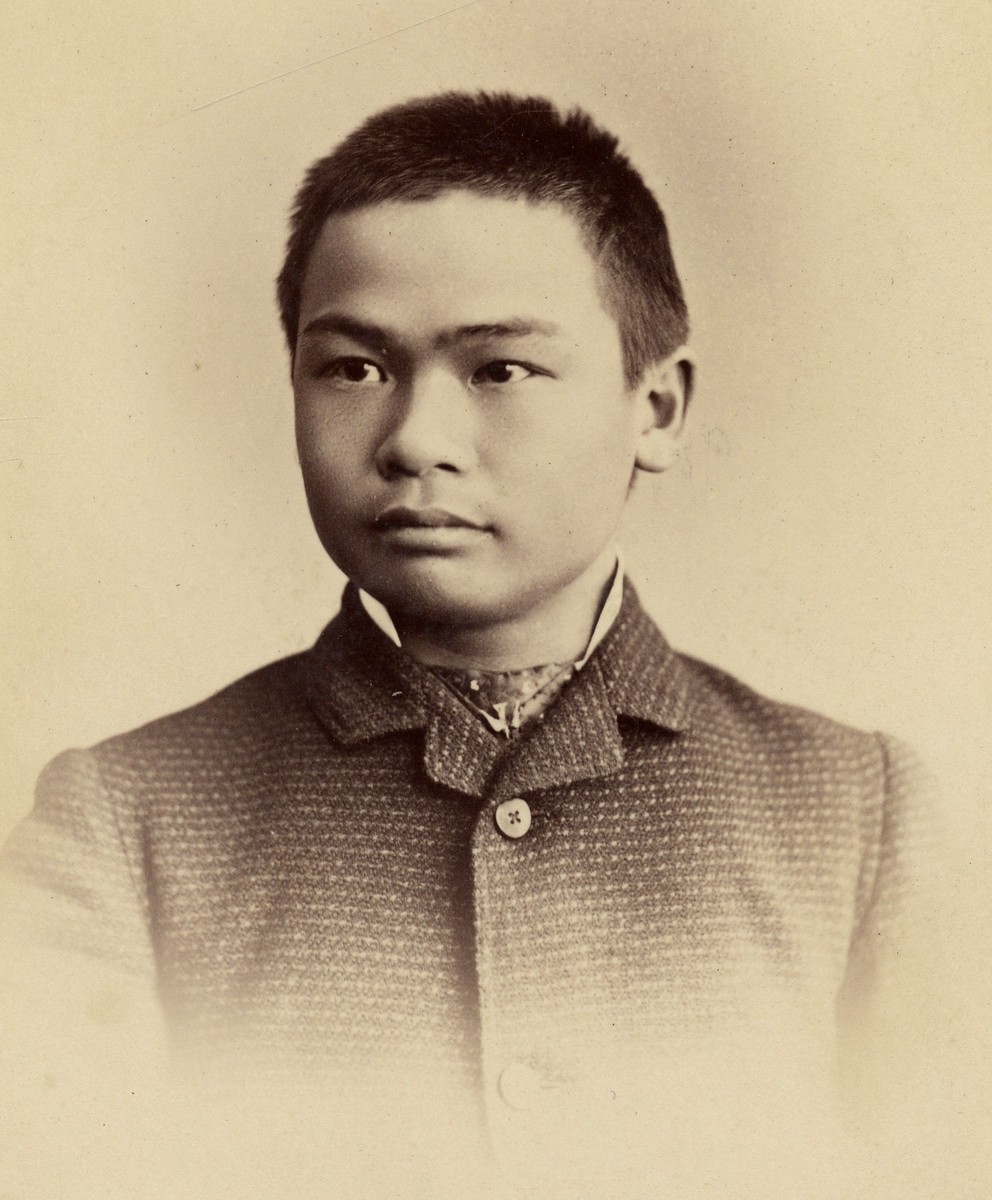
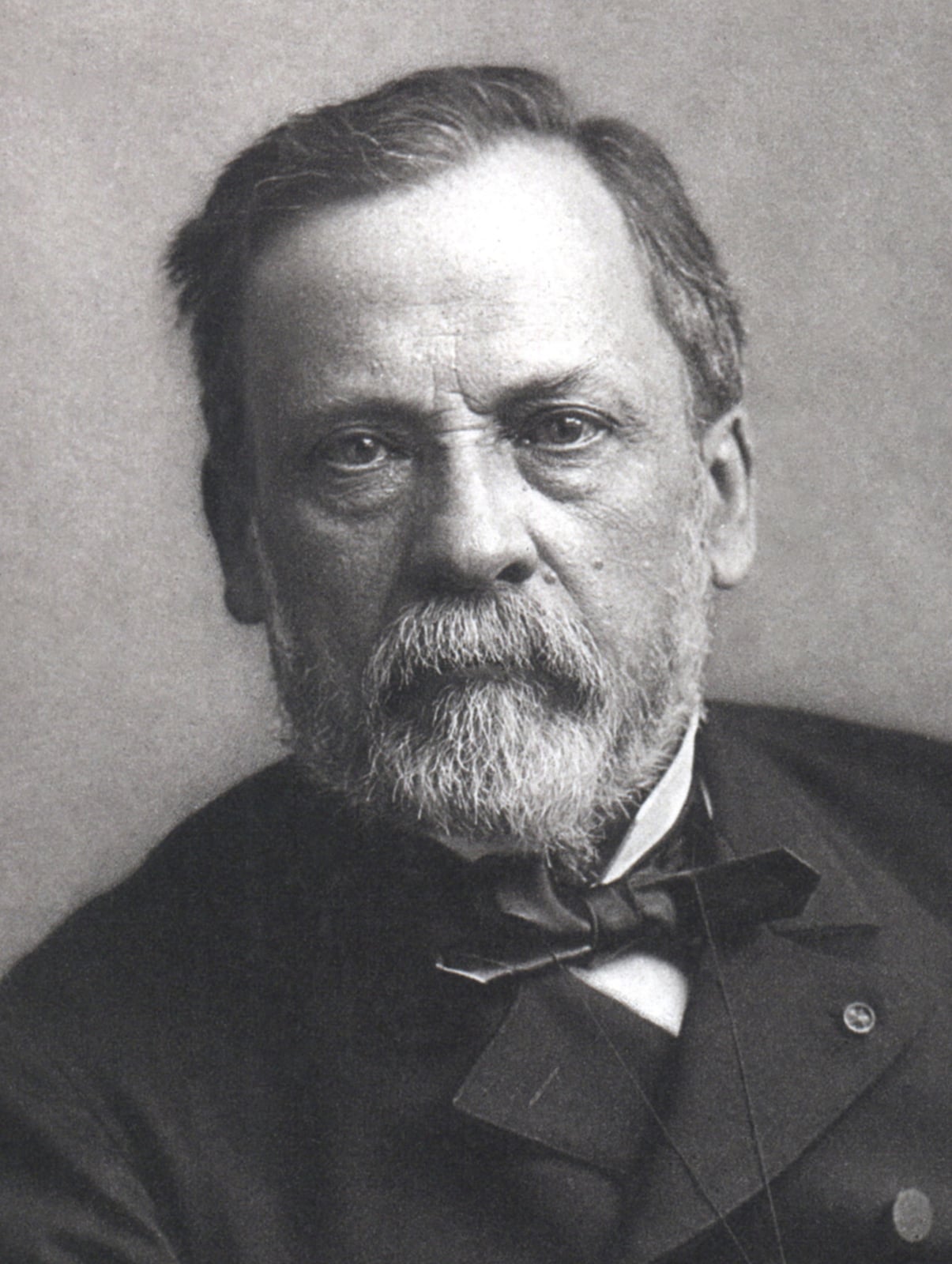
The Notman Photographic Co., Albany, NY, circa 1881, Yale University Library Manuscripts and Archives, public domain · Studio portrait photograph of Jeme Tien Yow (Zhan Tianyou), Sheffield Scientific School class of 1881, by the Notman Photographic Co., Albany, New York, circa 1881, in a class album, Yale University Library Manuscripts and Archives (call number Yb72 +881b, object 10016365). The 2575 x 3923 pixel scan was cropped to the sitter's head and torso (mount and studio imprint removed) and downscaled to 992 x 1200 with no upscaling. · Public domain: circa 1881 US studio photograph (public domain by age); Yale University Library record states 'Copyright public domain' and 'No known restrictions'
engineer · 20th Century
Zhan Tianyou
1861–1919
Known For
Not yet included in personality matching — the documented evidence doesn't yet cover enough of the personality model. Everything else on this page is fully available.
Trait Constellation
Key Achievements
He was chief engineer of the Beijing-Zhangjiakou railway, built from 1905 to 1909 and described as the first main line China designed and built itself.
He took the line through the steep Guangou pass with the Badaling tunnel and a zigzag at Qinglongqiao, and the project was reported finished about two years early and under budget.
Sent to the United States in 1872 with the Chinese Educational Mission, he graduated from Yale's Sheffield Scientific School in 1881 and went on to work on more than ten railway lines in China.
Moments That Reveal Them
After surveys in August 1905 of several candidate lines through the Guangou pass, he chose the Qinglongqiao route, and later added the Juyongguan tunnel when he found the grade too steep.
This is consistent with comparing alternatives and revising the plan on the evidence. Analytical Rigour
After the line opened he wrote in letters of 1909 and 1910 that the zigzag was not the best engineering solution and that spiral loops were preferable where possible.
This is consistent with candidly reassessing his own design choice. Belief Updating
Turning Points
In 1905, after years on the Kaiping and other lines under British managers, he became chief engineer of the Peking-Kalgan line, which was to be built without foreign engineers or capital.
This is consistent with taking charge of a large project and delivering it within its limits. Planning Orientation
Similar People
People whose overall profiles resemble theirs.

Alexander Hamilton

Ruth Bader Ginsburg

Bertrand Russell

Florence Nightingale

Carl Jung
Sources
- Zhan Tianyou (Q1397430), verified live via the Wikidata API (2026-11-06): description 'Chinese railroad engineer (1861-1919)', Korean label 첨천우 (also the Korean Wikipedia title), born 26 April 1861, died 24 April 1919. Orientation only; not used as support for any row.
- People's Daily Weekly (Renmin Zhoukan), Zhang Ziqi and Shi Wenyi, 13 October 2017, article on the Beijing-Zhangjiakou railway and Zhan Tianyou (read via a page summary, Chinese original). CANONICAL SIGNIFICANCE SOURCE (with the transportation-history page below): railway built from 1905 as the first Chinese-designed, built and operated line, about 201 km with the 1,092 m Badaling tunnel, finished two years early with about 350,000 taels saved against the budget, Zhan's Yale training (1878-81), work on more than ten lines and his 1888 start on the Tangshan-Tianjin line; it also corrects the popular claim that he 'designed' the switchback (he adopted a layout first used in South America and the United States, said himself that a spiral loop was better, and chose the zigzag for cost and schedule reasons) and credits Yuan Shikai's backing, which it says was later downplayed. State-media history piece, critical of myth-making.
- Duan Hailong, 'Extracting the Spirit of Engineers from the History of Beijing-Zhangjiakou Railway Engineering', Engineering Studies (Gongcheng Yanjiu), vol. 17, no. 5, 2025, pp. 604-613 (read via a page summary of the Chinese abstract and text). Scholarly study of the engineers on the line: surveys of 4-7 August 1905, the choice of the Qinglongqiao route among several candidates, the Juyongguan tunnel added after Zhan found the grade too steep (his letter of 16 February 1907), court deadlines and limited funds that ruled out the more ambitious Fengtai-Shacheng alignment, and his later letters of 15 September 1909 and 6 May 1910 conceding the zigzag was not the best engineering solution and favouring spiral loops. Relies partly on Zhan's own letters, so those points are self-report relayed by a historian.
- F. C. Coleman, 'The Peking-Kalgan Railway: The First Railway Financed, Engineered and Built Solely by Chinese', Scientific American, 4 November 1911, vol. 105, no. 19, p. 409 (read via a page summary). Contemporary Western account: five surveys before a route was chosen, a quoted remark of Zhan that early curves could 'break the back of a snake', a zigzag near the summit tunnel, four tunnels, the Great Wall summit tunnel, low earthwork costs credited to hiring Chinese staff directly and buying locally, and the line operating at a profit; the piece is openly advocacy for Chinese control of railway loans, gives no total cost per mile, and itself notes imported English bridge spans, Glasgow locomotives and Japanese sleepers, which qualifies its 'no foreigner' claim. Says Yale graduation 1883, which conflicts with the Yale record (1881).
- Xinhua News Agency, 'Listening to the story of Zhan Tianyou to grasp the spirit of scientists' (25 September 2025; read via a page summary). Report of a school lecture by a CRRC Nankou engineer: the zigzag layout, vertical-shaft tunnelling, the 1909 opening, his founding of the Chinese Engineering Society and his essay urging young engineers to develop study and moral character together. Official press report of a lecture with no cited primary sources; quotations are unsourced and it is used only for the society and the construction methods named.
- Transportation History blog (AASHTO-affiliated), 'Today in Transportation History - 1919: A Chinese Railroad Pioneer' (24 April 2017; read via a page summary). Chinese Educational Mission to New Haven and Yale's Sheffield Scientific School (graduated 1881), the Kaiping Railway from intern to district engineer, a 23-mile line finished within budget in 1902, chief engineer of the Peking-Kalgan line from 1905 built without foreign assistance or capital, under budget and two years early, member of the American Society of Civil Engineers and founding member of the Chinese Institute of Engineers. Unsigned blog post; its death year and age are internally inconsistent.
- China Daily, 'Following trailblazer's path' (1 October 2022; read via a page summary). Short feature: Zhan as chief designer of the roughly 200 km line opened in 1909, called the first Chinese railway designed and built without foreign assistance and the Father of China's Railways, buried with his wife at Qinglongqiao station. Brief state-media feature; used only to confirm the headline significance.
- Yale University Library, Digital Collections record 'Jeme Tien Yow (Zhan Tianyou), Sheffield Scientific School class of 1881' (object 10016365; IIIF manifest and OAI MODS record read; MacMillan Center page on the Chinese Educational Mission read for context). Class-album photograph by the Notman Photographic Co., Albany, circa 1881, Manuscripts and Archives call number Yb72 +881b; rights fields 'No known restrictions' and 'Copyright public domain'. The MacMillan Center page calls him the father of China's railroads among the mission's Yale alumni. Portrait source record for the image used.