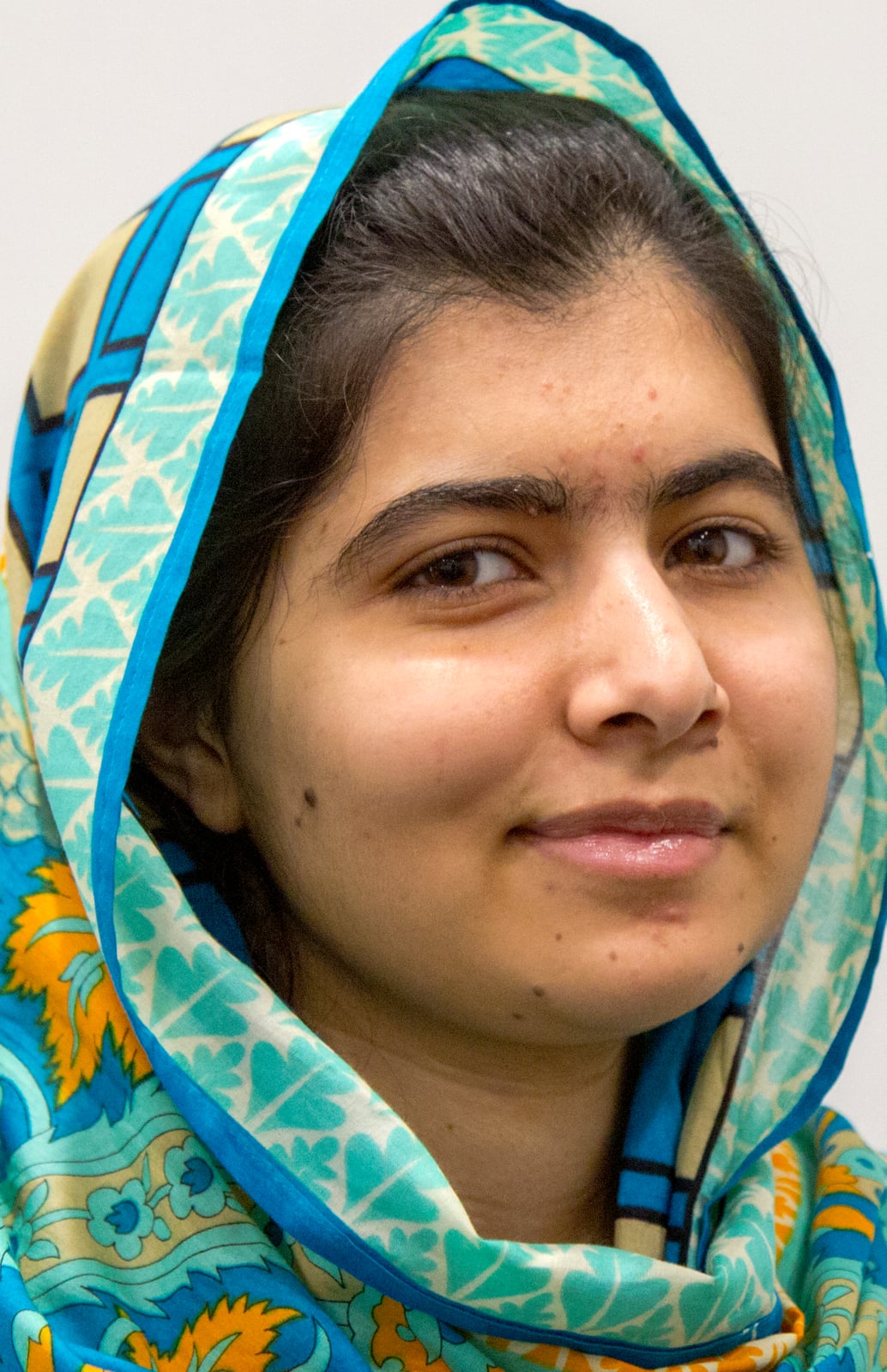
Benjamin Franklin
83% Profile Match
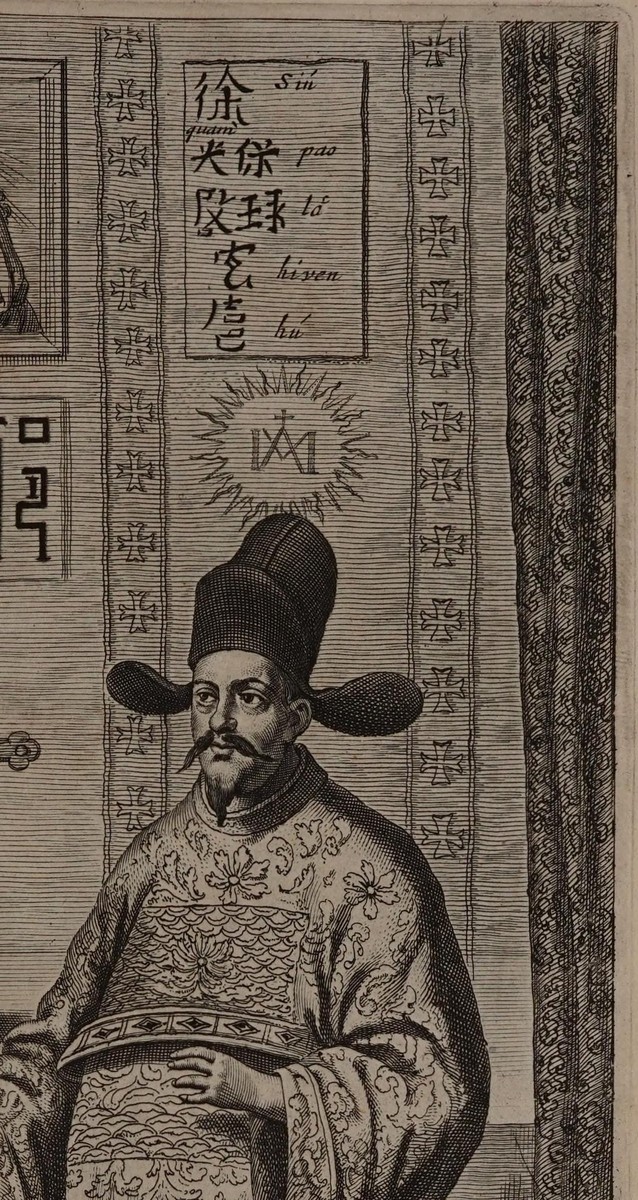
Engraver unknown, in Athanasius Kircher, China monumentis, Amsterdam, 1667. Digitised by the Wellcome Collection (https://wellcomecollection.org/works/y35ztr9n; Internet Archive item b33551364) · Engraved plate in Athanasius Kircher, China monumentis (Amsterdam: Jansson van Waesberge and Weyerstraet, 1667), showing Matteo Ricci and, to the right, Xu Guangqi named in Chinese characters in the cartouche above him. Taken from the Wellcome Collection's digitised copy (Internet Archive item b33551364, leaf 169). The right-hand figure with the name cartouche was cropped from the library's 3788 x 5708 pixel scan and downscaled to 638 x 1200, with no upscaling and no retouching. A posthumous European print, not a portrait from life; the engraver is not named. · Public domain (Wellcome Collection item-level Public Domain Mark; a book published in 1667)
Ming scholar who, working with the Jesuit Matteo Ricci, translated the first six books of Euclid's Elements into Chinese in 1607 and invented Chinese terms for geometric concepts that entered Chinese mathematics; Britannica and MacTutor call him the first of his countrymen to translate European books into Chinese.
Entrusted in 1629 with reforming the Chinese calendar after the Western-method eclipse forecast outdid its rivals on some measures, he directed Jesuit astronomers in the work, which was left unfinished at his death in 1633; modern astronomers find the Western forecast better on magnitude and duration but not on every timing.
Compiled the 60-juan agricultural encyclopedia Nongzheng quanshu, covering field systems, water conservancy, tools, crops, silk and disaster relief; it was unfinished at his death, the emperor asked for his manuscripts, and Chen Zilong's revised edition was printed in 1639.
In the translation of Euclid, Ricci explained the Latin text orally and Xu wrote down what he understood; for concepts with no Chinese words, such as point, curve, parallel line and acute angle, he invented the terms.
This is consistent with close, sustained collaboration across a language gap and a willingness to build the vocabulary a new field needed. Collaboration
When the emperor wished to punish the astronomers for a failed eclipse forecast, Xu answered that Guo Shoujing's method had also failed once, that calendars drift over time and should be corrected in good time; the emperor then ordered the Jesuits to compute the calendar with Xu as supervisor.
This is consistent with arguing for a technical remedy rather than blame, and with persuading a sceptical authority to adopt it. Persuasiveness
In 1629, after the Western-method forecast of the 21 June eclipse compared well against the Chinese and Muslim forecasts in a government contest, he was appointed to lead the calendar reform and from then directed work with Johann Terrenz, Giacomo Rho and Adam Schall.
This is consistent with years of study of European astronomy turning into a leading role in a major scientific project. Mastery Orientation
People whose overall profiles resemble theirs.