Nelson Mandela
96% Profile Match
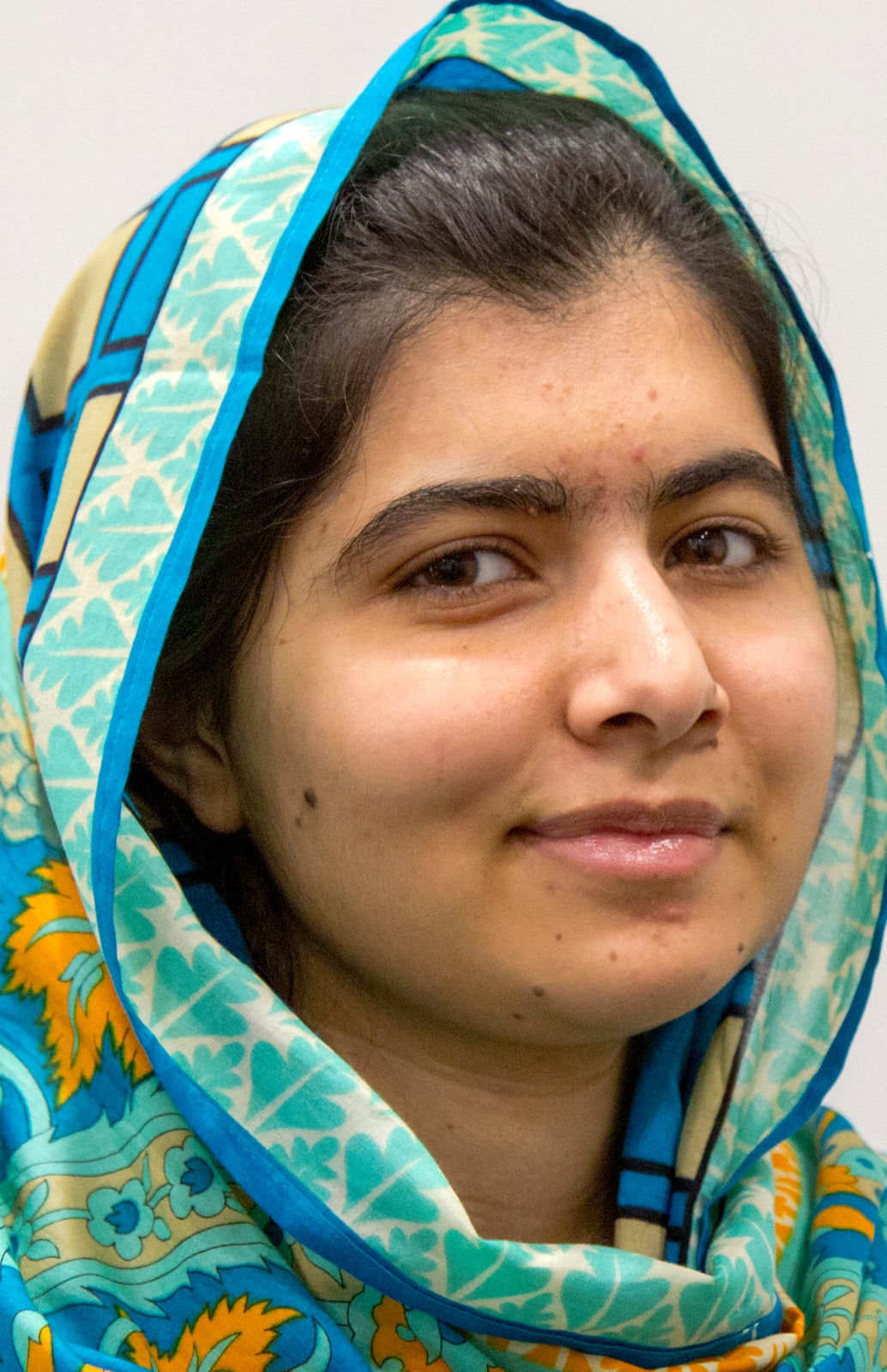
Photograph by Simon Davis / DFID (UK Department for International Development), 2015, CC BY 2.0 · Wikimedia Commons (resized derivative) · CC BY 2.0
1997 — Born in Mingora, Swat Valley, Pakistan; her father, Ziauddin, ran a school and was himself an education activist.
2009 — Wrote an anonymous blog for BBC Urdu under the pseudonym "Gul Makai," describing life under Taliban rule in Swat.
2012 — Shot by a Taliban gunman on her school bus on October 9; evacuated for treatment, eventually to Birmingham, England.
2013 — Co-founded the Malala Fund; addressed the United Nations on July 12.
2014 — Became the youngest Nobel Peace Prize laureate, sharing the award with Kailash Satyarthi.
2020 — Graduated from Lady Margaret Hall, Oxford, with a degree in Philosophy, Politics and Economics.
Co-founded the Malala Fund with Shiza Shahid in 2013, a nonprofit focused on funding and advocating for girls' education, which has continued operating and expanding years after the initial period of attention that followed the attack on her.
Co-authored the international bestseller I Am Malala (2013) and, in 2014, became the youngest Nobel Peace Prize laureate, sharing the award with Indian children's rights activist Kailash Satyarthi; graduated from Lady Margaret Hall, Oxford, in 2020 with a degree in Philosophy, Politics and Economics, continuing her advocacy work from within that platform.
Starting in January 2009, at age 11, Yousafzai wrote an anonymous blog for BBC Urdu under the pseudonym "Gul Makai," describing daily life under Taliban rule in Pakistan's Swat Valley — a self-initiated act, encouraged but not directed by her education-activist father, undertaken well before any resulting attention.
This matches the profile's dual-edged proactive_agency score: a specific, self-initiated act taken at real risk, which this profile's Turning Point shows led directly and severely to that risk materializing. Proactive Agency
By September 2008, still under her own name and in public, 11-year-old Yousafzai was already delivering speeches on education rights, including asking publicly, "How dare the Taliban take away my basic right to education?" — a more exposed, named act than the anonymous blog that followed months later.
On October 9, 2012, while returning home on a school bus after an exam, Yousafzai was shot by a Taliban gunman in the Swat Valley; the bullet entered near her left eye and lodged in her shoulder, and two classmates were also wounded. She was airlifted to a military hospital in Peshawar for emergency surgery, then transferred to Queen Elizabeth Hospital in Birmingham, England, for further treatment including facial nerve reconstruction and a cochlear implant. The attack shifted her from a regional activist and blogger in Swat Valley to a global figure whose recovery and subsequent life have largely taken place in England; on July 12, 2013 — her 16th birthday — she addressed the United Nations in a speech that came to be known as "Malala Day."
The Malala Fund, and the international profile the 2012 attack and its aftermath gave her, have made her one of the most recognized advocates for girls' education worldwide, credited with helping keep the issue on international policy agendas well beyond the initial period of global attention. Her reception within Pakistan has been more divided: alongside wide admiration, she has also faced criticism from conservative and nationalist voices who frame her advocacy, Oxford education, and life in England as evidence of foreign alignment — Pakistan's All Private Schools Federation banned her autobiography in 2015. Her advocacy has since extended to Afghan girls' education and Rohingya refugees.
People whose overall profiles resemble theirs.