
Warren Buffett
93% Profile Match
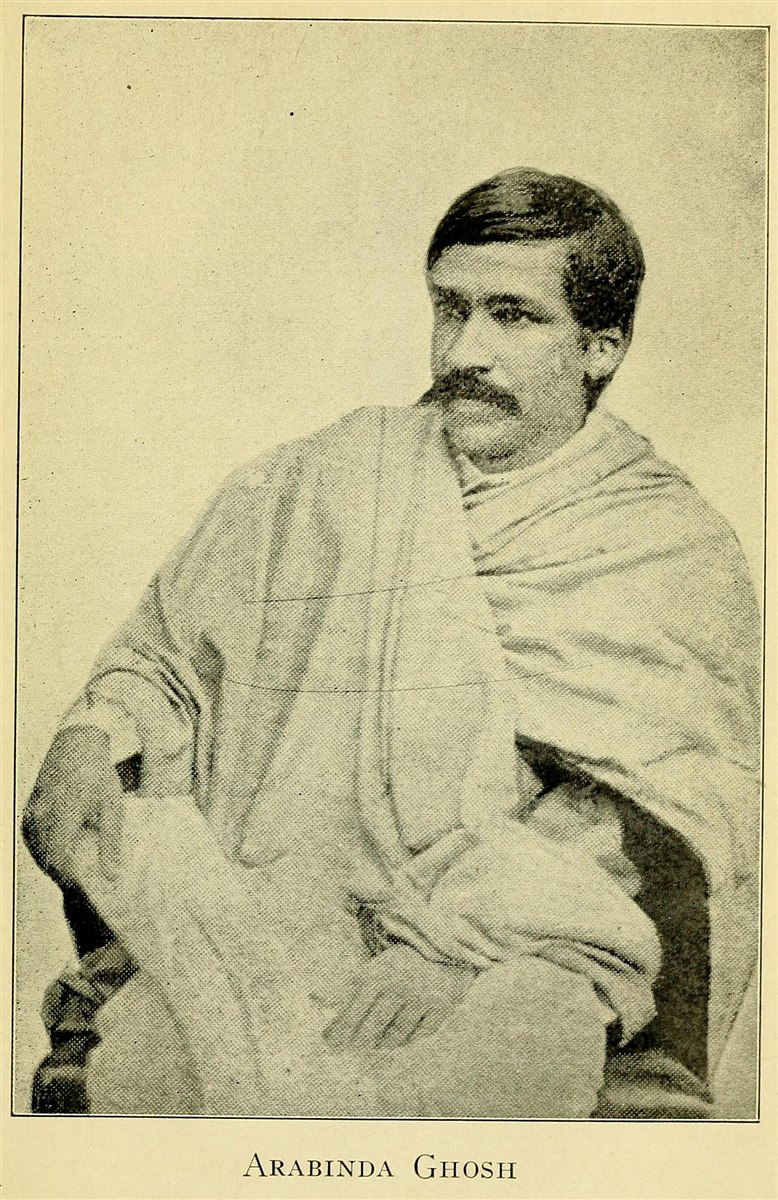
Arabinda Ghosh, photographic plate in Lajpat Rai, Young India, New York, B. W. Huebsch, 1916. Internet Archive, Library of Congress copy, public domain · Photographic plate captioned 'ARABINDA GHOSH' in Lajpat Rai, 'Young India: An Interpretation and a History of the Nationalist Movement from Within' (New York: B. W. Huebsch, 1916), from the Library of Congress copy digitised by the Internet Archive. The photographer and the date of the sitting are not named in the book. The file is a crop of the plate and its caption from the full-page scan (2154 x 3446), downscaled to 778 x 1200 with no upscaling. · Public domain (book first published in New York in 1916 with a 1916 copyright notice in the name of its publisher, so out of copyright in the United States by age)
philosopher · 20th Century
1872–1950
British Raj
Not yet included in personality matching — the documented evidence doesn't yet cover enough of the personality model. Everything else on this page is fully available.
After leaving the nationalist movement in 1910 for Pondicherry, he developed Integral Yoga and, in the monthly Arya (1914-21), published The Life Divine, The Synthesis of Yoga, Essays on the Gita and other works setting out a philosophy of spiritual evolution; a reviewer of his biography counts over 4,600 pages in the journal.
A poet who wrote verse from his student days in England, he spent much of his adult life on the epic Savitri, reviewers describe it as running to more than 20,000 lines and finished shortly before his death, and he also wrote a study of poetry, The Future Poetry.
At Pondicherry a community of disciples gathered around him and grew into the Sri Aurobindo Ashram, whose organisation was taken over by the Mirra Alfassa known as the Mother; its supporters and its critics still dispute how his life should be told.
In 1914, after four years of yoga at Pondicherry, he began the monthly Arya, which appeared without interruption for six and a half years and carried most of his major prose works as serials.
This is consistent with keeping to a regular writing schedule over several years. Discipline
Reviewers of his biography say he worked on the epic Savitri for much of his adult life and completed it only shortly before his death.
This is consistent with returning to one long work over decades, as the reviewers describe it. Persistence
In 1910 he withdrew from public life to Pondicherry in French India, where the Ashram says the work needed the exclusive concentration of all his energies, and from then on he devoted himself to yoga and writing.
This is consistent with narrowing his activity to a single, demanding line of work. Deep Focus
People whose overall profiles resemble theirs.




Not a rival — a different profile shape worth a look.
