Yayoi Kusama
93% Profile Match
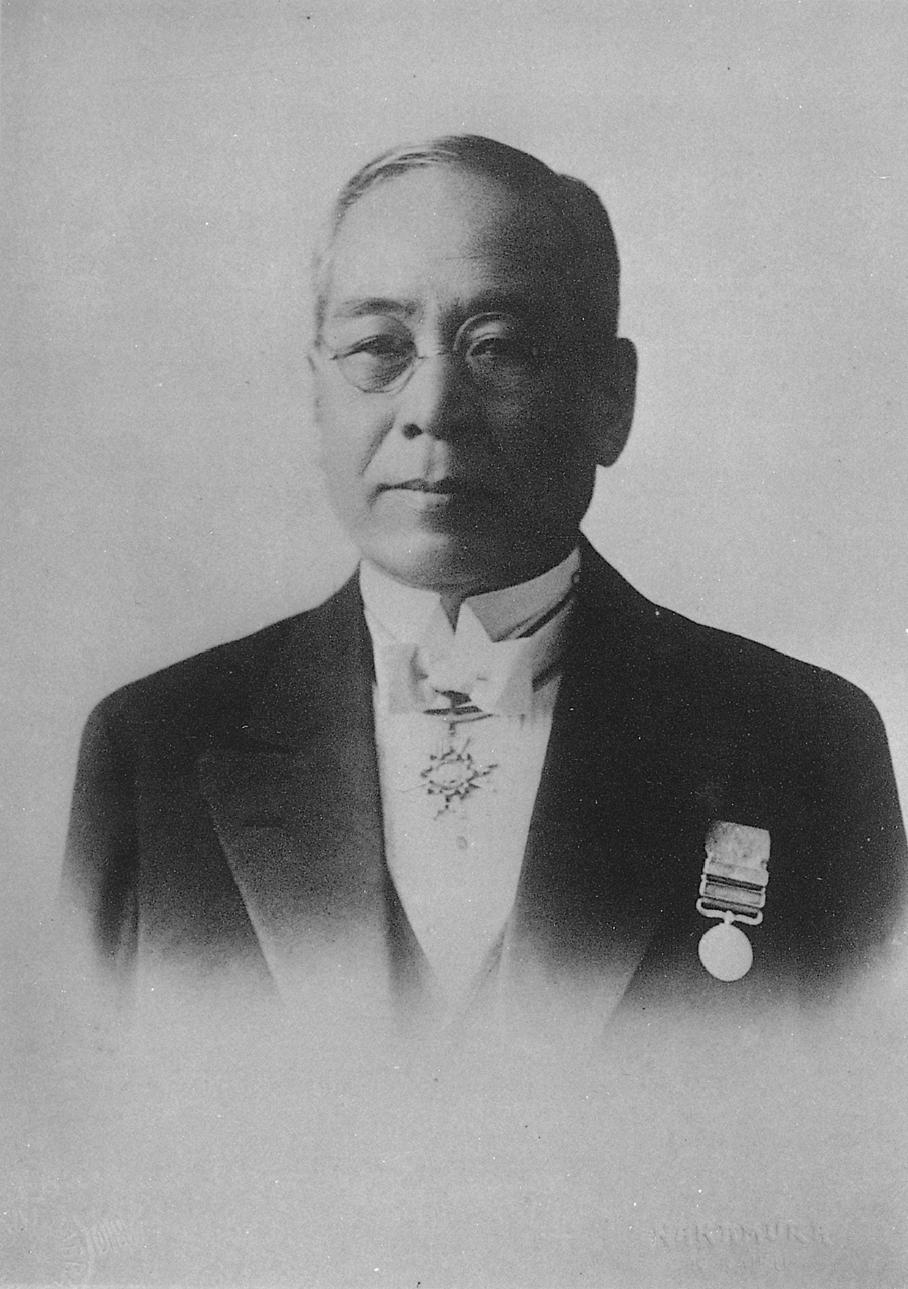
Portraits of Modern Japanese Historical Figures, National Diet Library, Japan; via Wikimedia Commons (public domain) · Studio portrait photograph of Sakichi Toyoda in formal dress with a decoration, with an embossed studio mark at lower right that appears to read 'Nakamura' (the photographer is otherwise unidentified), hosted on Wikimedia Commons as 'Sakichi Toyoda.jpg' (uploaded 2007; the file page says it comes from the Japanese book 'Toyoda Sakichi den' and links the National Diet Library page). The same image is displayed on the National Diet Library's digital exhibition 'Portraits of Modern Japanese Historical Figures', whose About page states that all images in the exhibition are in the public domain and may be reused, including commercially, with the source cited; the exhibition's page footer carries only the library's generic site copyright line, which does not apply to those images. Rights basis: the NDL statement plus age: the photograph was taken before his death in 1930 and, from the 'Toyoda Sakichi den' source (a 1933 biography by the Toyoda Sakichi-o Seiden Hensansho appears in the NDL catalogue, not opened here), published by 1933, so the Japanese term for a photograph published in 1933 had expired long before the 1996 US restoration date and the image is in the public domain in the United States. Caveats: the individual photographer and the exact first-publication year could not be confirmed, and the NDL digital record behind the image was not readable. Original 908 x 1289 pixels; saved as is, no cropping, resizing or upscaling. · Public domain (National Diet Library statement; Japanese photograph published by 1933)
A carpenter's son, he spent his career improving the loom: Toyota's history calls his 1897 power loom Japan's first self-powered loom, and with his son Kiichiro he completed the Type G automatic loom in the mid-1920s.
His looms added devices that stopped the machine when a thread broke, and Toyota's company history traces the jidoka principle of its production system to this design.
He founded Toyoda Automatic Loom Works in 1926, the root of Toyota Industries, and the rights to the Type G outside Japan, China and the United States were sold to Britain's Platt Brothers in 1929.
After a partner's fraud nearly brought down his Nagoya store in 1896, he saved the business and went on to complete his narrow power loom the following year.
This is consistent with continuing his loom work through a business crisis. Persistence
In 1902 he angrily resigned from the Mitsui-backed Igeta company after clashes over research funds, and in 1910 he resigned from the Toyoda Loom Works over policy differences.
This is consistent with a strong need to control the direction of his own research, even at the cost of financed companies. Need for Autonomy
In 1885, at eighteen, after hearing of the new patent law and reading Samuel Smiles's Self-Help in translation, he gave up the carpenter's path and decided to become an inventor of looms.
This is consistent with a lifelong commitment to a single field of invention made early in life. Mastery Orientation
People whose overall profiles resemble theirs.
Not a rival — a different profile shape worth a look.