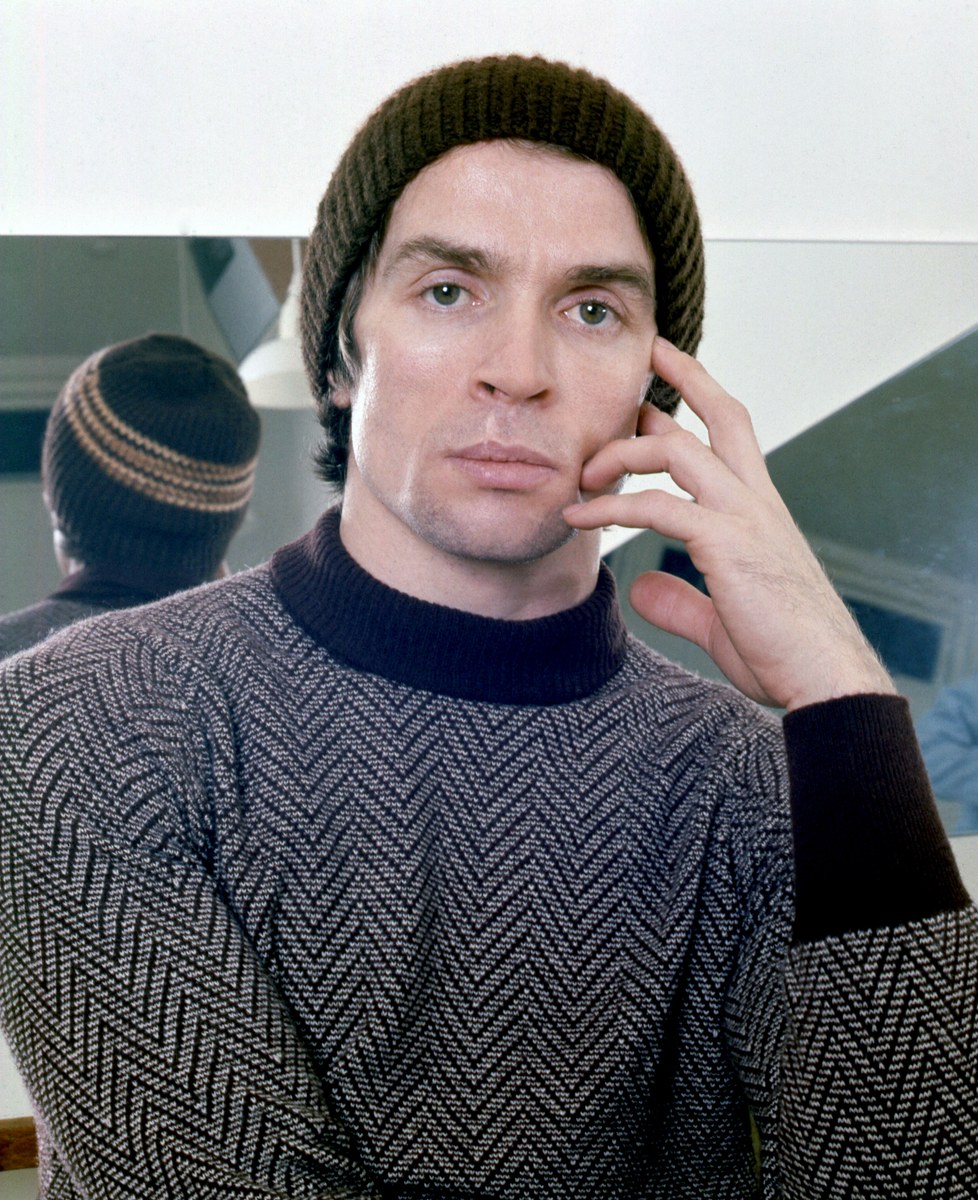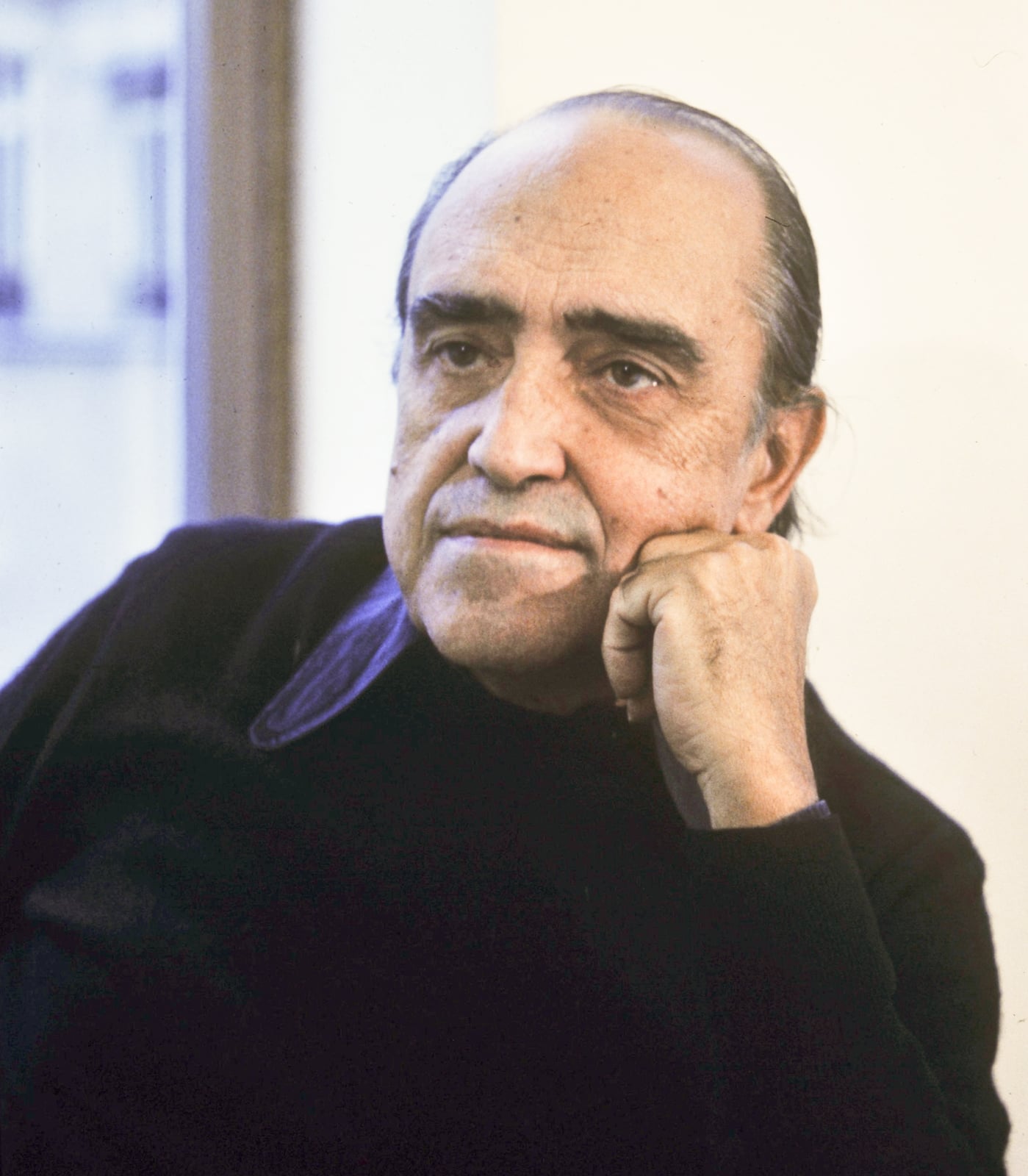

Photo: Allan Warren, 1973, CC BY-SA 3.0 · Wikimedia Commons file 'Nureyev 9 Allan Warren.jpg': photograph by Allan Warren, 1973, Nureyev in his dressing room at the Royal Ballet School, London; uploaded by the photographer as his own work under CC BY-SA 3.0 and GFDL. The original is 3587 x 4401 pixels and was reduced (downscaled only, never enlarged) to 978 x 1200 pixels. · CC BY-SA 3.0
dancer · 20th Century
Rudolf Nureyev
1938–1993
Known For
Not yet included in personality matching — the documented evidence doesn't yet cover enough of the personality model. Everything else on this page is fully available.
Trait Constellation
Key Achievements
Became one of the most famous ballet dancers of the 20th century; Britannica credits him with reviving the prominence of male ballet roles and significantly widening the audience for ballet.
Danced with Margot Fonteyn at the Royal Ballet from their February 1962 Giselle; Ashton made Marguerite and Armand for the pair, and each is described as changing the other's style.
Restaged classics such as Swan Lake (Vienna, 1964) with the male lead dominant, co-directed a Don Quixote film (1973) and led the Paris Opera Ballet from 1983 to 1989, though critics debate the value of his choreography.
Moments That Reveal Them
After a 1960 tantrum over his baggy costume at the Kirov, he began dancing in tights without the covering trunks, a look and a ballerina-inspired upper-body style that The Nation says are now mainstream.
This is consistent with a performer who pushed his own stage style against convention in ways that later became standard. Creative Originality
Rough in technique at his London debut, he worked compulsively to correct his limits, learning English placing from Fonteyn; Ninette de Valois judged his dancing virtually perfect by the age of 25.
This is consistent with a strong drive to master his craft by absorbing what others could teach him. Mastery Orientation
Turning Points
Beginning in 1962, partnership with Fonteyn at the Royal Ballet brought him a more refined, English-schooled style while her dancing gained a new intensity, and made him an international star.
This is consistent with a performer who adapted his style to a new tradition while keeping his own force. Adaptability
Similar People
People whose overall profiles resemble theirs.

Carl Jung

Aung San Suu Kyi

Sigmund Freud

Louis Pasteur
Coco Chanel
Opposite Profile
Not a rival — a different profile shape worth a look.
Florence Nightingale
Sources
- Rudolf Nureyev (Q84217) -- verified live via the Wikidata API (2026-10-26): English label 'Rudolf Nureyev', description 'Soviet ballet dancer and choreographer (1938-1993)', born 1938-03-17, died 1993-01-06, Korean label, P18 images 'Nureyev 9 Allan Warren.jpg' and 'Nureyev Allan Warren.jpg'. Orientation only; not used as support for any row.
- Encyclopaedia Britannica, 'Rudolf Nureyev' (britannica.com print article, revised 2026), read in full: Soviet-born dancer whose suspended leaps and fast turns were compared to Nijinsky's; revived the prominence of male ballet roles and significantly widened the audience for ballet; Leningrad ballet school under Aleksandr Pushkin, Kirov soloist from 1958; asylum request in Paris in June 1961; Grand Ballet du Marquis de Cuevas, American debut 1962, permanent guest artist of the Royal Ballet but never a member of a major troupe in the West; Fonteyn's favourite partner (Giselle, Marguerite and Armand, Swan Lake); reworked Swan Lake (Vienna 1964) giving the dominant role to the male dancer; Romeo and Juliet (1977), Manfred (1979), Nutcracker (Berlin 1980), La Scala Romeo and Juliet (1981); modern repertoire with Graham, Louis and Taylor; Don Quixote film co-directed with Helpmann (1973); Austrian citizen 1982; artistic director of the Paris Opera Ballet 1983-89. CANONICAL SIGNIFICANCE SOURCE. The 1961 asylum request is recorded only as a biographical event and is not scored.
- EBSCO Research Starters, 'Rudolf Nureyev' (Allene Phy-Olsen, 2024), read in full: Nureyev elevated the classical male dancer to a status equal to the ballerina and drew a large popular audience; trained under Pushkin, often in trouble for bending company rules, rough in technique but strong in communication and jumps; Fonteyn partnership from 1962 in which critics felt he gave passion to her dancing and she gave poetry to his; chief of choreography at the Vienna State Opera 1964-88, with Don Quixote perhaps his most notable achievement; at Vienna and Paris discovered and developed dancers and mentored young artists; film acting did not translate well; over his career worked across classical and modern dance; bibliography notes Kavanagh's 800-page study. Reference-style encyclopedia entry with an assessment section; the political and health passages were not used.
- UXL Encyclopedia of World Biography, 'Rudolf Nureyev' (via encyclopedia.com), read in full: trained at the Leningrad school under Pushkin, Kirov soloist in full-length roles; Fonteyn partnership from 1961-62; Ashton created Marguerite and Armand for him (March 1963); first own production, last act of La Bayadere for the Royal Ballet (Nov 1963) and Raymonda reconstruction (June 1964); modern dance with Graham, Louis and Taylor; directing debut with Don Quixote in Melbourne; over ninety roles and appearances with more than thirty companies; three-year directorship of the Paris Opera Ballet from 1983 (Britannica gives 1983-89). Encyclopedia entry for students; used as a cross-check on repertoire and workload.
- Julie Kavanagh, 'Nureyev and Fonteyn: A Taming of Sorts' (Rudolf Nureyev Foundation website, extract of her authorised biography), read in full: Fonteyn feared becoming a back number and agreed to experimental Swan Lakes away from London critics; Nureyev taught her Russian bravura and Vaganova phrasing while she helped him polish a 'ragged' placing and 'hit-and-miss' technique, a transformation one critic called an 'English Nureyev'; Violette Verdy called it 'a taming of sorts'; their February 1962 Giselle launched the partnership; Ashton's Marguerite and Armand was made for them; Ashton felt hurt by Nureyev's treatment of Fonteyn during rehearsals; rehearsal clashes and a constructive exchange of styles. The Foundation supported the biography, so this is an admiring, institutional source; the speculation about the couple's private relationship was deliberately not used.
- Marina Harss, 'Pointe Work' (The Nation, review of Julie Kavanagh's 'Nureyev: The Life', 10 December 2007 issue), read in full: Nureyev's innovations (soft arms and expressive torso modelled on ballerinas, higher legs in attitude and arabesque, high demi-pointe stance, tights without baggy trunks after a 1960 Kirov Don Quixote costume row) are now mainstream; he was a virtuoso but rough, with thumpy landings and messy performances (Black Swan at his London debut), and observers noted he struggled to bind steps into musical phrases; he worked compulsively to correct limits and improved, Ninette de Valois saying that by 25 his dancing was virtually perfect; sceptics included Robbins, Kirstein, Balanchine (did not come backstage) and critic John Martin, who accused him of taking all the plums; his restagings put himself front and centre and his choreography was mostly unsuccessful, florid and over-fiddly (Acocella quoted); modern dance forays limited by touring; behaviour toward colleagues could be brutal, including cruelty to Fonteyn; at the Paris Opera Ballet he made few friends but brought in new ballet masters, promoted young dancers such as Sylvie Guillem and invited choreographers such as Forsythe; as a mentor Kavanagh argues he surpassed Baryshnikov. Independent critical review with named counter-voices; private-life and health passages were not used.
- Moira Macdonald, '"Nureyev: The Life" | Legendary dancer' (The Seattle Times, 7 October 2007), read in full: the biography is meticulously researched but never quite finds the man behind the mystique; authorised by the Nureyev Foundation and similar to Diane Solway's 1998 biography; Nureyev never known as a consummate technician, fame came from passion and leaps; modelled his technique on ballerinas; Fonteyn partnership created sensation with fans queuing for days; career ended in a slow fading away rather than dignified retirement; fascination with Balanchine; Kavanagh notes he was the first Russian dance artist to defect (her claim, reported by the reviewer, not repeated in the cards). Independent newspaper critic's review.
- Caroline Baum, 'Rudolf Nureyev' (Stage Noise, review of Julie Kavanagh's biography, 10 November 2007), read in full: ten years of research with access to papers and letters, essentially authorised but still honest; Kavanagh does not hide his arrogance and unreasonable demands; fair account of the Royal Ballet's resentment when Fonteyn and Nureyev's billing eclipsed others, as in the casting of Macmillan's Romeo and Juliet; his 'absolute hunger to learn, to embrace the new and to take risks'; 'his legacy as a choreographer may be questionable, despite some significant triumphs'; Don Quixote film made in Melbourne with Robert Helpmann with insistence on authenticity and a three-week deadline; he could behave like a brute one minute and an angel the next. Independent critic's review (Australian); personal-life and health passages not used.
- Wikimedia Commons file page 'Nureyev 9 Allan Warren.jpg' (wikitext and API record), checked for the portrait's licence: photograph by Allan Warren, 1973, Nureyev in his dressing room at the Royal Ballet School, Talgarth Road, London; source 'own work' by the photographer's Commons account; licence CC BY-SA 3.0 (and GFDL); original 3587 x 4401 pixels. Not used for any scoring.