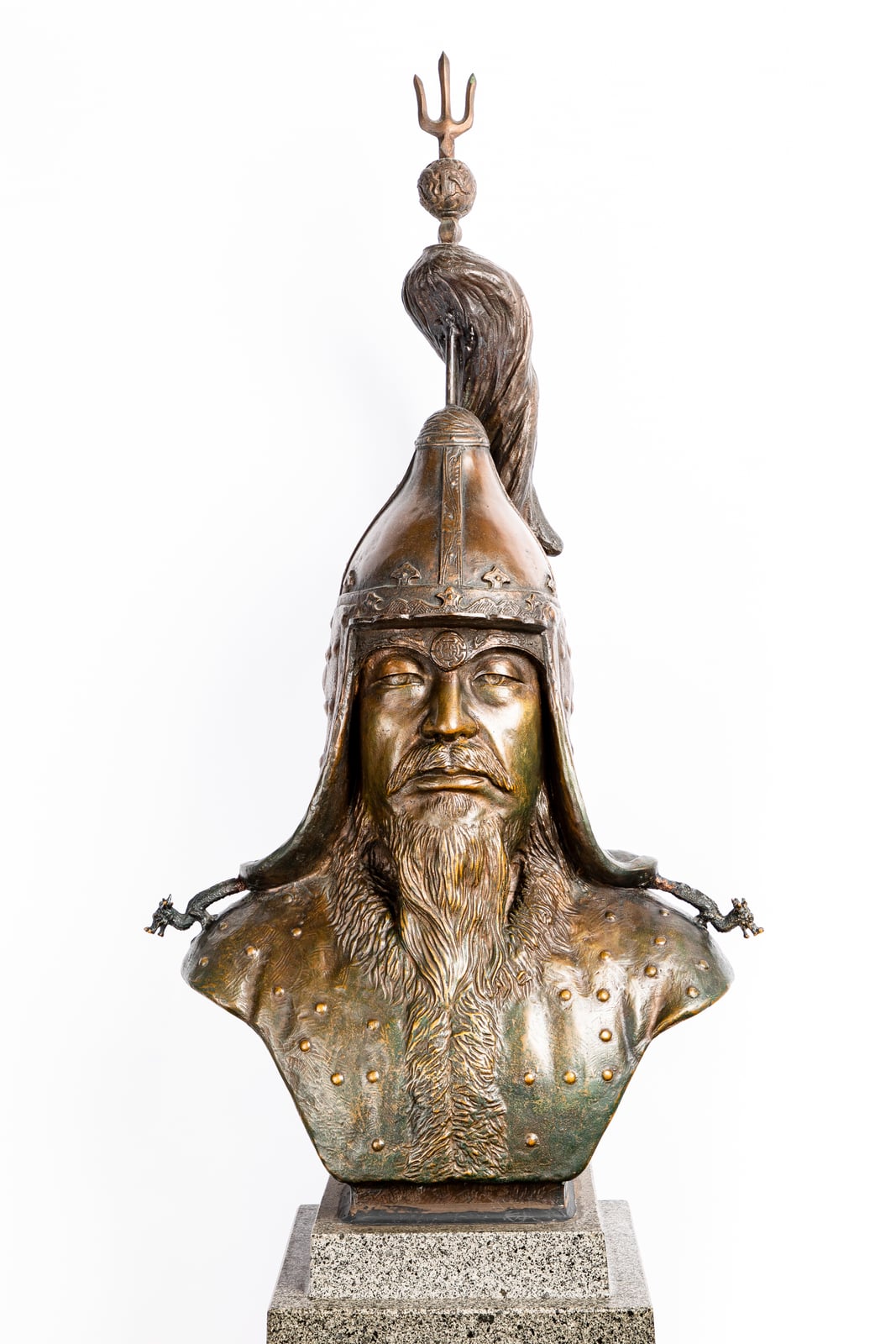
Yi Sun-sin
81% Profile Match
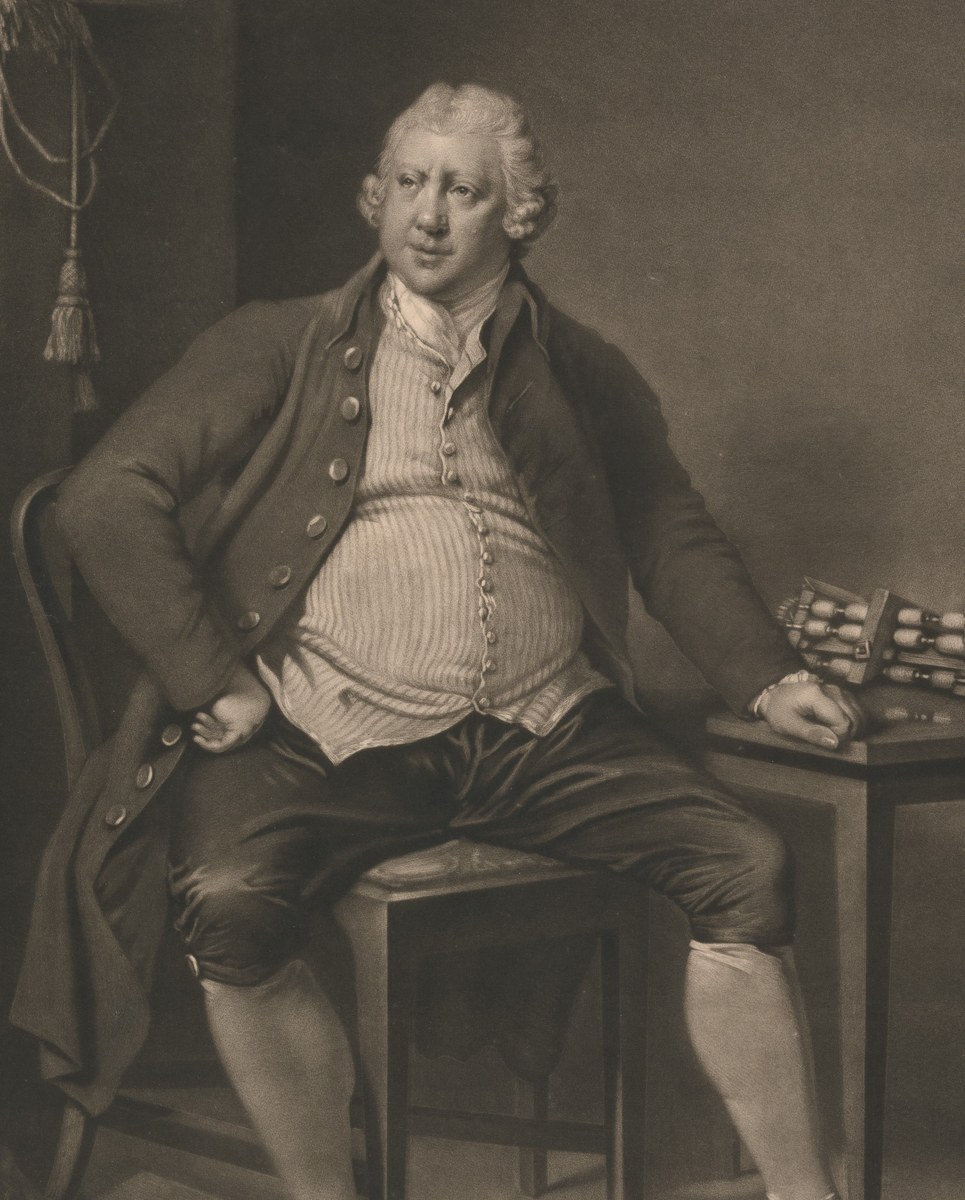
John Raphael Smith (engraver) after Joseph Wright of Derby, 'Sr Richard Arkwright', mezzotint, 1801. Yale Center for British Art, Paul Mellon Collection, B1978.43.1115 (Public Domain). Cropped and downscaled. · Mezzotint 'Portrait of Richard Arkwright' by John Raphael Smith, published 5 May 1801 after the 1790 portrait painting by Joseph Wright of Derby, held by the Yale Center for British Art (Paul Mellon Collection, accession B1978.43.1115), whose item record gives Copyright Status 'Public Domain'. The print's own lettering reads 'Painted by Joseph Wright, R.A. 1790', 'Engraved by J. R. Smith, Mezzotinto Engraver to H.R.H. the Prince of Wales, May 5, 1801' and 'Sr Richard Arkwright'. The file is a head-and-knees crop of the museum's 4765 x 6828 pixel image (crop 3328 x 4139) downscaled to 965 x 1200 with no upscaling; the lettered margin is outside the crop. · Public domain: the Yale Center for British Art item record states Copyright Status 'Public Domain' for this print; the engraver died in 1812 and the painter in 1797, and the print was published in London in 1801 (public domain by age)
entrepreneur · Early Modern
1732–1792
Not yet included in personality matching — the documented evidence doesn't yet cover enough of the personality model. Everything else on this page is fully available.
English cotton-spinning entrepreneur who ran the water-powered Cromford mill from 1771 and, with patents of 1769 and 1775, built the factory system at the heart of the Derwent Valley Mills World Heritage Site; the Science Museum Group calls him more an improver of others' ideas than an inventor, with business skill as his main talent.
Built Cromford into a mill village by housing and recruiting workers from outside the district, and expanded to mills in several counties; by 1782 he put his employees at over 5,000, and the workforce included many women and children.
Licensed his patents and sued infringers; the patents were cancelled in 1785 after witnesses, including Thomas Highs, said he had taken others' ideas, yet his business carried on, and he was knighted in 1786 and left a fortune of around 500,000 pounds.
In 1781 he sued nine firms for infringing his patents; the first case, against Colonel Mordaunt, was lost because his specification was judged insufficient, and in 1785 a jury ruled against him in a further trial.
This is consistent with someone willing to press contested claims in court repeatedly, at the cost of public defeat. Conflict Tolerance
When Cromford could not supply enough workers, he built terraced cottages and an inn and recruited workers, especially weavers with large families, from outside the district.
This is consistent with someone who solved a labour shortage by building housing and recruiting rather than adapting the plan. Resourcefulness
In 1771, after a horse-powered mill at Nottingham, he moved spinning to water power at Cromford with Jedediah Strutt and Samuel Need as partners, the mill the World Heritage statement treats as the base of the Arkwright system.
This is consistent with someone who moved a working idea to a larger, differently powered scale once partners supplied the capital. Opportunity Sensing
People whose overall profiles resemble theirs.