Confucius
82% Profile Match
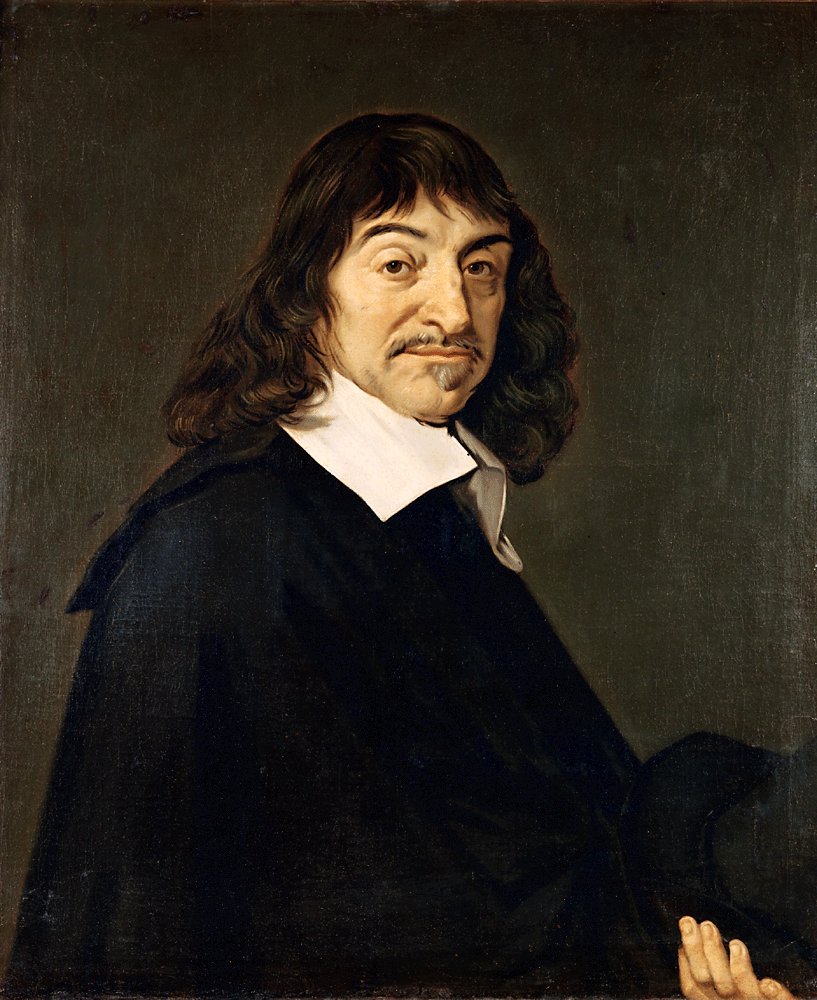
After Frans Hals (1582/83-1666), Portrait of René Descartes, oil on canvas, Musée du Louvre (INV. 1317); public domain (PD-Art, artist died 1666); unaltered resave of the Wikimedia Commons file · Musée du Louvre (INV. 1317, painting 'after Frans Hals'), via Wikimedia Commons · Public domain
In 1637 the Discourse on the Method appeared, printed at Leiden and published anonymously, together with three essays: the Dioptrics, the Meteorology and the Geometry. Scholarly accounts describe it as a limited sample of his philosophy, issued after he had set aside The World.
The Meditations on First Philosophy was published in 1641 (second edition 1642) together with objections from critics including Caterus, Hobbes, Arnauld, Gassendi and Bourdin, and Descartes's replies. On 13 November 1639 he had told Mersenne that he meant to print only twenty or thirty copies for the most learned theologians first, to learn from them what it would be good to change, correct or add before making it public.
In late November 1633 Descartes wrote to Mersenne that he had asked in Leiden and Amsterdam for Galileo's book and had been told that the copies had been burned in Rome and the author fined. He said this so astonished him that he was almost resolved to burn all his papers, or at least to show them to no one, since he wanted nothing to leave his hands that the Church might disapprove and would rather suppress the treatise than publish it 'crippled'; in April 1634 he told Mersenne he was resolved never to show it to anyone.
His own letters present this as avoiding any clash with Church authority, which is consistent with a cautious stance toward that kind of risk. One scholarly account notes that some historians doubt the danger was real for someone living in the Netherlands, and his later open quarrel with Voetius indicates that he did not avoid every conflict. Risk Tolerance
In a letter dated 6/16 May 1643 Princess Elisabeth of Bohemia asked Descartes how the soul, if it is only a thinking substance, can determine the body's voluntary movements. On 21 May he replied that this was the question that could most fairly be put to him after his published writings, since he had said almost nothing about the soul's union with the body; after her further letter of 10/20 June he wrote on 28 June that she had given him occasion to note things he had omitted.
This offers one example of Descartes working through a correspondent's objection across several letters rather than only defending his text. It sits alongside other episodes, such as the reproachful end of his exchange with Beeckman in 1630, where working together did not last. Collaboration
Isaac Beeckman's journal records Descartes visiting him at Dordrecht on 8 October 1628, and the student register of the University of Franeker, as reported by the editors of his correspondence, enters his name under 16 April 1629. According to a modern scholarly account, he broke off his unfinished Rules around then and settled in the Dutch Republic, returning to France only infrequently before he left for Sweden in 1649, keeping his address secret and changing it often.
This pattern is consistent with a preference for controlling where and how he worked, though the main evidence for that motive is what Descartes himself wrote, and he later accepted an invitation to Stockholm. Need for Autonomy
People whose overall profiles resemble theirs.