
Maya Angelou
93% Profile Match
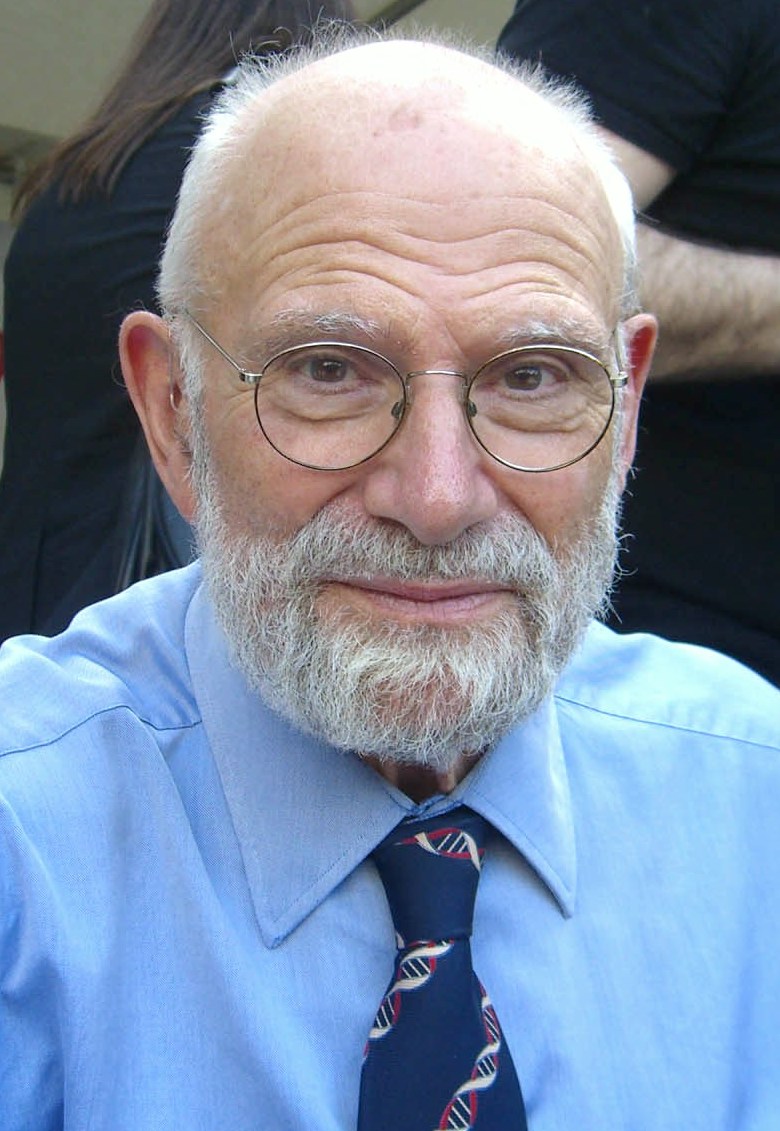
Photo: Luigi Novi / Wikimedia Commons, 2009, CC BY 3.0 · Wikimedia Commons, '9.13.09OliverSacksByLuigiNovi (cropped).jpg' (crop of '9.13.09OliverSacksByLuigiNovi.jpg', 1610 x 1412) -- photograph by Luigi Novi taken 13 September 2009 at the Brooklyn Book Festival, own work, uploaded by the photographer under CC BY 3.0 with a request for a visible credit line. Crop original 780 x 1131 pixels (SHA-1 51175822e69f, matches the Commons record); saved unchanged, never upscaled. · CC BY 3.0
physician · 20th Century
1933–2015
Not yet included in personality matching — the documented evidence doesn't yet cover enough of the personality model. Everything else on this page is fully available.
As consulting neurologist at Beth Abraham Hospital in the Bronx, Sacks treated postencephalitic patients, many frozen for decades after the 1916-1927 sleeping-sickness epidemic, with L-dopa from spring 1969. Many recovered dramatically but often only for a time. His book Awakenings (1973) set out twenty case histories, and a 1987 edition added an epilogue updating them; the 1990 film adaptation was nominated for three Oscars including Best Picture.
Sacks wrote clinical case histories as narrative, beginning with Migraine (1970) and continuing with The Man Who Mistook His Wife for a Hat, An Anthropologist on Mars and Musicophilia, covering conditions such as Tourette's syndrome, aphasia and autism. The Oliver Sacks Foundation says his approach looked at how each individual coped and adapted rather than fitting patients into a diagnostic category, and that he is often credited as a forerunner of the neurodiversity movement.
Sacks was a professor of clinical neurology at Albert Einstein College of Medicine, then a professor at Columbia University Medical Center (2007-2012, where the Foundation says he was its first 'Columbia University Artist') and at NYU School of Medicine (2012-2015). A regular contributor to The New Yorker and The New York Review of Books, he received Rockefeller University's Lewis Thomas Prize in 2002.
For Awakenings Sacks kept detailed notes, encouraged patients to keep journals and wrote twenty biographical case histories of postencephalitic patients on L-dopa. EBSCO notes that a 1987 edition added an epilogue updating those cases since 1973.
This is consistent with sustained, long-running attention to the same patients. Persistence
Commentators summarising Rachel Aviv's December 2025 New Yorker article say Sacks's journals and letters suggest that the Rilke 'caged panther' image he attributed to the patient Leonard in Awakenings was his own, and that the recovery he reported for 'Rebecca' in The Man Who Mistook His Wife for a Hat is contradicted by his journals. Colin McGinn says he had raised embellishment in his 1986 London Review of Books review.
This is consistent with narrative appeal outweighing fidelity to what was observed in some early case histories, which the commentators read as confabulation rather than deliberate lying. Analytical Rigour
About a year out of residency in 1969, Sacks began giving L-dopa to postencephalitic patients at Beth Abraham. His first book, Migraine, followed in 1970 and Awakenings in 1973, after which he wrote for general readers alongside clinical practice and teaching.
This is consistent with a widening of his work from clinical practice into writing for general readers. Cross-Domain Range
People whose overall profiles resemble theirs.


Not a rival — a different profile shape worth a look.
