Louis Pasteur
94% Profile Match
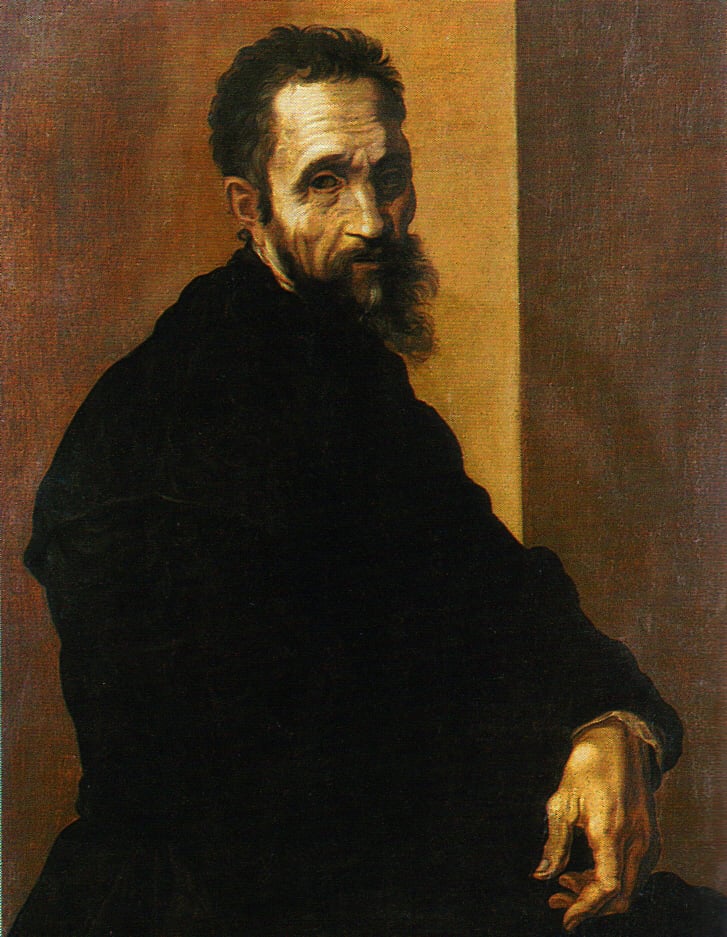
Jacopino del Conte, c.1535, Casa Buonarroti, Florence — painted from life · Wikimedia Commons (resized/recompressed derivative) · Public Domain
1475 — Born near Arezzo, Tuscany.
1488 — Apprenticed to the painter Domenico Ghirlandaio in Florence at 13, then trained in the Medici household's sculpture garden.
1498–1504 — Completed the Pietà in Rome under a cardinal's commission, then the statue of David in Florence.
1508–1512 — Painted the Sistine Chapel ceiling for Pope Julius II.
1546 — In his seventies, took on the role of chief architect of St. Peter's Basilica, redesigning its structure, including the dome.
1564 — Died in Rome, still working; the Basilica's dome was completed after his death, based on his design.
Across a nearly seventy-year working life he sustained major output across sculpture (David, the Pietà), painting (the Sistine Chapel ceiling and Last Judgment), architecture (the dome of St. Peter's Basilica, the Laurentian Library), and poetry — an unusually well-corroborated case of range across genuinely distinct disciplines, not merely dabbling in each.
In his seventies, decades into an established reputation as a painter and sculptor, he took on the role of chief architect for St. Peter's Basilica and fundamentally redesigned its structural plan, including the dome — a late-career shift into a substantially different discipline rather than remaining within his already-mastered domains.
Giorgio Vasari's biography — written and revised while Michelangelo was alive, with his direct knowledge — documents that during intensive periods of work, including the Sistine ceiling commission, he sometimes slept in his clothes and boots for extended periods without undressing, so as not to interrupt the work.
Vasari's biography also documents Michelangelo repeatedly abandoning and restarting major commissions — including more than one Pietà and tomb sculpture — reworking them to standards only he judged sufficient, rather than delivering a version he considered less than complete.
This is the specific, named documented pattern behind the profile's perfectionism score, not a general reputation inferred after the fact. Perfectionism
In 1506, after a dispute with Pope Julius II over payment for the pope's own tomb commission, Michelangelo fled Rome without permission — an extraordinarily risky act for the era against the most powerful patron in it — and returned only after direct negotiation restored the relationship.
Confronting the era's most powerful patron directly, rather than accepting the dispute quietly, is consistent with the profile's risk_tolerance and autonomy_need scores. Risk Tolerance
People whose overall profiles resemble theirs.


Not a rival — a different profile shape worth a look.