Duke Ellington
94% Profile Match
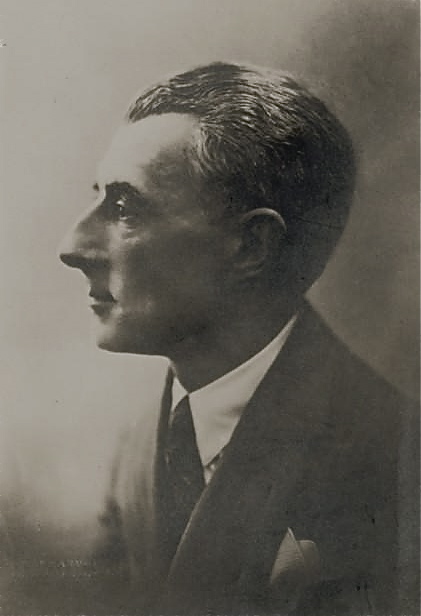
Henri Manuel, c. 1925, Bibliotheque nationale de France (Gallica), public domain · Photograph of Maurice Ravel by Henri Manuel (1874-1947), dated 1925, positive print 16.5 x 11.5 cm, Bibliotheque nationale de France, departement Musique, Est. Ravel M. 018 (Gallica ark:/12148/btv1b8423961b); the Gallica OAI record names Henri Manuel as creator and states 'domaine public / public domain'. Obtained from Wikimedia Commons 'Ravel 1925 (2).jpg' (uploaded 2011-07-08 by Kokin, tagged PD-old-auto-expired 1947), original 421 x 616 pixels, SHA-1 cf9d38c6f5637f2364b63768883e9167061b5502 (matches the downloaded file); saved unchanged, never resized or upscaled. Rights basis: creator died in 1947 (life plus 70 years expired in 2017, the EU/France term) and the photograph was made in 1925 (before 1931, so public domain in the United States if published); BnF's own record states public domain, so there is no conflicting institutional notice. The wikidata P18 file 'Maurice Ravel 1925.jpg' (2880 x 3840) was examined and NOT used: its Commons page names no photographer ('author unknown'), gives the date as 'assumed published in 1925' and carries a to-be-checked Gallica tag, i.e. a generic basis only. The higher-resolution Gallica download itself was blocked to automated access (403), so the 421 x 616 Commons copy of the same Gallica item is used. · Public domain (photograph by Henri Manuel, 1925, d. 1947; BnF Gallica states public domain; Commons tag PD-old-auto-expired 1947)
composer · 20th Century
1875–1937
Not yet included in personality matching — the documented evidence doesn't yet cover enough of the personality model. Everything else on this page is fully available.
Developed an original musical idiom very early; Jeux d'eau (1901) was credited with opening a new world of piano sound, and the ballet Daphnis et Chloe is counted among the major French symphonic works of the century.
Ranked by scholars among the century's best orchestrators; in 1922 he orchestrated Mussorgsky's Pictures at an Exhibition on a commission from conductor Serge Koussevitzky.
Wrote Bolero for dancer Ida Rubinstein, a single repeated theme built up by an orchestral crescendo, which premiered in Paris in 1928 and became one of his most widely performed works.
Ravel entered the Prix de Rome competition repeatedly between 1901 and 1905 and was eliminated in the first round in 1905; the resulting press outcry led to the Conservatoire director's resignation, while Ravel stayed publicly silent and never applied again.
This is consistent with persistence in seeking official recognition, though the sources give differing attempt counts and no reasons of his own. Persistence
At the 1928 premiere of Bolero a woman reportedly shouted that the composer was mad, and Ravel is said to have replied that she had understood the piece; he himself described it as uniform in melody, harmony and rhythm, its only variety the orchestral crescendo.
This is consistent with a composer deliberately testing an extreme, single-idea form, though the anecdote comes from a secondary synthesis. Creative Originality
After the 1905 Prix de Rome affair, Ravel was famous; in 1909 he co-founded the Societe Musicale Independante as an alternative to the conservative Societe Nationale and, in 1920, declined the Legion d'honneur.
This is consistent with a pattern of positioning himself outside the musical establishment, although his reasons are not recorded in the sources read. Independent Thinking
People whose overall profiles resemble theirs.
Not a rival — a different profile shape worth a look.