Ada Lovelace
90% Profile Match
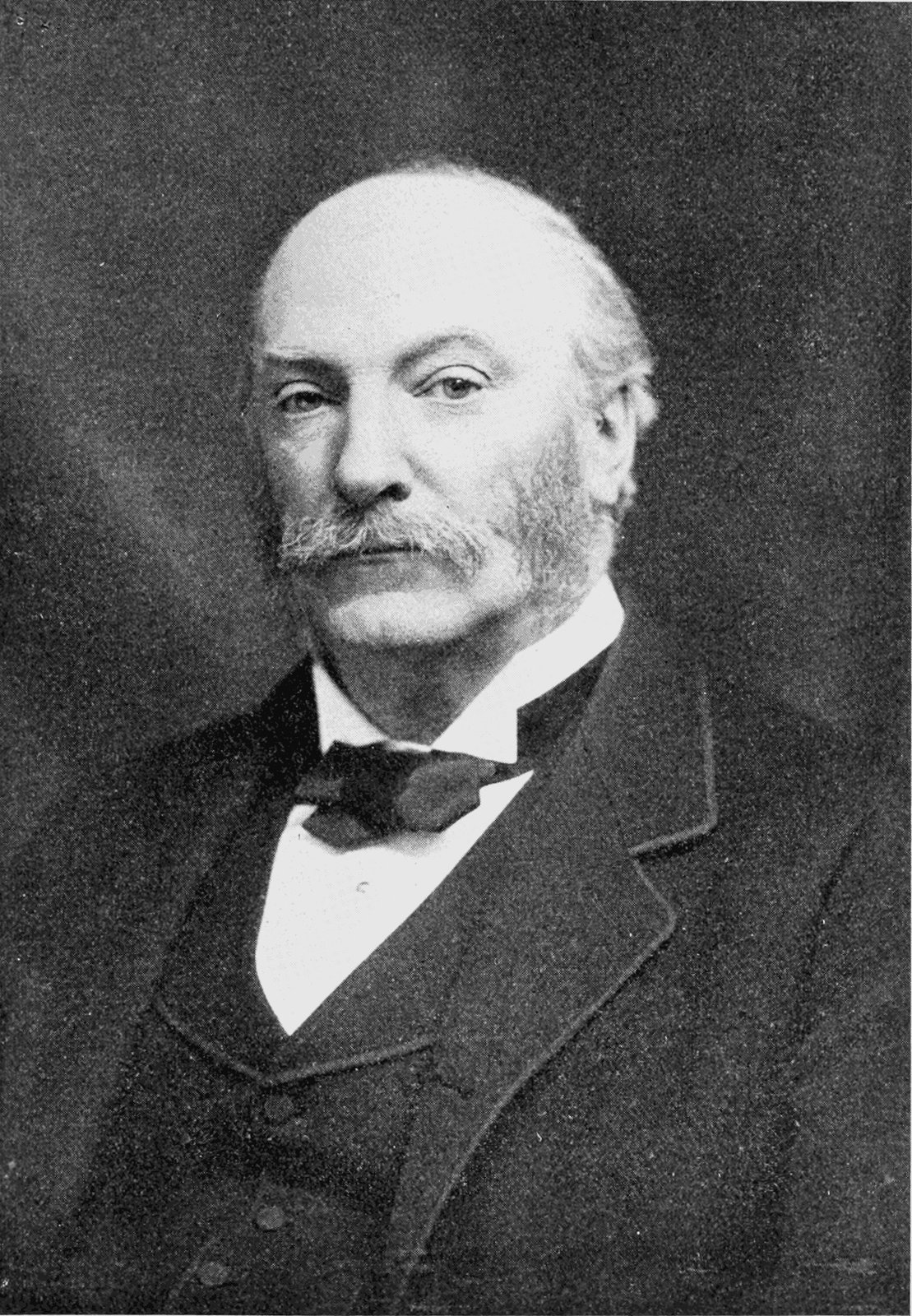
Photograph captioned 'Lord Rayleigh', The Popular Science Monthly, vol. 67, 1905, p. 91; the magazine does not credit a photographer, and the Wellcome Collection catalogue attributes the same portrait photograph to Elliott & Fry · The Popular Science Monthly, vol. 67 (May to October 1905), New York: The Science Press, p. 91, full-page portrait captioned 'Lord Rayleigh' illustrating the note 'The Nobel Prizes', via Internet Archive (popularsciencemo67newy) · Public domain (published in the United States in 1905)
physicist · 19th Century
1842–1919
Not yet included in personality matching — the documented evidence doesn't yet cover enough of the personality model. Everything else on this page is fully available.
Rayleigh began writing The Theory of Sound in the winter of 1872-73, during a trip up the Nile, and published it in two volumes in 1877 and 1878. James Jeans wrote in the Dictionary of National Biography that it was the only textbook Rayleigh ever wrote and that it at once took rank as the leading book on its subject.
In 1892 Rayleigh announced that nitrogen prepared by different routes differed in density by as much as one part in a thousand. He and William Ramsay traced the difference to an unknown gas in the atmosphere, which they named argon, and their joint paper 'Argon, a new constituent of the atmosphere' was communicated to the Royal Society on 31 January 1895. Rayleigh received the Nobel Prize in Physics in 1904, and Ramsay the Prize in Chemistry.
In 1871 Rayleigh published a theory of the scattering of light that MacTutor calls the first correct explanation of why the sky is blue. His wave-theory work on optics showed, in the words MacTutor quotes from a 1953 account, that the resolving power of a grating depends on the total number of lines multiplied by the order of the spectrum, and in 1885 he described waves that travel along the plane surface of an elastic solid, now known as Rayleigh waves.
As Cavendish Professor at Cambridge, Rayleigh redetermined the ohm in absolute units between 1880 and 1883, working with Arthur Schuster and Mrs Sidgwick, and in 1884 published with Mrs Sidgwick the electrochemical equivalent of silver and the voltage of the Clark cell. R. T. Glazebrook, who worked under him, wrote that the ohm had been uncertain by about 4 per cent and that later accuracy in the silver determination was the direct outcome of Rayleigh's work. The Nobel Foundation biography credits his experiments with establishing standards of resistance, current and electromotive force.
Rayleigh prepared nitrogen by two routes, from air over red-hot copper and from ammonia. He had at first thought the nitrogen work finished when the ammonia series agreed with itself, but the second method gave densities a thousandth different, 'to my surprise and disgust', as he put it in his Nobel lecture. He ruled out known impurities, kept a sample for eight months to test the idea of dissociated nitrogen, then replaced air with oxygen in the ammonia method to enlarge the gap to about one part in 200, noting that it is 'a good rule' to magnify a discrepancy rather than try to get rid of it.
Checking a result by a second method and then enlarging the anomaly instead of discarding it is consistent with analytical rigor; the account is Rayleigh's own, and Ramsay's history describes the same tests. Analytical Rigour
After taking the Cavendish chair in 1879, Rayleigh asked friends for money to equip the laboratory, since university funds would not stretch to it. According to R. T. Glazebrook, the fund reached about 1,500 pounds, of which the Duke of Devonshire and Rayleigh each gave 500, while resident members of the university were not asked. He also began a course of lectures on the history of the basic electrical measurements and started his own experiments soon after his inauguration.
Raising money himself rather than waiting for the university, and starting experiments almost at once, is consistent with proactive agency; the account comes from a colleague who worked under him. Proactive Agency
Rayleigh resigned the Cavendish professorship at the end of 1884, after five years, and went back to research in his private laboratory at Terling in Essex, although colleagues tried to persuade him to stay. James Jeans wrote that he found Cambridge life rather too exacting, and MacTutor adds that his finances had improved by then. He kept working on gas densities and optics from Terling, and took up the Royal Society's secretaryship a few months later.
Leaving a leading chair to work in his own laboratory is consistent with a need to set the terms of his own work; MacTutor notes that money was also a consideration, so the choice was not purely a preference. Need for Autonomy
People whose overall profiles resemble theirs.