Rosalind Franklin
88% Profile Match
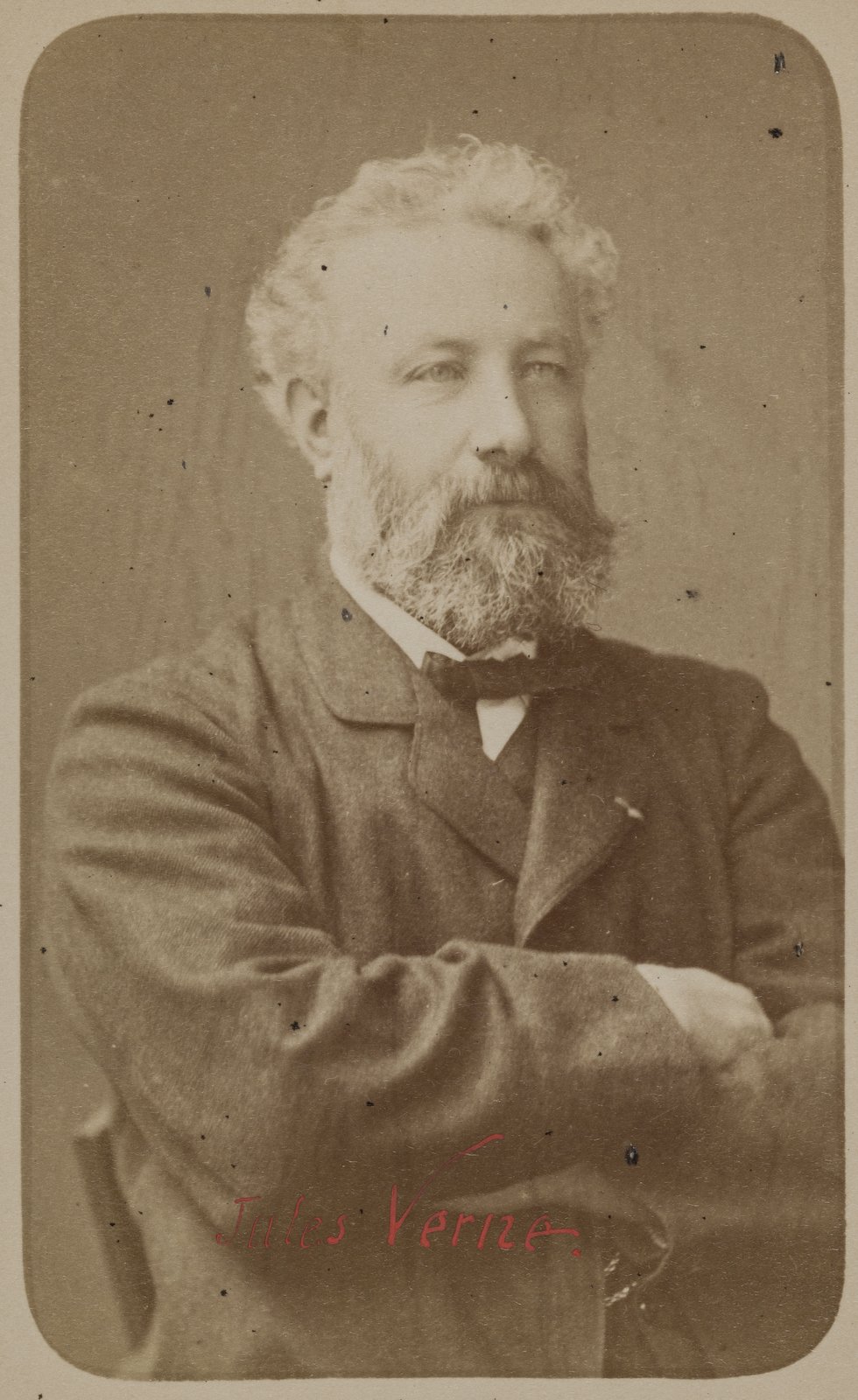
Atelier Nadar, Portrait of Jules Verne, albumen carte-de-visite, Musée Carnavalet - Histoire de Paris (PH57401); CC0 Paris Musées; card mount cropped, downscaled · Atelier Nadar, Portrait de Jules Verne (1828-1905), écrivain, carte-de-visite albumen print (9.3 x 5.8 cm), between 1860 and 1890, Musée Carnavalet - Histoire de Paris, inv. PH57401; CC0 digitization by Paris Musées via Wikimedia Commons · CC0 1.0
The Paris publisher Pierre-Jules Hetzel brought out Verne's Five Weeks in a Balloon in 1863. From 1866 Hetzel presented Verne's novels as a series, the Voyages Extraordinaires, a run of bestselling adventure novels that includes Journey to the Center of the Earth (1864), Twenty Thousand Leagues Under the Seas (1870) and Around the World in Eighty Days (1872). Their partnership lasted until Hetzel's death in 1886.
Verne has been the second most-translated author in the world since 1979, ranking below Agatha Christie and above Shakespeare. British and American publishers marketed his books almost exclusively to young audiences, a business decision that had a lasting effect on his reputation in English-speaking countries, implying that he could be treated purely as a children's author.
He also wrote for the theatre. Stage versions of Around the World in Eighty Days and Michel Strogoff, written with the dramatist Adolphe d'Ennery, were major successes in Paris. In 1904 Michel Strogoff was again playing at the Théâtre du Châtelet.
In an 1893 interview in Amiens, Verne told the journalist Robert Sherard that he was never satisfied with fewer than seven or eight sets of proofs. Sherard saw beside him a pile of proofs Verne called 'the sixth set'. The manuscripts kept at Nantes show the same layers of work: a pencil draft, corrections in ink, chapters rewritten in the margins, then several rounds of proofs.
Revising this many times after the text was already set in type fits the profile's perfectionism score. Verne himself said the practice cost him money as well as time, which is why the trait is marked dual-edged. Perfectionism
In interviews between 1893 and 1904, Verne said he read the same fifteen newspapers every afternoon, subscribed to more than twenty, followed science and geography journals, and cut out or noted anything useful. In 1894-95 the journalist Marie Belloc saw cardboard pigeon-holes in his library holding more than twenty thousand notes, which he said were sorted by subject.
This lifelong habit of reading and filing sits alongside the profile's curiosity score. Most of the description comes from Verne himself, but the files Belloc saw are one physical trace of it. Curiosity
In spring 1869 Hetzel rejected the closing chapters of Twenty Thousand Leagues under the Seas. Verne had made Captain Nemo a Pole avenging the crushing of the 1863 uprising, but Hetzel objected for commercial and diplomatic reasons. Verne refused to rewrite the character as asked, saying he could not portray what he did not feel, though he accepted other changes. In the published book Nemo's nationality and motives stay unexplained. Scholars disagree over who prevailed.
Defending his main character while working within a publisher's rules offers one example of why the profile places his need for autonomy near the middle rather than high. Later letters show him rejecting Hetzel's suggestions more openly, yet he kept working with Hetzel until the publisher's death in 1886. Need for Autonomy
People whose overall profiles resemble theirs.