Leonardo da Vinci
93% Profile Match
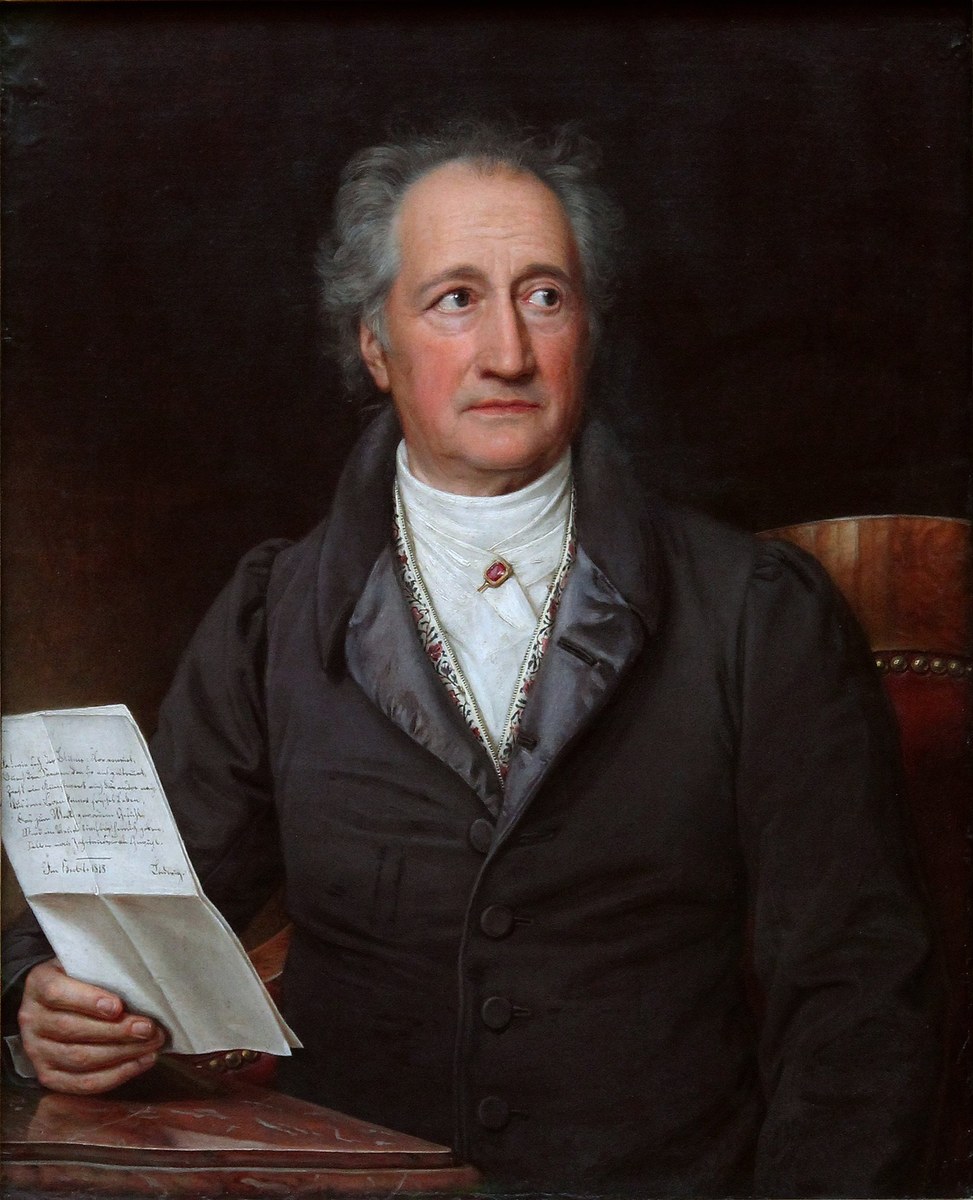
Joseph Karl Stieler, 1828, Bayerische Staatsgemaeldesammlungen - Neue Pinakothek Munich (WAF 1048), Public Domain (artist died 1858) · Wikimedia Commons, 'Goethe (Stieler 1828).jpg' -- Joseph Karl Stieler, oil on canvas 1828 (Neue Pinakothek Munich, inventory WAF 1048), painted from sittings with Goethe in Weimar; original Commons file 1972 x 2432 pixels, downscaled once to 973 x 1200 (never upscaled). · Public Domain
writer · Early Modern
1749–1832
Not yet included in personality matching — the documented evidence doesn't yet cover enough of the personality model. Everything else on this page is fully available.
He worked on Faust for more than 60 years, revising and returning to it until its second part reached its last acts in 1831.
His early works, including Götz von Berlichingen and The Sorrows of Young Werther, were immensely popular.
From 1794 he worked in close partnership with Friedrich Schiller on journals, almanacs and epigrams, and he directed the Weimar court theatre.
In 1823 he told Eckermann that for twenty years he had known that Newton and the mathematicians were wrong about colour and that he alone among millions knew the truth, and he went on defending his theory for the rest of his life.
This is consistent with a willingness to hold a position against nearly the whole scientific establishment of his day, in a case where later physicists judged him wrong. Independent Thinking
In 1831 he had the whole manuscript of Faust's second part stitched together, with white paper standing in for the missing fourth act, so that what was finished would draw him on to complete the rest.
This is consistent with finishing a very long work by returning to it in stages and arranging the work so it pulls him forward. Persistence
After Schiller's letter of 23 August 1794 describing his mind, Goethe replied that he regarded those days as an epoch in his life, and the two began a close working partnership on journals, almanacs and poems.
This is consistent with a writer who, from this point, sought out a close peer to work with instead of working mainly alone. Collaboration
People whose overall profiles resemble theirs.