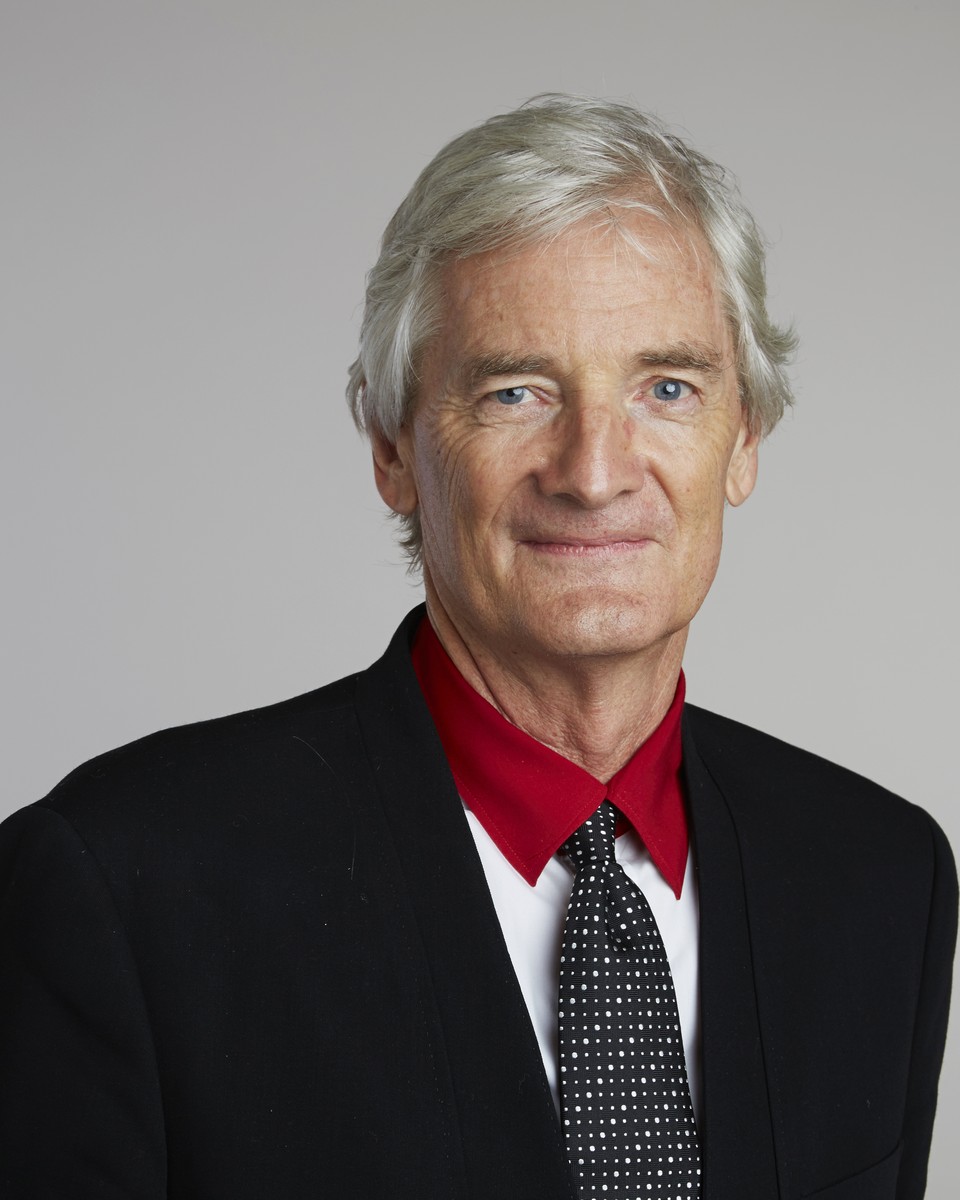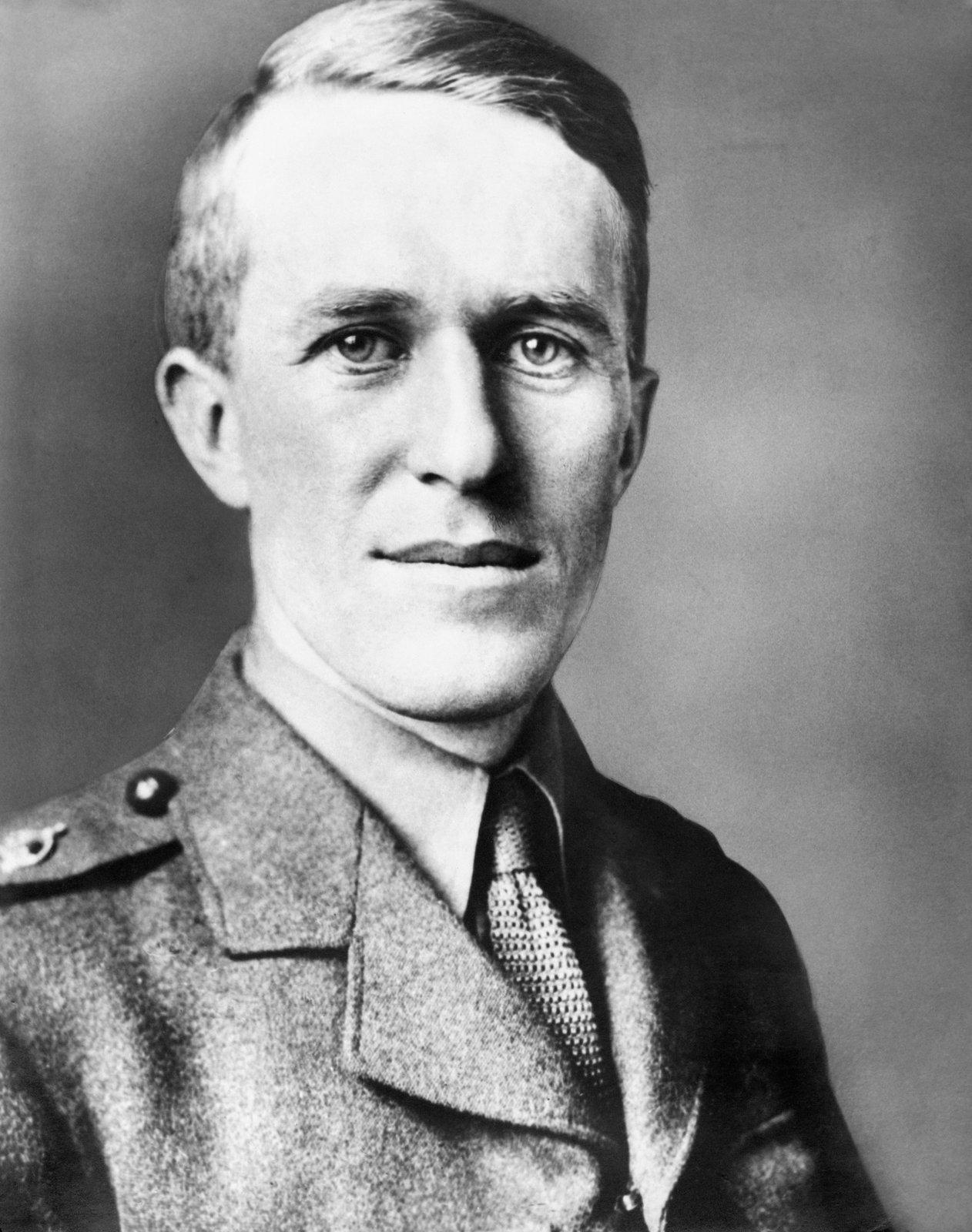

Photo: Debbie Rowe for the Royal Society, 10 July 2015, CC BY-SA 3.0, cropped and downscaled from the original · Wikimedia Commons, 'Sir James Dyson CBE FREng FRS.jpg' -- studio photograph by Debbie Rowe (named as creator on the Royal Society Picture Library record 'Portrait of James Dyson', image RS.18523) taken at the Royal Society's Admissions Day ceremony in July 2015 (EXIF Canon EOS 5D Mark III, 10 July 2015), uploaded to Commons by the Royal Society's uploader account under a VRTS permission ticket (2014062710019796); the Commons page (a featured picture) offers CC BY-SA 4.0 and CC BY-SA 3.0 and the Royal Society's own library record credits CC BY-SA 3.0 with no conflicting restriction, and the file's embedded metadata carries no conflicting copyright notice; original 3724 x 5586 pixels, cropped to a 3100 x 3875 head-and-shoulders area and downscaled once to 960 x 1200 (never upscaled). · CC BY-SA 3.0
inventor · Contemporary
James Dyson
b. 1947
Known For
Not yet included in personality matching — the documented evidence doesn't yet cover enough of the personality model. Everything else on this page is fully available.
Trait Constellation
Key Achievements
In 1978 he adapted the cyclone collectors used in sawmills to a household vacuum cleaner, testing more than 5,000 prototypes over about five years, according to Britannica. After established makers showed no interest he sold the design in Japan as the G-Force, which the Design Museum says funded his own DC01, made in Wiltshire from 1993 and, Britannica says, Britain's top-selling vacuum cleaner within two years despite a higher price.
He built Dyson beyond the vacuum cleaner: Britannica records the Air Multiplier bladeless fan of 2009, an Observer interview describes the company's Airblade hand dryer, and the Guardian reported in 2005 that, about two years after entering the American market, Dyson had become the most popular vacuum cleaner there, a claim the company announced; Cooper Hewitt dates the US launch of the DC07 to 2002.
The Royal Designers for Industry list him under Engineering Design (2005), and the Royal Society, which elected him a Fellow in 2015, says he holds 1,138 patents and funds 50 research projects at UK universities; his G-Force, DC01 and DC07 cleaners are held by the Design Museum, the Science Museum Group and Cooper Hewitt.
Moments That Reveal Them
When Dyson's team began selling the cleaner with a see-through bin, retailers were appalled and said people would not want to see the dirt, and market research agreed. Dyson says he could not prove people would buy it but kept the design, and his design director Peter Gammack says colleagues were uncomfortable with the idea but that 'he stuck to his guns'; Dyson adds that other makers now use clear bins too.
This is consistent with a designer who backs his own judgement over market research, though both accounts come from Dyson and his own design director and are told after the product succeeded. Independent Thinking
On 10 October 2019 Dyson emailed staff that his team had built a 'fantastic car' but that 'we simply can no longer see a way to make it commercially viable'. He said he had tried to sell the division without finding a buyer, that this was not 'a product failure, or a failure of the team', and the company said it hoped to find other roles for most of the 523 people involved, 498 of them in the UK. A business-school professor told the Guardian the project had never stacked up commercially and looked like a vanity project.
This is consistent with a founder who stops a very large project when its economics do not work, though the decision came after he had confirmed a £2.5bn investment plan covering the car and an outside critic read the project as a vanity project. Belief Updating
Turning Points
Unable to find support for his bagless design in the UK, and with the established manufacturers uninterested, Dyson licensed it in Japan, where the G-Force went on sale in 1986 and, the Design Museum says, succeeded well enough to fund his own production of the DC01. He opened his own plant in North Wiltshire in 1993, and Britannica says the Dual Cyclone was Britain's top-selling vacuum cleaner within two years.
This is consistent with someone who built his own route to market when the existing ones were closed, though most details of the earlier rejections come from his own account. Proactive Agency
Similar People
People whose overall profiles resemble theirs.

Catherine the Great

Carl Jung

Yayoi Kusama

George Orwell

Frida Kahlo
Sources
- James Dyson (Q1346101) -- verified live via the Wikidata API (2026-10-16): English label 'James Dyson', description 'British inventor, industrial designer and founder of the Dyson company (born 1947)', born 2 May 1947, no date of death, citizenship United Kingdom, Korean label present. Orientation only; not used as support for any row.
- Encyclopaedia Britannica (Britannica Money), 'James Dyson', by the Editors -- encyclopedia biography: the Royal College of Art, the Sea Truck landing craft for Rotork (1970), the Ballbarrow company (1974), the 1978 idea of adapting the cyclone collectors of industrial plants such as sawmills to a household cleaner, five years and more than 5,000 prototypes, the established makers' lack of interest, the G-Force sold in Japan, the 1993 plant in North Wiltshire and the Dual Cyclone becoming Britain's top-selling vacuum cleaner within two years despite its price, the 2009 Air Multiplier bladeless fan, and his campaigning for engineering. CANONICAL SIGNIFICANCE SOURCE (a reference work's overview of his contribution). Independent, though it follows his own account in places; its CBE year (1998) conflicts with the Royal Society and Royal Designers for Industry (1996), so no honours date is taken from it, and its passages on policy reports are not used. Read in full.
- The Royal Society, 'Sir James Dyson CBE FREng FRS' Fellow profile (elected 2015) -- the Society's statement that he is a renowned inventor, entrepreneur, philanthropist and supporter of science and engineering who holds 1,138 patents, funds 50 research projects at UK universities and conducts further R&D at his own facility, with subject groups in engineering and materials science. CANONICAL SIGNIFICANCE SOURCE (second; the Society's own statement of why he was elected). Institutional; the patent and funding figures were supplied at election and are not independently checked, and the word 'outspoken advocate' is not used for scoring. Read in full.
- Royal Designers for Industry (the Royal Society of Arts faculty of distinguished designers), profile of James Dyson, Engineering Design, 2005 -- the faculty's entry and biography: founder of Dyson, six thousand engineers and scientists, technology sold in 83 markets, works listed (DC01 1993, V11 Animal 2019, Supersonic hair dryer 2019), honours and charitable giving. Institutional listing with company-supplied figures, used for the recognition card only and never for scoring. Read in full.
- Design Museum (London), 'Dyson G-Force' object page (Adopt an Object) -- the museum's note that, unable to find support for his invention in the UK, Dyson licensed his first design for a bagless vacuum cleaner in Japan, and that the G-Force's form, colours and cyclone feature were a success that funded his production of the DC01. Short institutional statement. Read in full.
- Cooper Hewitt, Smithsonian Design Museum blog, 'James Dyson: Designing Out Annoyances' by Rebecca McNamara (first posted 1 May 2013, reposted 17 May 2018) -- curator's note on the DC07: his habit of treating the shortcomings of appliances as opportunities, the DC01's development through more than five thousand prototypes with one aspect changed at a time, the adaptation of industrial cyclone technology to the home, and the 2002 US launch of the DC07. Institutional blog that partly relies on his autobiography. Read in full.
- James Dyson Foundation, 'Our Story' page -- the account published by the Dyson-supported charity: the 1978 sawmill idea and rough cardboard prototype, five years and 5,127 prototypes to the DC01, the company's growth into a global technology enterprise, and the Foundation's founding in 2002. Self-published by a Dyson-funded charity, so used only for orientation and as the origin of the prototype count, and its 'world's first bagless vacuum cleaner' wording is not used. Read in full.
- Gary Younge, 'Gold dust', The Guardian (G2), 28 February 2005 -- profile written in New York after the company's American success: his critical eye for design flaws (even in a hotel suite), the origin of the cyclone idea at a sawmill, the US launch and retailers' initial reluctance, his remark comparing his success with the Beatles and the writer's view that it was boastful, his 2004 resignation as chairman of the Design Museum over style versus substance, and the 2002 move of production to Malaysia with 800 redundancies and his account of it. Independent profile with a critical edge; its passages on wealth, dividends, taxation, the euro and litigation were read and are not used as evidence. Read in full.
- Lucy Siegle, 'James Dyson: Reinventing Britain', The Observer, 1 May 2011 (online 30 April) -- interview at the Malmesbury headquarters: his statement that he made 5,126 failed prototypes before number 5,127, the failed Contrarotator washing machine kept in his office, his refusal to design down to a cost and his dismissal of brands, the first business 'betrayal' over the Ballbarrow, the interviewer pressing him on the 2002 move abroad and his distinction between assembly and manufacturing, and his admission that he could not do three-quarters of the work in the building. Independent interview with named challenge; its passages on copying, universities and policy were read and are not used. Read in full.
- Carole Cadwalladr, 'James Dyson interview: Vacuums are already smarter than people', The Guardian/Observer, 9 May 2014 -- interview: his remark that rejection by the big manufacturers revealed an opportunity, his preference for learning from failure, the clear-bin decision made against retailers' objections and market research, his reasons for keeping Dyson private and doubling research spending every two years, and the company's robotics work. Independent interviewer; much of the content is Dyson's own account, and the passages on education policy, immigration and wealth are not used. Read in full.
- Rob Davies, 'James Dyson scraps plans to build electric car', The Guardian, 10 October 2019 -- news report on his email to staff that the electric-car project could not be made commercially viable, his statement that he had tried to sell the division and found no buyer and that it was not a product failure or a failure of the team, the 523 staff affected, and a business-school professor's comment that it never stacked up and looked like a vanity project. Independent report with an outside critic; the references to Brexit and the choice of Singapore for the factory are not used. Read in full.
- Faisal Islam, 'Britain no longer wants to make it', The Observer, 24 August 2003 -- report on the move of the contra-rotating washing machine's production to Malaysia a year after the vacuum cleaners', with 65 further UK jobs lost on top of 800 and his reasoning that it would protect more than 1,200 design, research and engineering jobs, set inside a discussion of manufacturing policy. Independent reporting; its policy and statistics sections are not used. Read in full.
- Patty Onderko, 'James Dyson: The Ever-Tinkering Engineer', SUCCESS, November 2013 (page later updated) -- magazine profile: the 1978 insight and cardboard-and-duct-tape cyclone, fifteen years of rejections, lawsuits and near-bankruptcy, the G-Force in Japan in 1986 and the DC01 in 1993, his rule that engineers build and test their own prototypes while he spends his days breaking them, former design manager Marcus Hartley on his charisma and approachability, his refusal to sell the technology or go public, and his description of the 2002 move abroad as painful but recommended by his chief executive. Independent but largely favourable; the passage on his wife and household is not used. Read in full.
- James Dyson and Peter Gammack, 'How we made the Dyson vacuum cleaner', The Guardian, 24 May 2016 -- first-person account by Dyson and his director of design: the Hoover Junior's clogging bag, the sawmill cyclone and cardboard prototype, fifteen years and about 5,000 prototypes, the Japanese G-Force deal, the clear bin that colleagues hesitated over, the DC02 built in two years, and the investment in the company's own motors. Self plus an employee's account, so used only as one voice and never as sole support; its '22 months later' timing of the DC01 is not used. Read in full.
- Nina Zipkin, 'James Dyson: Never Be Afraid to Fail', Entrepreneur.com via NBC News, 12 June 2014 -- short interview: the 5,127-prototype count, unreleased inventions such as the 2001 Halo headset, and Dyson's own account of an early licensing deal whose terms changed, the manufacturer making the product without him and the fraud suit he had to fight to recover his drawings. Almost entirely Dyson's own account (self), used only to corroborate other sources and never alone. Read in full.
- Wikimedia Commons file 'Sir James Dyson CBE FREng FRS.jpg' and the Royal Society Picture Library record for 'Portrait of James Dyson' (creator Debbie Rowe, taken at the Society's Admissions Day ceremony in July 2015) -- opened to check the portrait's licence: the Commons page shows a Royal Society release under CC BY-SA 4.0 and CC BY-SA 3.0 with a VRTS permission ticket, and the Library record credits CC BY-SA 3.0. Not used for any scoring.
- Science Museum Group Collection, 'Dyson DC01 dual cyclone vacuum cleaner' (object 1996-160) -- catalogue record of a 1995 DC01 modified to show the vortex effect, made by Dyson Appliances Limited at Chippenham and linked to James Dyson as related person. A bare catalogue record with no interpretive text, used only to show that the museum holds the object. Read in full.