
Benjamin Franklin
92% Profile Match
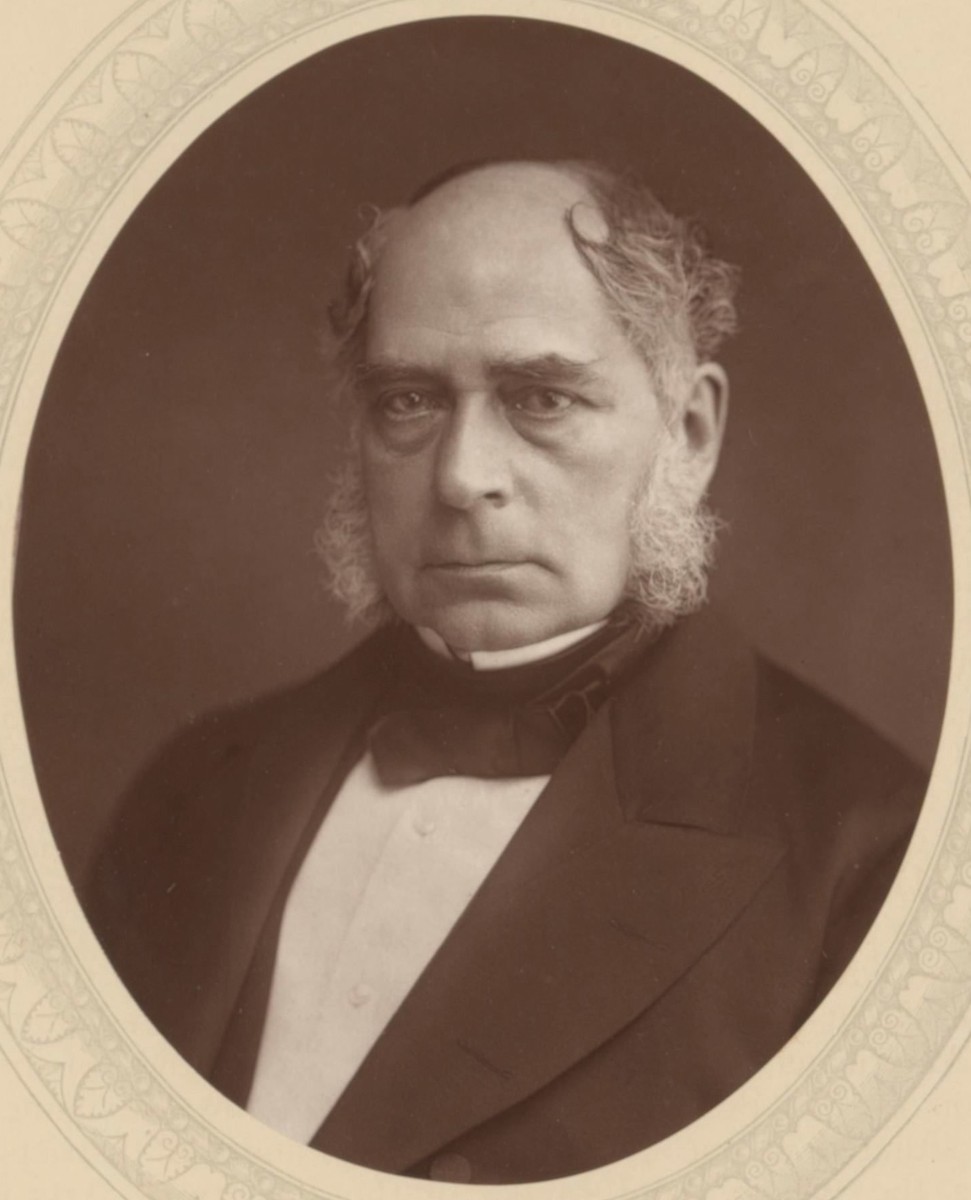
Lock & Whitfield (photographer), 'Sir Henry Bessemer', Woodbury print in 'Men of Mark', c. 1876 - in or before 1881. Rijksmuseum, Amsterdam, RP-F-2001-7-235E-29 (Public Domain). Cropped and downscaled. · Photographic portrait of Sir Henry Bessemer by the London studio Lock & Whitfield (named on the print), reproduced by the Woodbury photomechanical process as a plate in the portrait volume 'Men of Mark' (text by Thompson Cooper), page 29, held by the Rijksmuseum, Amsterdam (object number RP-F-2001-7-235E-29, 'Portret van Henry Bessemer'), dated by the museum c. 1876 - in or before 1881. The printed caption under the plate and the facing biography name the sitter. The file is the portrait oval cropped from the museum's double-page scan (7162 x 4570 pixels; crop 1440 x 1780) and downscaled to 971 x 1200 with no upscaling. · Public Domain Mark 1.0 and CC0 as stated in the Rijksmuseum's own item record; the photograph was made and published in London in the 1870s (public domain by age)
inventor · 19th Century
1813–1898
Not yet included in personality matching — the documented evidence doesn't yet cover enough of the personality model. Everything else on this page is fully available.
British engineer and inventor whose converter process, announced in 1856, made steel in bulk by blowing air through molten pig iron; one account puts the price fall from about 50-60 pounds a tonne to 6-7. The process needed Mushet's spiegeleisen addition, and later Gilchrist and Thomas's basic lining for phosphoric iron, to work reliably.
After early licensees failed to make the process work, he set up his own steelworks company in Sheffield in 1859 and licensed the process more widely; his steelmaking royalties exceeded one million pounds.
A prolific inventor whose about 120 patent specifications range from bronze-powder machinery and a stamp against forgery to sugar and glass processes; he was Iron and Steel Institute president (1871-73), was knighted and made a Fellow of the Royal Society in 1879, and gave his name to the Institute's Bessemer Gold Medal.
By his own account, when the ironmasters who had paid for licences to his process could not make it work, he bought the licences back and set out to prove it commercially at his own works in Sheffield rather than argue the matter in the press.
This is consistent with an inventor who answered a public setback by continuing to develop the process rather than withdrawing it. Persistence
When Robert Mushet's agent asked for a licence for his manganese patents, Bessemer refused, invited Mushet to test the matter in court, and later paid him an annuity of 300 pounds, which a museum blog suggests may have been to avoid troublesome litigation.
This is consistent with someone who met a priority dispute head-on and also bought peace when it suited him. Conflict Tolerance
Having announced the process in 1856 and seen licensees fail to make good steel from it, he moved from selling licences to making steel himself, founding Henry Bessemer and Company in Sheffield in 1859.
This is consistent with an inventor who turned a patented idea into an operating business rather than leaving its exploitation to others. Opportunity Sensing
People whose overall profiles resemble theirs.



Not a rival — a different profile shape worth a look.
