Coco Chanel
93% Profile Match
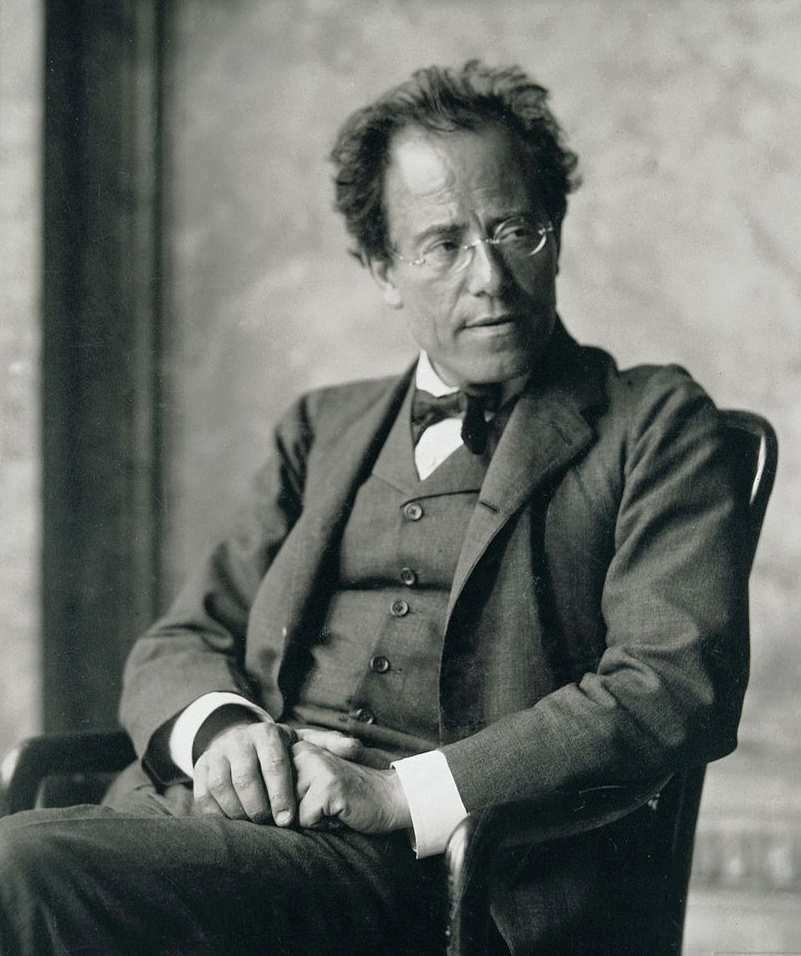
Photograph by Moritz Nähr (Vienna), 1907, as published on plate 12 of Richard Specht, 'Gustav Mahler' (Berlin and Leipzig: Schuster & Loeffler, 1913), credited 'M. Nähr, Wien, phot.' · Wikimedia Commons, 'Photo of Gustav Mahler by Moritz Naehr 01.jpg' (Commons wikitext: published on plate 12 of Richard Specht, Gustav Mahler, Schuster & Loeffler, Berlin/Leipzig 1913); plate checked on the Internet Archive scan of Specht 1913 (Univ. of Toronto copy), leaf with page number 12, credited 'M. Naehr, Wien, phot.' · Public domain (photographer Moritz Naehr, died 1945, so Austrian and EU term of life+70 expired end of 2015; published 1913, so also US public domain)
composer · 19th Century
1860–1911
Not yet included in personality matching — the documented evidence doesn't yet cover enough of the personality model. Everything else on this page is fully available.
Mahler composed nine numbered symphonies, the symphonic song cycle Das Lied von der Erde (completed 1908), the Kindertotenlieder and the Wunderhorn songs, and left a Tenth Symphony unfinished. He wrote most of this music in the summer breaks from his conducting posts. The Eighth Symphony was first performed in Munich on 12 September 1910 under his own baton, and Bruno Walter later premiered Das Lied von der Erde (Munich, 20 November 1911) and the Ninth (Vienna, 23 June 1912).
From 1897 to 1907 Mahler directed the Vienna Court Opera. According to his biographers Paul Stefan and Richard Specht, the paid claque disappeared, late-comers were no longer admitted during a performance, singers were drilled as an ensemble rather than as soloists, and from 1903 he worked with the painter Alfred Roller on some thirty to forty new productions, beginning with Tristan und Isolde, that brought scenery and lighting into line with the music. He left in 1907 and sailed for New York that December.
Mahler conducted at the Hamburg opera from 1891 and, after Hans von Bülow's illness and death in 1894, led its subscription concerts; in Vienna he also led the Philharmonic concerts from 1898 to 1901. In New York he conducted opera at the Metropolitan and, with the reorganised Philharmonic Society, 46 concerts in 1909-10 and a further 48 in the following season. Henderson of The Sun, a critic who at times disagreed with his readings, wrote in 1911 that all nineteen of his reviews of Mahler's Philharmonic concerts contained praise.
According to Richard Specht, when admirers of the tenor Hermann Winkelmann kept interrupting performances at the Vienna Opera with applause in the middle of scenes, Mahler met a group of them at the stage door. He refused their cheers, called their behaviour 'barbarous' and unworthy of young people, and told them to think before doing it again; only after he had left the stage did he say he would accept their cheers. Specht reports that the interruptions stopped.
Facing a hostile group directly rather than avoiding it is consistent with tolerance of conflict; the account comes from an admiring biographer and is undated. Conflict Tolerance
Paul Stefan reports that Mahler performed Beethoven's Ninth Symphony with retouched instrumentation, following changes Wagner had proposed. When critics objected, he had a printed explanation handed out in the hall, and the performance was repeated. A Sun reviewer in 1909 also questioned his handling of Schumann's D minor symphony, calling the finale hurried and the coda little better than a blur, while granting that his intended design was plain to hear.
Making his own editorial changes to a canonical score and defending them in print is consistent with independent thinking; the Sun review shows that critics did not always accept his readings. Independent Thinking
In summer 1907 Mahler applied for his pension and left the Vienna Court Opera, where he held a life appointment, and in December sailed to America. The Sun reported at the time that he said he was weary of the post and wanted time to compose, while his enemies said he had been forced out; Stefan says a protest address signed by writers, musicians and scientists was presented to him. In his farewell letter to the company he wrote that he left 'patchwork' rather than a finished whole.
Giving up a secure appointment for more control over his working time is consistent with a need for autonomy, though the sources disagree on whether he left by choice or under pressure. Need for Autonomy
People whose overall profiles resemble theirs.


Not a rival — a different profile shape worth a look.
