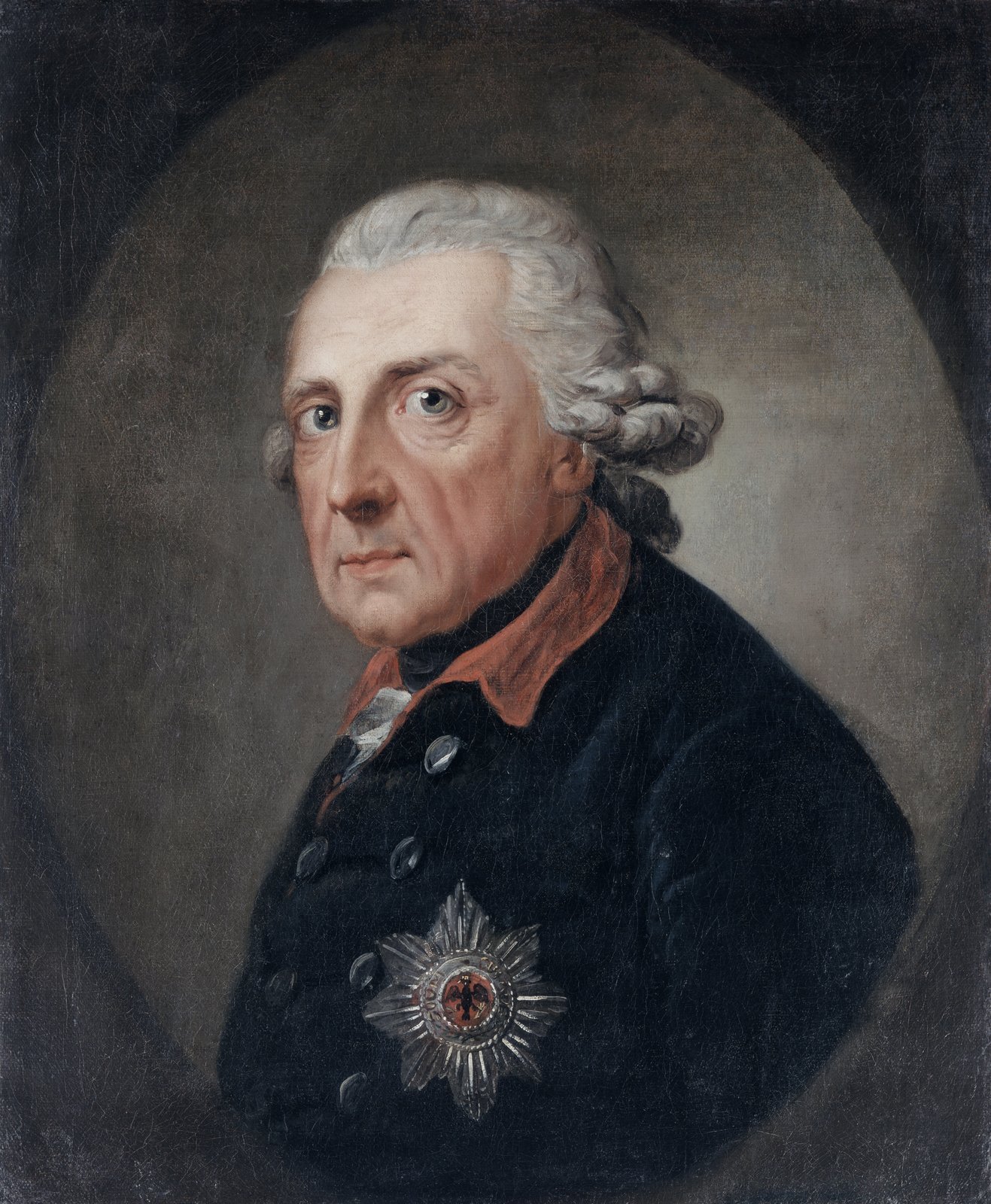
Frederick the Great
93% Profile Match
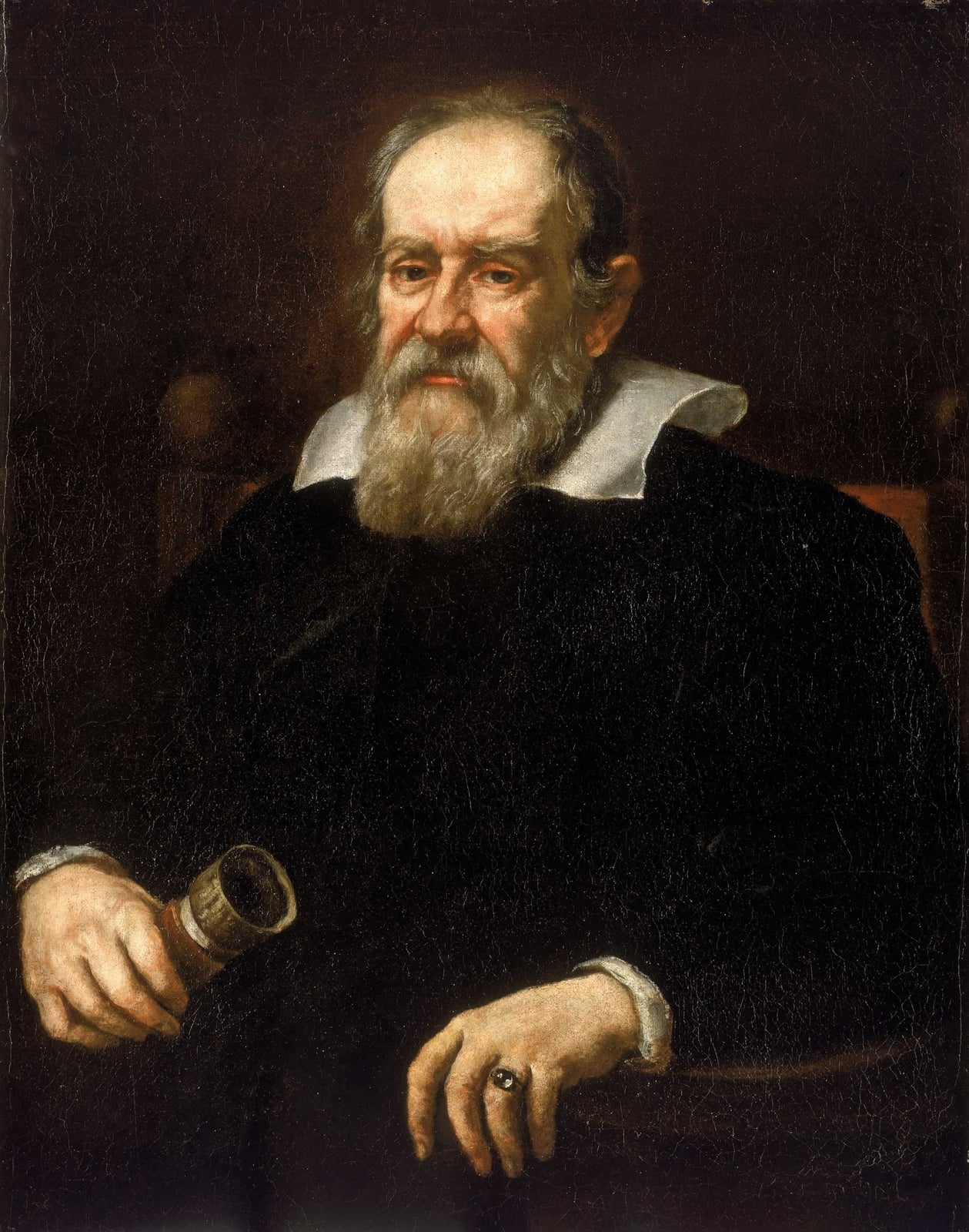
Painted by Justus Sustermans, 1636, National Maritime Museum, Greenwich, Public Domain · Wikimedia Commons (hosted locally by this app as a resized/compressed derivative; see licenseUrl for the full-resolution original) · Public Domain
1564 — Born.
1609 — Built and rapidly improved his own telescope; published Jupiter's moons and other findings.
1616 — Formally prohibited by the Catholic Church from teaching or defending heliocentrism.
1632 — Published the Dialogue Concerning the Two Chief World Systems, defying the prohibition.
1633 — Tried by the Roman Inquisition, forced to recant, and placed under house arrest.
1642 — Died, still under house arrest.
On hearing secondhand reports of a Dutch spyglass in 1609, Galileo built and rapidly improved his own telescope within months, then turned it toward the sky rather than only the terrestrial and military uses it was marketed for — publishing Jupiter's moons and other findings in Sidereus Nuncius within about a year of his first observations.
His inclined-plane and pendulum experiments produced quantitative, repeatable measurements of falling-body motion — a documented, distinctly quantitative methodology apart from the qualitative physics that dominated the period, reconstructed in detail from his own notebooks by historian Stillman Drake.
He wrote the 1632 Dialogue Concerning the Two Chief World Systems in vernacular Italian rather than scholarly Latin, deliberately reaching a wider lay readership, and structured it as a pointed dialogue that included a character widely read by contemporaries as mocking a Church-aligned position on cosmology.
Despite Johannes Kepler's published evidence for elliptical planetary orbits, Galileo continued to favor circular orbits for the rest of his life — a specific, documented instance in which he did not revise a particular technical position after new evidence became available.
This is the concrete, source-grounded basis for the profile's comparatively low belief_updating score on this point — not a general claim about his openness to evidence elsewhere in his career, where the telescope itself shows the opposite pattern. Belief Updating
In 1616 the Catholic Church formally prohibited Galileo from teaching or defending heliocentrism. He continued making the case for it regardless, including in the 1632 Dialogue, published after an explicit prior warning. In 1633 he was tried by the Roman Inquisition, forced to recant, and spent the remainder of his life under house arrest.
Continuing to argue a prohibited position rather than complying quietly is consistent with the profile's independent_thinking and risk_tolerance scores — though the consequence, house arrest until his death nine years later, was severe enough that this should not be read as a costless choice. Independent Thinking
People whose overall profiles resemble theirs.