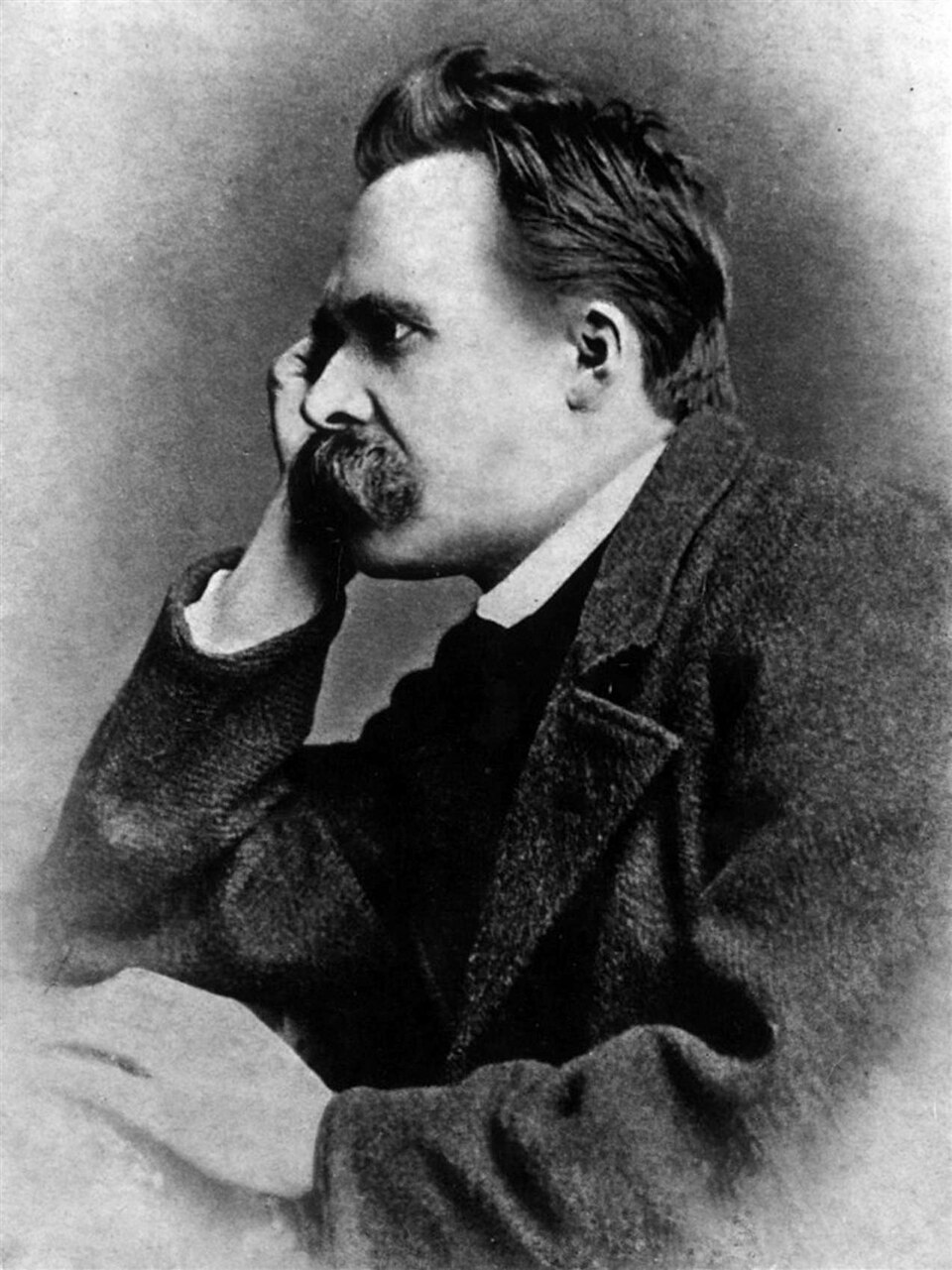
Photo: Gustav-Adolf Schultze, 1882, public domain · Wikimedia Commons 'Nietzsche1882.jpg': early-September 1882 photograph of Friedrich Nietzsche by Gustav-Adolf Schultze of Naumburg (died 1897; one of five profile photographs), scanned from Walter Kaufmann's 'Nietzsche' (Princeton Paperbacks) and processed in 2005; the Commons page tags it PD-old-100 and PD-US-expired. A contemporaneous photograph by a photographer dead for more than 70 years, so public domain by age; the book scan is a flat reproduction. Original file 1274 x 1700; saved from the Commons thumbnail at 960 x 1281 (downscaled only, no upscaling). · Public Domain
philosopher · 19th Century
Friedrich Nietzsche
1844–1900
Known For
Not yet included in personality matching — the documented evidence doesn't yet cover enough of the personality model. Everything else on this page is fully available.
Trait Constellation
Key Achievements
Appointed professor of classical philology at Basel in 1869 at age 24, the youngest ever appointed to such a post according to the Stanford Encyclopedia, and published The Birth of Tragedy (1872), a controversial book that classical scholars largely rejected.
After leaving Basel in 1879 he published almost a book a year, including Thus Spoke Zarathustra, Beyond Good and Evil and On the Genealogy of Morality, which challenge Christianity and traditional morality and include the 'God is dead' pronouncement.
His unmasking of the motives behind religion, morality and philosophy deeply affected later theologians, philosophers, psychologists, poets, novelists and playwrights, although Zarathustra drew little attention in his lifetime.
Moments That Reveal Them
Nietzsche's first book, The Birth of Tragedy, was a speculative polemic rather than careful scholarship; it was mocked as 'Future Philology' by Wilamowitz-Moellendorff, and Nietzsche then had difficulty attracting students.
This is consistent with a willingness to depart from scholarly convention at a cost to his academic standing. Independent Thinking
Part IV of Thus Spoke Zarathustra was printed privately in 1885 in forty copies, of which only seven were distributed among friends, and he went on publishing a new book nearly every year.
This is consistent with continuing to write and publish despite a very small readership. Persistence
Turning Points
In 1879 Nietzsche resigned his Basel chair with a pension and afterwards lived as an itinerant independent author, spending winters on the Mediterranean and summers in Sils Maria, in search of solitude for his work.
This is consistent with organising his working life around independent writing rather than an academic post. Need for Autonomy
Similar People
People whose overall profiles resemble theirs.

Frida Kahlo

Carl Jung

Yayoi Kusama

Ludwig Wittgenstein

Sigmund Freud
Opposite Profile
Not a rival — a different profile shape worth a look.
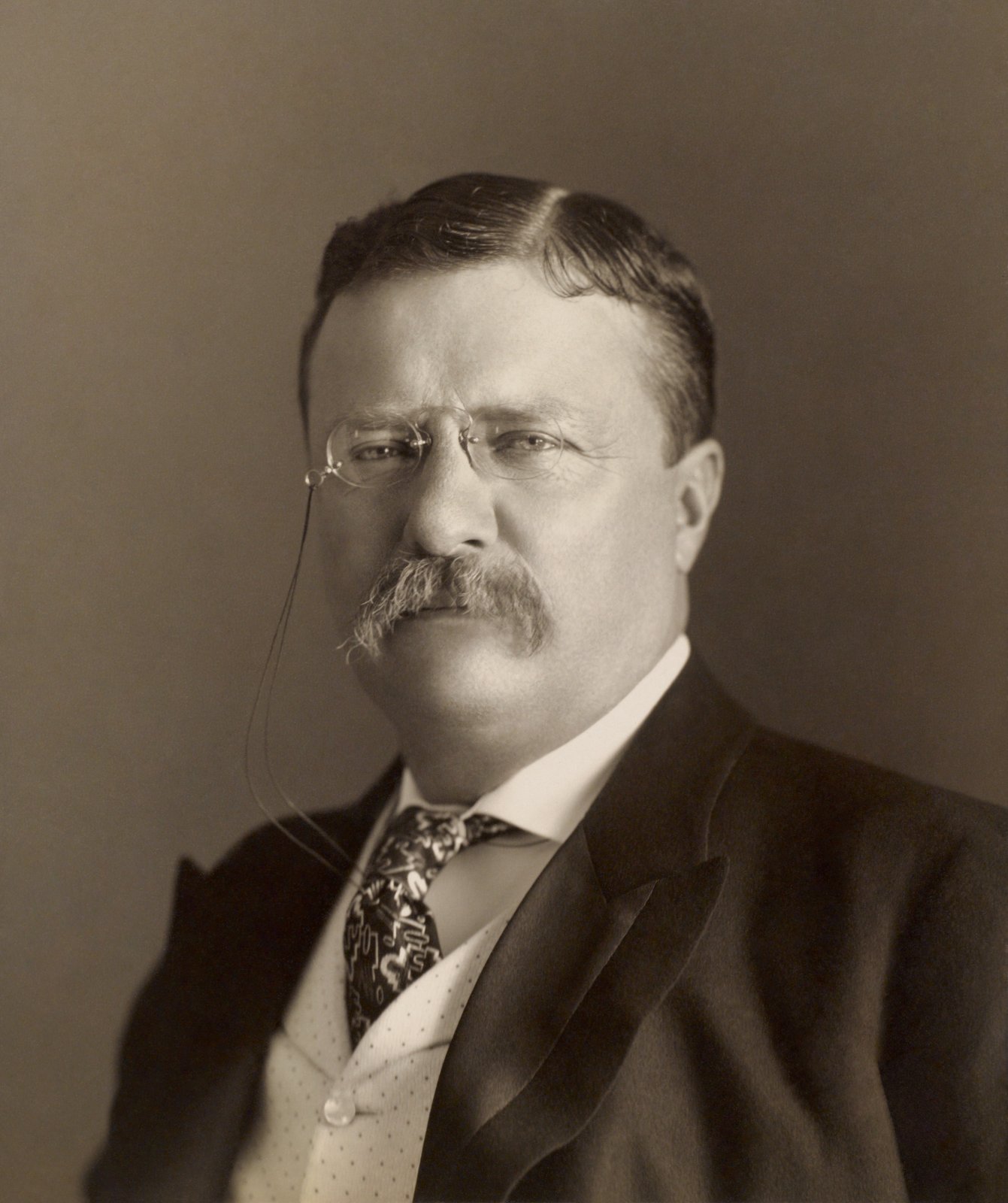
Theodore Roosevelt
Sources
- Friedrich Nietzsche (Q9358) -- verified live via the Wikidata API (2026-10-23): English label 'Friedrich Nietzsche', description 'German philosopher (1844-1900)', born 15 October 1844, died 25 August 1900, P18 images 'Nietzsche187a.jpg' and 'Friedrich Nietzsche - 1864.jpg'. Orientation only; not used as support for any row.
- Encyclopaedia Britannica, 'Friedrich Nietzsche' by Bernd Magnus (britannica.com), first page read through an Internet Archive copy (the live site blocks automated access; the later 'Years of wandering' pages were not retrieved): German classical scholar, philosopher and critic of culture whose attempts to unmask the motives underlying Western religion, morality and philosophy deeply affected generations of theologians, philosophers, psychologists, poets, novelists and playwrights; Ritschl's praise and the 1869 Basel appointment with no doctoral thesis, promotion to ordinary professor in 1870; The Birth of Tragedy (1872) 'marked his emancipation from the trappings of classical scholarship', speculative rather than exegetical, greeted by stony silence then controversy, praised by F. M. Cornford in 1912; Human, All-Too-Human (1878) in aphoristic form; resignation on 14 June 1879 with a pension; Thus Spake Zarathustra (1883-85) received little attention in his lifetime. CANONICAL SIGNIFICANCE SOURCE. All health, military-service, family and Wagner-relationship passages were deliberately not used for scoring; the note that fascists later invoked his name was not used.
- Stanford Encyclopedia of Philosophy, 'Friedrich Nietzsche' (plato.stanford.edu, revised edition), biography and works sections read in full: youngest ever appointed to a chair of classical philology (Basel, 1869, aged 24) on Ritschl's reference; The Birth of Tragedy (1872) was a controversial polemic, generally ill-received within classical studies and savagely reviewed by Wilamowitz-Moellendorff, despite striking interpretive insights; the Untimely Meditations as essays for a wide public; Human, All-too-human (1878) introducing short numbered aphorisms, a naturalistic critique of morality, and the break with the Wagners; after resigning in 1879 he published nearly a book a year (Daybreak, Gay Science, Zarathustra, Beyond Good and Evil, Genealogy, Twilight of the Idols and later-published Antichrist and Ecce Homo); his place in the German aphoristic tradition from Lichtenberg; his insistence on bringing multiple perspectives to bear. The entry's passages on illness, the 1889 collapse, relationships and his sister's editing were not used for any row or card.
- Stanford Encyclopedia of Philosophy, 'Nietzsche's Life and Works' (plato.stanford.edu, substantive revision 2021), read in full: 1869 start at Basel; limited satisfaction among philology colleagues and closer intellectual ties to the historians Franz Overbeck and Jacob Burckhardt, whose lectures he attended; Basel period and the Untimely Meditations; the post-1879 'nomadic years' (Nice and Genoa in winter, Sils-Maria in summer, never residing anywhere longer than several months) during which most main works were written; 'During his creative years, Nietzsche struggled to bring his writings into print and never doubted that his books would have a lasting cultural effect'; he learned he was the subject of Georg Brandes's 1888 Copenhagen lectures; the Zarathustra, Beyond Good and Evil and Genealogy summaries. The entry's discussion of the collapse, diagnoses, family and Salome episode was not used for any row, card or interpretation.
- Internet Encyclopedia of Philosophy, 'Friedrich Nietzsche' (iep.utm.edu), biography and works sections read in full: Basel professor of classical philology at 24 on Ritschl's praise despite no dissertation; The Birth of Tragedy mocked as 'Zukunfts-Philologie' ('Future Philology') by Wilamowitz-Moellendorff and called megalomania even by Ritschl, so that, the entry says, Nietzsche's academic reputation as a philologist was effectively destroyed and he had difficulty attracting students; an unsuccessful attempt to move to the philosophy department; after leaving Basel he never stayed in one place long, moving with the seasons in search of solitude for his work and reasonable living conditions on a modest budget, summers in Sils Maria and winters on the Mediterranean; Thus Spoke Zarathustra Book IV 'printed and distributed privately' (1885). The entry's discussion of ailments, his sister's editing and politics was not used.
- Middle Tennessee State University (Prof. J. Comas), 'Friedrich Nietzsche - Chronology' (capone.mtsu.edu), based on Walter Kaufmann's chronology in The Portable Nietzsche (1954) with additions, read in full through an Internet Archive copy (the live page returns 403 to automated access): his winter 1872-73 Basel lecture course on Greek eloquence 'attended by only two students'; a 1873-74 rhetoric course not offered 'because of lack of student interest'; leave from the university in 1876; resignation with pension in 1879; 'for the next ten years a new book is printed every year'; from the early 1880s summers in Sils Maria and winters in Nice with moves between Genoa, Rapallo and Turin; the Zarathustra parts written in short winter and summer spells and published separately in 1883-84; Part IV of Zarathustra (1885) printed privately in forty copies of which 'only seven' were distributed among friends; 'the beginning of fame' with Brandes's 1888 Copenhagen lectures. University-hosted chronology built on Kaufmann; its entries on illness, relationships and the 1889 collapse were not used.
- Christian Benne, review of Georg Brandes and Harald Hoffding, 'The Great Debate' (trans. and ed. William Banks, 2024), Critical Inquiry online, 1 March 2024 (criticalinquiry.uchicago.edu), read in full: Brandes gave the first university lectures on Nietzsche, in Copenhagen in 1888, and the essay compiled from them, 'Aristocratic Radicalism', became a main reference for understanding Nietzsche; the reviewer adds that Nietzsche's early reception was more complex than the common belief that Brandes discovered him. Used only for the documented reception episode (1888 lectures); the political content of the debate is NOT scored. Scholarly book review, independent of the encyclopaedia entries.
- Wikimedia Commons file page 'Nietzsche1882.jpg' (wikitext and API record), checked for the portrait's rights: photograph by Gustav-Adolf Schultze of Naumburg (died 1897), one of five profile photographs taken in early September 1882, scan from Walter Kaufmann's 'Nietzsche' (Princeton Paperbacks) processed 2005; tagged PD-old-100 and PD-US-expired; original 1274 x 1700. The P18 lead 'Nietzsche187a.jpg' (Friedrich Hartmann, c. 1875) was checked and not used because its Commons source is a Pinterest image link. Not used for any scoring.