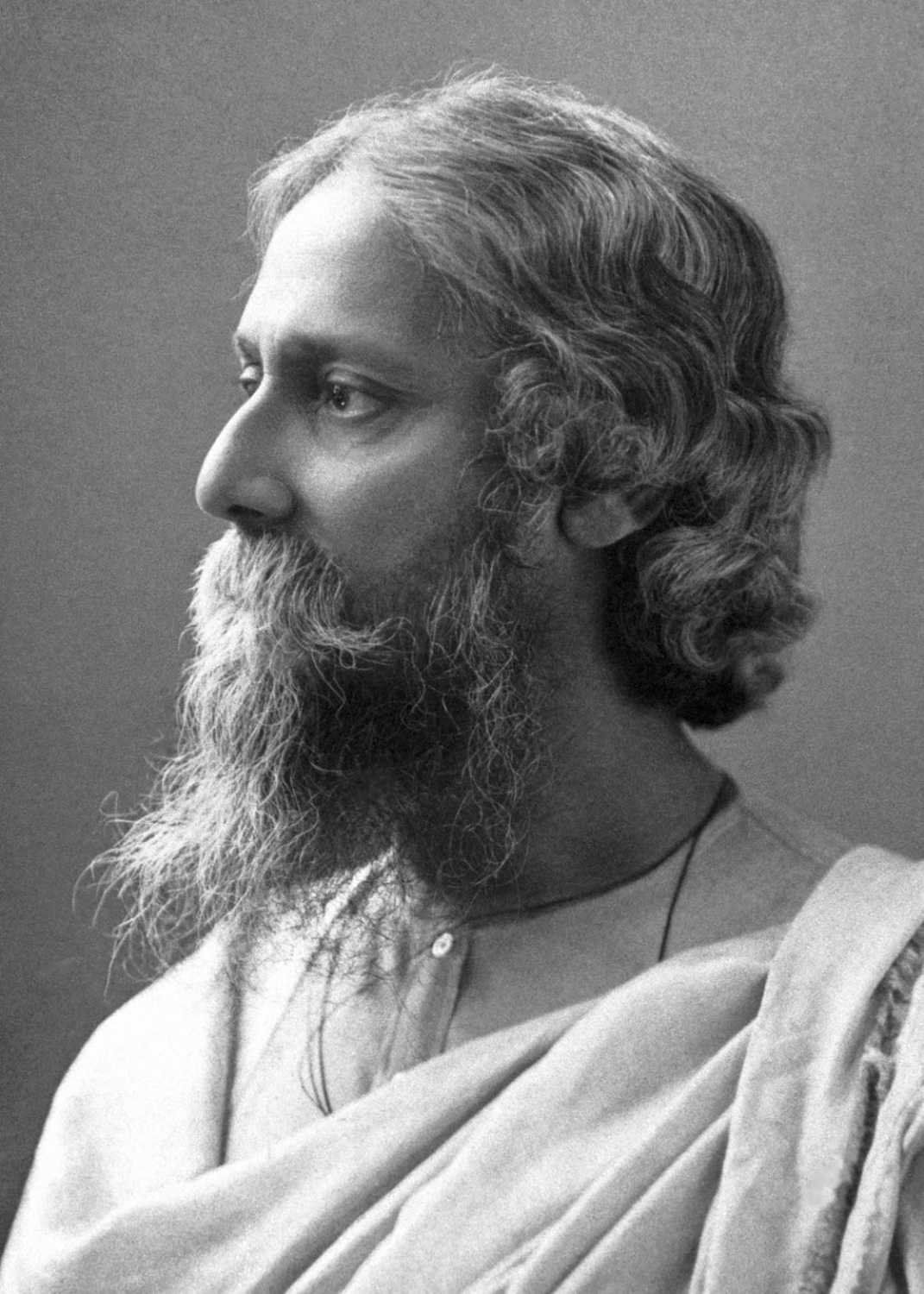
Rabindranath Tagore
92% Profile Match
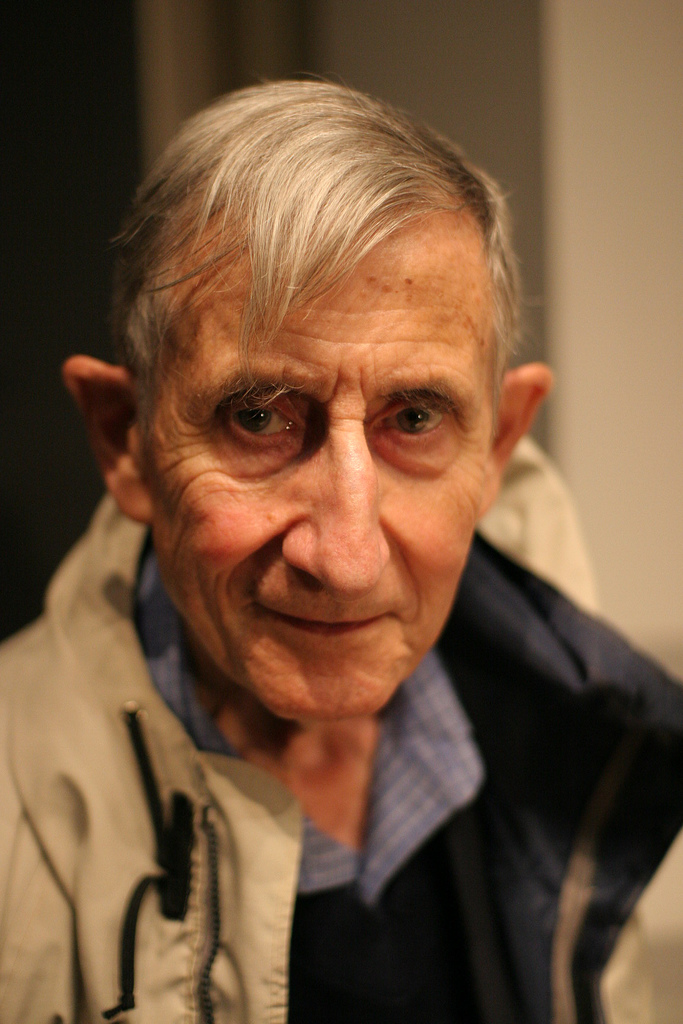
Photo: Jacob Appelbaum (Flickr: ioerror), Long Now Foundation seminar, 5 October 2005, CC BY-SA 2.0 · Wikimedia Commons, 'Freeman Dyson.jpg' -- photograph by Jacob Appelbaum (Flickr user ioerror) at a Long Now Foundation seminar, San Francisco, 5 October 2005; original Commons file 683 x 1024 pixels, saved unchanged (no scaling); the Commons page records an automated Flickr licence review ('FlickreviewR' pass, 1 April 2008) for CC BY-SA 2.0; the Flickr page itself could not be opened (HTTP 403) so the review record on Commons is the verification; no conflicting notice was found in the IAS or AIP pages read (the AIP Emilio Segre Visual Archives group photograph of 1979 was seen but not used). · CC BY-SA 2.0
physicist · 20th Century
1923–2020
Not yet included in personality matching — the documented evidence doesn't yet cover enough of the personality model. Everything else on this page is fully available.
In 1949 he showed that the two competing formulations of quantum electrodynamics, by Tomonaga and Schwinger and by Feynman, are mathematically equivalent, which let physicists use Feynman diagrams in calculations.
Beyond QED he helped design the TRIGA research reactor, worked on random matrices and the stability of matter, and in 1960 suggested searching for advanced civilisations by the infrared heat of star-enclosing structures, later called Dyson spheres.
From the 1970s he wrote books and essays for general readers, including Disturbing the Universe (1979) and Weapons and Hope, which won the National Book Critics Circle Award for nonfiction in 1984.
Travelling alone by bus to Princeton in 1948, after weeks of studying Feynman's and Schwinger's methods, he worked out that the two theories were equivalent, which he later called a flash of illumination.
This is consistent with an ability to hold two difficult formalisms in mind and prove how they relate. Analytical Rigour
When colleague William Press posed a problem about the iterated prisoner's dilemma, Dyson replied the next day, and the two published a much-cited paper in 2012.
This is consistent with a pattern of short, project-based collaboration on problems that catch his interest. Collaboration
In 1975, following G. H. Hardy's advice that old men should write books, he decided to write books, and his output of theorems gradually fell while his output of books rose.
This is consistent with a preference for steering his own career toward the work he found most creative. Need for Autonomy
People whose overall profiles resemble theirs.


Not a rival — a different profile shape worth a look.
