Yayoi Kusama
93% Profile Match
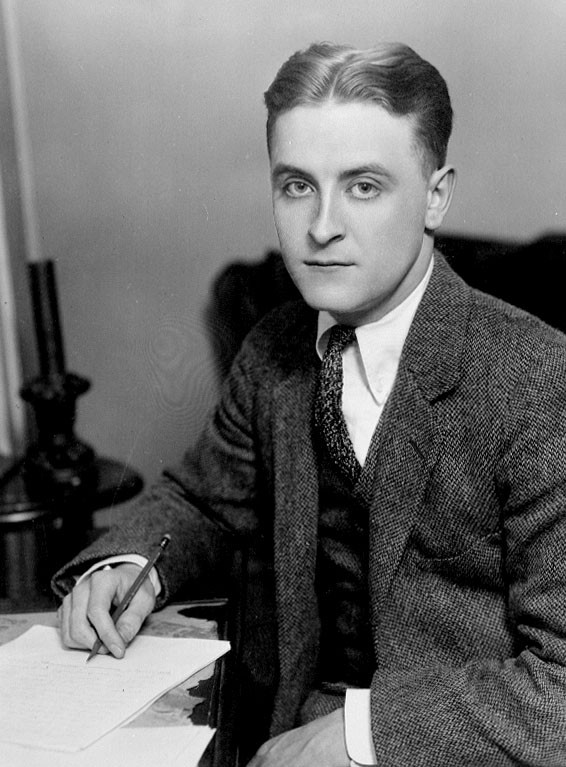
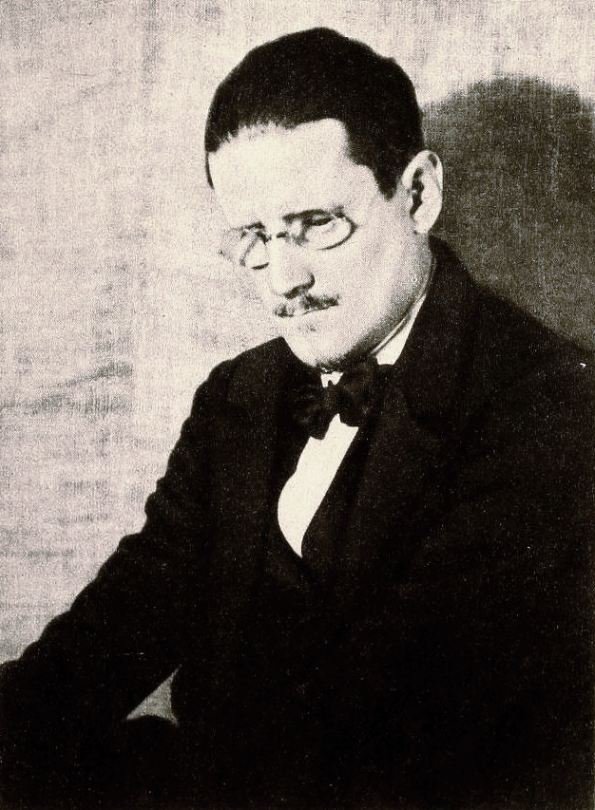
Photographer unknown (publicity photograph distributed by Scribner's), printed in The World's Work, June 1921, page 192; public domain; via Wikimedia Commons, used uncropped · Wikimedia Commons, 'F Scott Fitzgerald 1921.jpg' (original 566 x 767 pixels, uploaded 13 September 2013): a publicity photograph of F. Scott Fitzgerald c. 1921, photographer unknown, distributed by his publisher Scribner's and printed in The World's Work, June 1921, page 192 (Internet Archive scan of volume 42, University of Toronto copy, whose text layer carries the item headed 'Scott Fitzgerald' on that page with no photographer credit and no rights statement) and in US newspapers of April 1922 as cited on the Commons page; Commons tags it public domain (PD-US-expired) because it was published in 1921. Used as downloaded: uncropped, not resized and never upscaled. The Library of Congress Van Vechten portrait of 4 June 1937 was set aside because the Library's rights statement records a trustee's request not to crop or colorize and a dispute over the donor's executor's authority (see the provenance notes). · Public domain (United States): published in 1921, photographer unknown (Commons PD-Scan / PD-US-expired)
writer · 20th Century
1896–1940
Not yet included in personality matching — the documented evidence doesn't yet cover enough of the personality model. Everything else on this page is fully available.
Fitzgerald's The Great Gatsby (1925), which Britannica says is today widely considered the great American novel, was planned from June 1922, restarted in 1924 after an earlier version was abandoned, finished in manuscript by September 1924 and then extensively revised and rewritten in galley proof in early 1925. The University of South Carolina Libraries call it a striking advance in his technique, with a complex structure and a controlled narrative point of view, though its first sales were disappointing.
His first novel, This Side of Paradise (1920), made the 24-year-old Fitzgerald famous almost overnight and, Britannica says, was a revelation of the new morality of the young. He completed four novels in all, including The Beautiful and Damned (1922) and Tender Is the Night (1934), and Britannica describes him as famous for his depictions of the Jazz Age and a key figure of the Lost Generation.
Fitzgerald also wrote more than 150 short stories. Working through his agent Harold Ober from the autumn of 1919, he wrote popular stories for mass-circulation magazines, and the University of South Carolina Libraries call the Saturday Evening Post his best story market and say his early commercial stories introduced a fresh character, the independent, determined young American woman. Britannica names 'The Rich Boy' and 'Absolution', in All the Sad Young Men (1926), among his finest stories.
Fitzgerald sent the typescript of Gatsby to his editor Maxwell Perkins in November 1924. When the typeset galleys reached him in Rome he spent the first two months of 1925 correcting them in pencil and pasting in long typed additions, and Princeton's curators, citing the scholar James L. W. West III, note that the galley text was not the same novel as the published one. Even after publication he corrected a personal copy of the first edition for later printings.
This is consistent with a writer who held his work to a high standard through repeated revision, though heavy revision is common among novelists and the sources trace back largely to one scholarly lineage. Perfectionism
At MGM in September 1937 Fitzgerald asked the producer Joseph Mankiewicz to let him work alone on his Three Comrades revisions, and Mankiewicz replied that what he had submitted was 'simply swell'. The studio nevertheless assigned E. E. Paramore as collaborator, and Fitzgerald wrote to him in October that he preferred to keep responsibility for the script as a whole. After six revisions Mankiewicz heavily revised the final script, and Fitzgerald noted in his shooting script that the shadows and rhythm of his pages had been removed.
This is consistent with a writer who wanted control of his own work, though the account comes from a library's acquisition page that gives Fitzgerald's side far more fully than the studio's. Need for Autonomy
After Scribner's twice turned down his first novel, Fitzgerald quit his job in July 1919, went home to St. Paul and rewrote it as This Side of Paradise, which Maxwell Perkins accepted in September; published on 26 March 1920, it made him famous almost overnight. In the same autumn and winter he began writing stories for mass-circulation magazines through the agent Harold Ober, and his first Saturday Evening Post story, 'Head and Shoulders', sold for $400.
This is consistent with a writer who rebuilt a rejected project rather than giving up on it, though the sources are institutional narratives that give no detail of what he changed. Persistence
People whose overall profiles resemble theirs.
Not a rival — a different profile shape worth a look.