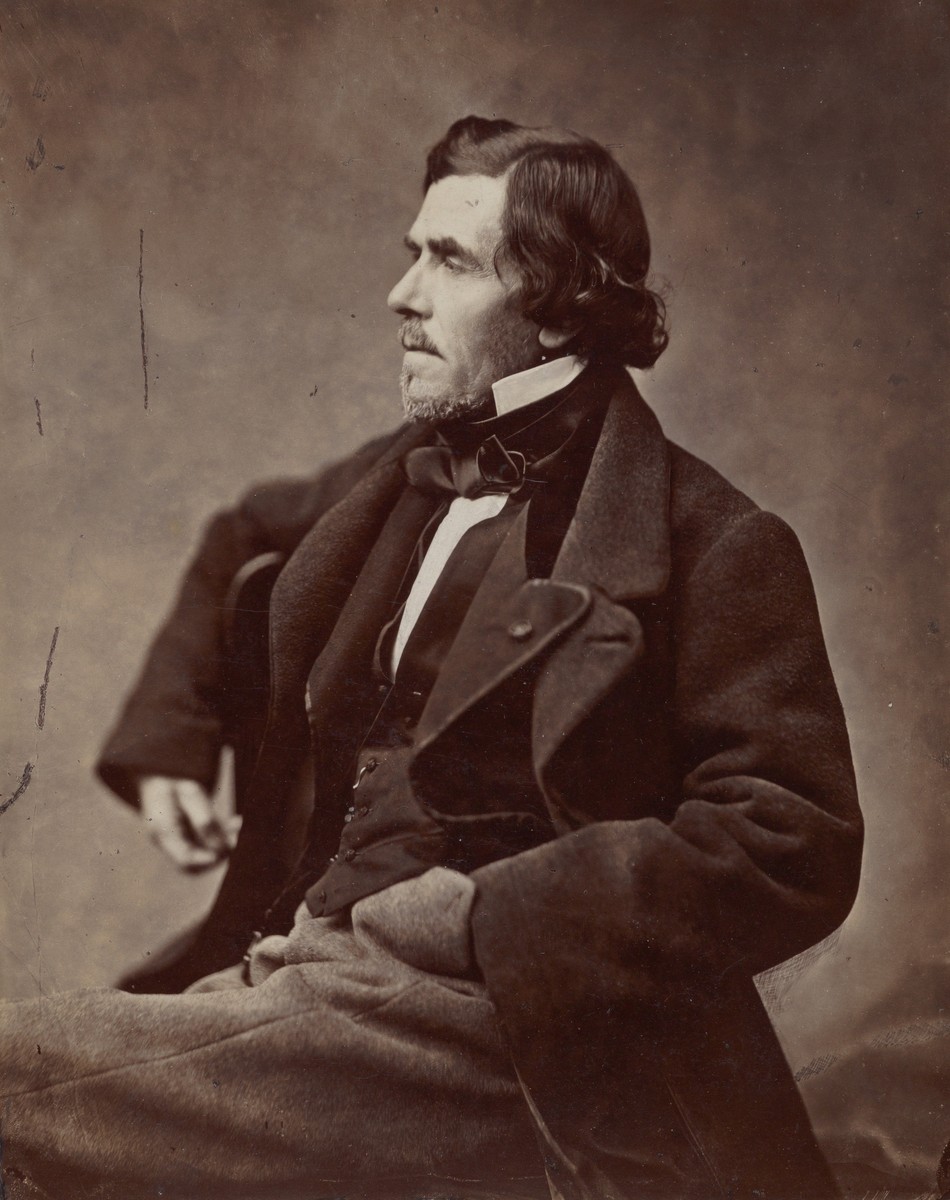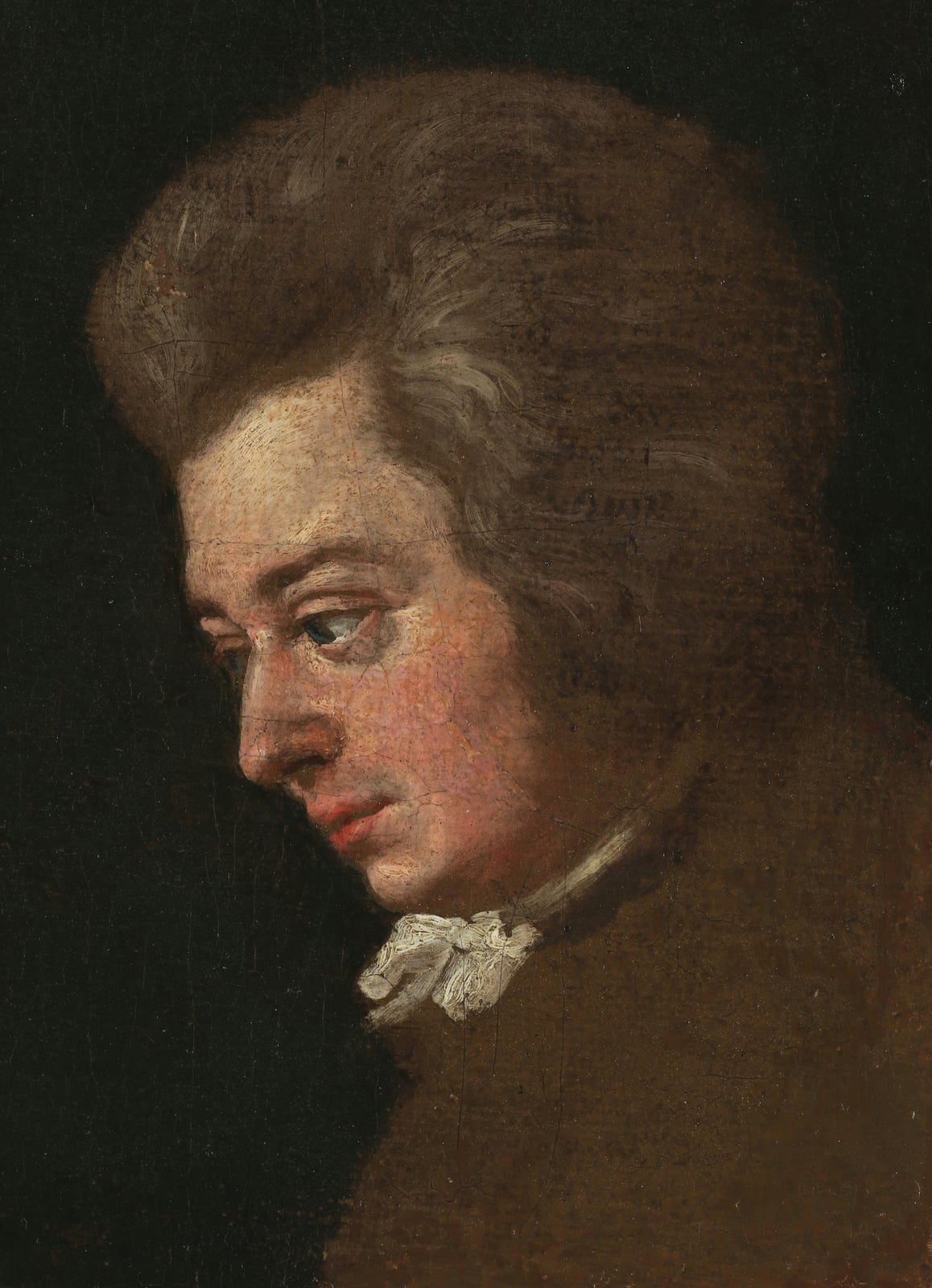

Pierre Petit, Portrait of Delacroix, about 1862, albumen print, The Metropolitan Museum of Art, New York (2024.591.45), public domain · Albumen print 'Portrait of Delacroix' by Pierre Petit (1832-1909), about 1862, Metropolitan Museum of Art, New York, object 2024.591.45 (Gift from the Karen B. Cohen Collection of Eugene Delacroix, 2024); the museum's Open Access record marks it public domain. The sitter is named by the museum. The museum scan (3054 x 4000 pixels) shows the photograph on its card mount; this project cropped to the photograph (1764 x 2228 pixels) and reduced it to 950 x 1200 pixels, never enlarging it · Public Domain (Metropolitan Museum Open Access; photograph by Pierre Petit, who died in 1909)
painter · 19th Century
Eugène Delacroix
1798–1863
Known For
Not yet included in personality matching — the documented evidence doesn't yet cover enough of the personality model. Everything else on this page is fully available.
Trait Constellation
Key Achievements
Became the leading exponent of Romanticism in French painting, beginning with Dante and Virgil in Hell at the 1822 Salon and continuing with The Massacre at Scio, The Death of Sardanapalus and Liberty Leading the People, works that set vivid colour and movement against academic convention.
Painted large decorative schemes for public buildings in Paris, including the Palais Bourbon, the Luxembourg library, the central ceiling of the Louvre's Galerie d'Apollon and the Chapel of the Holy Angels at Saint-Sulpice (1849-1861).
His 1832 journey to Morocco produced sketches and notes that fed his painting for decades, and his colour and journal became a resource for later painters; Cezanne is quoted as saying, "We all paint in Delacroix's language."
Moments That Reveal Them
He was elected to the Academie des Beaux-Arts in January 1857 on his seventh attempt, after repeated rejections.
This is consistent with a persistent streak, keeping on with a goal through repeated refusals. Persistence
After the 1832 mission to Morocco he filled sketchbooks and notes and kept drawing on them for years, reworking earlier compositions such as the Women of Algiers.
This is consistent with a curious observer who stored what he saw and returned to it. Curiosity
Turning Points
His Dante and Virgil in Hell at the 1822 Salon drew immediate critical attention and made the 24-year-old a leading figure of the Romantic movement.
This is consistent with an original approach that broke from academic habits and was noticed at once. Creative Originality
Similar People
People whose overall profiles resemble theirs.


Yayoi Kusama

Frida Kahlo

Oscar Niemeyer

Vincent van Gogh

Leonardo da Vinci
Opposite Profile
Not a rival — a different profile shape worth a look.
Otto von Bismarck
Sources
- Eugène Delacroix (Q33477), verified live via the Wikidata API (2026-11-04): English label 'Eugène Delacroix', description 'French painter (1798-1863)', born 1798-04-26, died 1863-08-13, Korean label present. Orientation only; not used as support for any row.
- The Metropolitan Museum of Art, New York, object 2024.591.45 'Portrait of Delacroix', albumen print by Pierre Petit, about 1862 (Gift from the Karen B. Cohen Collection of Eugène Delacroix, 2024), record read through the museum's Open Access API (public domain flag true, no reproduction restriction). Used only for the portrait; not used as support for any row.
- Musée national Eugène-Delacroix, Paris, 'Eugène Delacroix - Biography', read in full: dated account of his training under Guérin from 1815, the 1822 Salon debut with Dante and Virgil in Hell, the 1824 Massacre at Scio, the 1827 Death of Sardanapalus, the 1831 Liberty Leading the People, the 1832 Moroccan mission (more than 72 later Moroccan paintings), the mural commissions at the Palais Bourbon, the Luxembourg library, the Louvre Galerie d'Apollon and the Saint-Sulpice chapel (1849-1861), the 1855 special exhibition, and election to the Académie des Beaux-Arts in January 1857 on his seventh attempt. CANONICAL SIGNIFICANCE SOURCE (together with the National Gallery artist page). Museum devoted to him, so favourable.
- The National Gallery, London, artist page 'Eugène Delacroix', read in full: calls him the leading exponent of Romanticism in French painting; trained under Guérin, first exhibited at the Salon in 1822, visited England in 1825, travelled to Spain, Morocco and Algiers in 1832, received a long series of official decorative commissions from 1833, last exhibited at the Salon in 1859. CANONICAL SIGNIFICANCE SOURCE.
- Museo Nacional Thyssen-Bornemisza, Madrid, biography page 'Eugène Delacroix', read in full: grew up in a cultured family, copied Raphael, Titian, Veronese and Rubens at the Louvre, encountered English collections, Byron, Scott, Shakespeare and Goethe's Faust in 1825, made sketches and notes in Morocco and Spain that fed later compositions, turned to decorative schemes in his mature phase, and was kept away from Paris by chronic laryngitis.
- Charles Baudelaire, 'L'Oeuvre et la vie d'Eugène Delacroix' (1863, in French), read in full on Wikisource (1885 edition text): a contemporary and admirer's account of his daily regime (a careful palette, hesitation before starting, then working until physically exhausted), evening drawing and copying, his reading of Shakespeare, Dante, Byron and Ariosto, his output (about 236 easel works and 77 major Salon subjects, citing Silvestre), his mural commissions, and the hostility of critics and slow sales. Written days after his death by a friend; admiring, and the main early source for his work habits.
- 'A Romantic of Endless Industry', The Christian Science Monitor, 22 July 1991, read in full: exhibition feature describing him as a man of endless industry who copied in the Louvre as a student, kept a journal from the age of 24, drew horses and big cats from Paris menageries and stables as well as from his Moroccan sketchbooks, noted small visual details such as a stirrup's shadow on a horse's flank, and held state mural commissions from the Palais Bourbon onward; says critics were unkind and that he entered the Academy only after seven rejected applications (it gives 1859 for the election, whereas the museum's biography gives January 1857, so the museum's date is used).
- Review of 'Delacroix and the Rise of Modern Art' (National Gallery, London, 2016) and its catalogue, 19th-Century Art Worldwide, spring 2016, read in full: a scholarly review stating that contemporaries almost universally named him leader of French Romanticism, that colour was his defining strength, that he worked in glazes and interwoven strokes, copied old masters, reworked earlier compositions (Women of Algiers 1847-49 from 1834), and was versatile across large pictures, murals, lithographs and watercolours, and that later artists from Manet to Cezanne drew on him through copying, collecting and his posthumously published journals.
- 'Eugene Delacroix and the Rise of Modern Art' exhibition review, Studio International, London, read in full: a critical review that describes him as equally criticised and revered in his own time, quotes his statement that he had been a Romantic since 15 because of his dislike of academic recipes, notes that he resisted leadership of any school, and doubts that his direct influence on Gauguin, Cezanne, Kandinsky or Matisse is as large as the exhibition claimed. COUNTER-VOICE on influence claims.