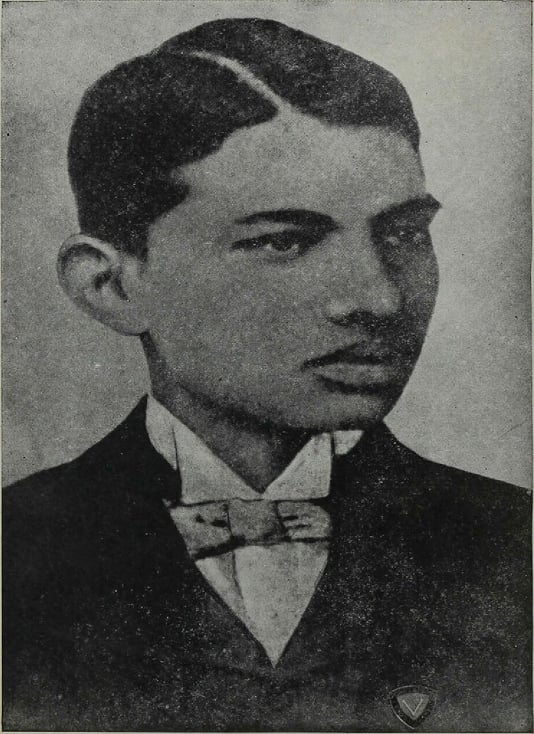
Mahatma Gandhi
91% Profile Match
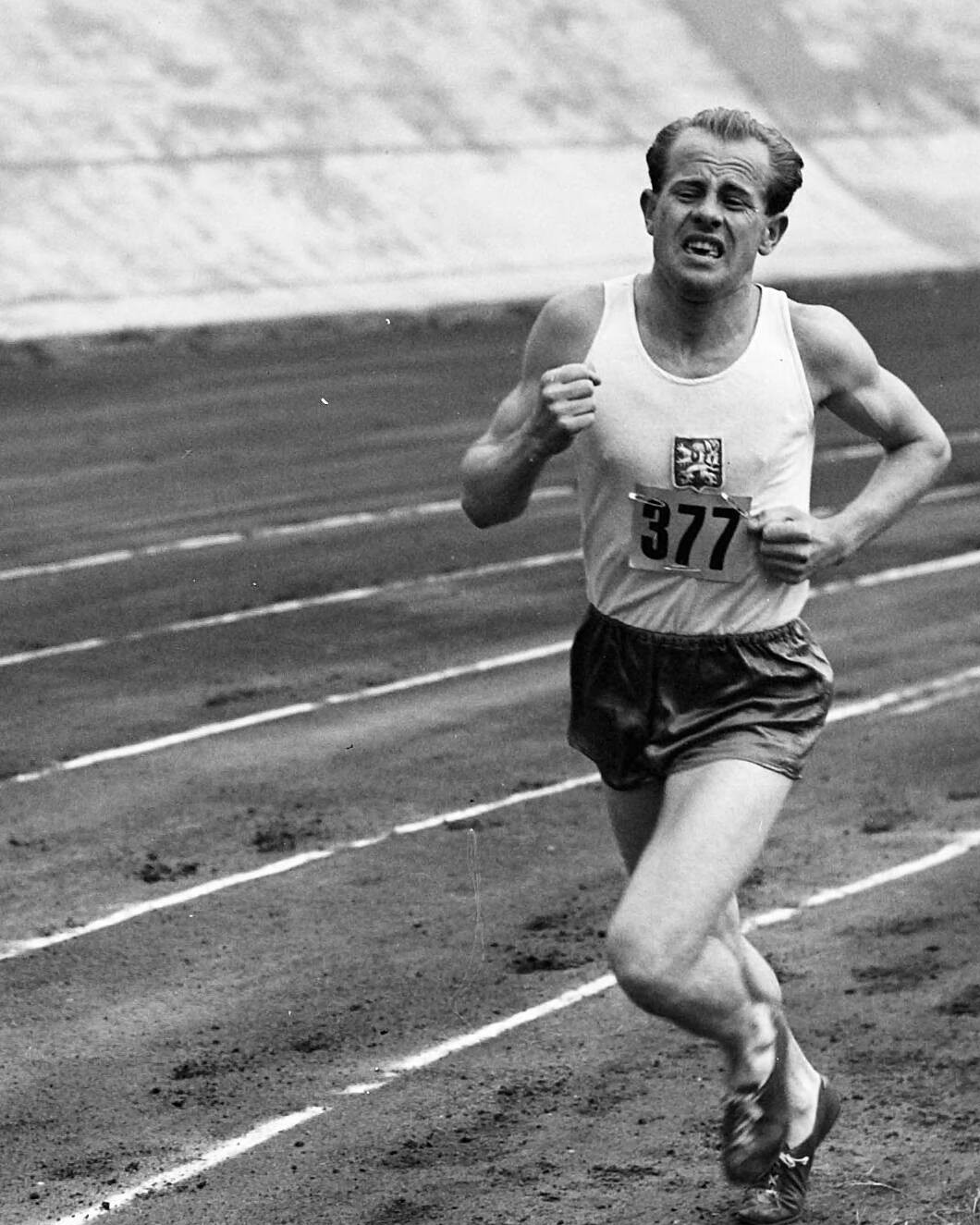
J.D. (Daan) Noske / Anefo, 'Internationale atletiekwedstrijd in het Olympisch Stadion. Emil Zatopek', August 1948; Nationaal Archief, Fotocollectie Anefo, bestanddeelnummer 902-9145, CC0 · Nationaal Archief (Dutch National Archives), Fotocollectie Anefo, item 902-9145, via Wikimedia Commons (cropped) · CC0 1.0
At the 1948 London Olympics Emil Zátopek won the 10,000 m and took silver in the 5,000 m. At Helsinki in 1952 he won the 5,000 m, defended his 10,000 m title and, in his first marathon, won that as well, setting an Olympic record in each (14:06.6, 29:17.0 and 2:23:03.2) within eight days. No one else has won all three at one Games.
Zátopek built his training around repeated fast runs, often dozens of 400 m efforts separated by short jogs, a method experts at first derided and that Olympedia credits him with popularising among distance runners; a coach had first introduced him to interval work. From 1949 into the mid-1950s he set 18 world records at distances from 5,000 m to 30,000 m, including the first 10,000 m under 29 minutes and, in 1951, the first 20,000 m run in under an hour (59:51.8).
The Times obituary records that Zátopek trained in heavy army boots so that racing shoes would feel light, tried a gas mask to see whether it helped his breathing (it did not), and ran on the spot in a spare room when curfew kept him indoors. World Athletics adds that as an army trainee he ran 10-12 km through deep snow in boots and several layers of clothing, and that in 1951, a year before Helsinki, he ran two 20,000 m races within two weeks to test his endurance.
Trying out equipment and conditions this way is consistent with the experimentation scored on his profile; the Times's own aside that the gas mask did not help shows that not every trial paid off. Experimentation
When Ron Clarke, an Australian who held many world records but no Olympic gold medal, visited Prague in 1966, Zátopek, long retired, drove him to the airport and handed him a small package. Clarke opened it on the flight and found Zátopek's 1952 Olympic 10,000 m gold medal, inscribed with Clarke's name and the day's date. By Clarke's recollection, as reported by World Athletics, Zátopek said it was 'not out of friendship but because you deserve it', and Clarke wept.
In 1968 Zátopek, who had signed the reformers' 'Two Thousand Words' manifesto weeks earlier, went to Wenceslas Square after Warsaw Pact forces invaded Czechoslovakia and argued with the Soviet soldiers there. After the reform movement was suppressed he was expelled from the army and the Communist Party, and his name was removed from school textbooks. He then did manual work for years with a crew prospecting for water and minerals in rural Czechoslovakia (accounts differ on the details), later held a sports-ministry job reading foreign sports publications, and was officially rehabilitated after 1989.
People whose overall profiles resemble theirs.
Not a rival — a different profile shape worth a look.
