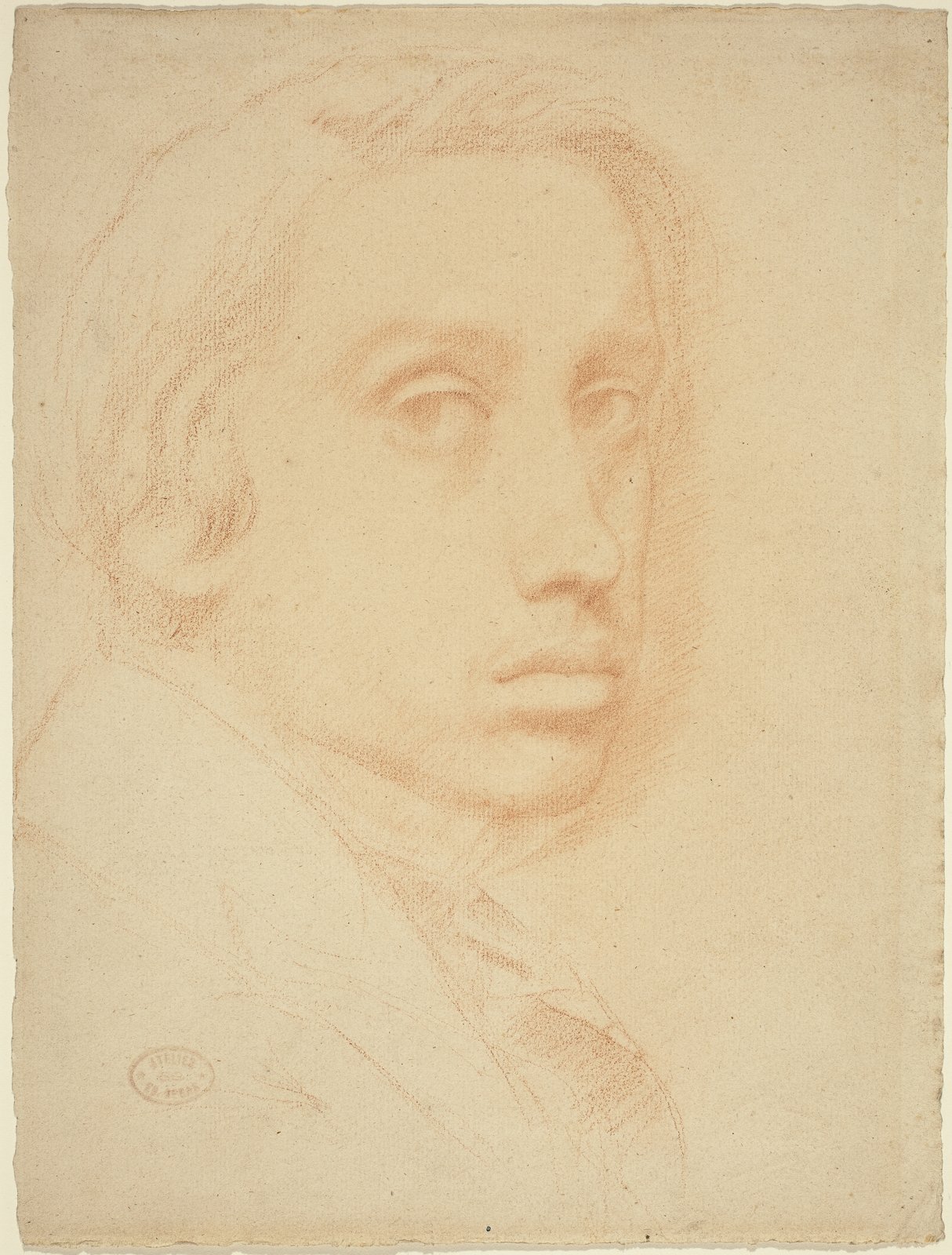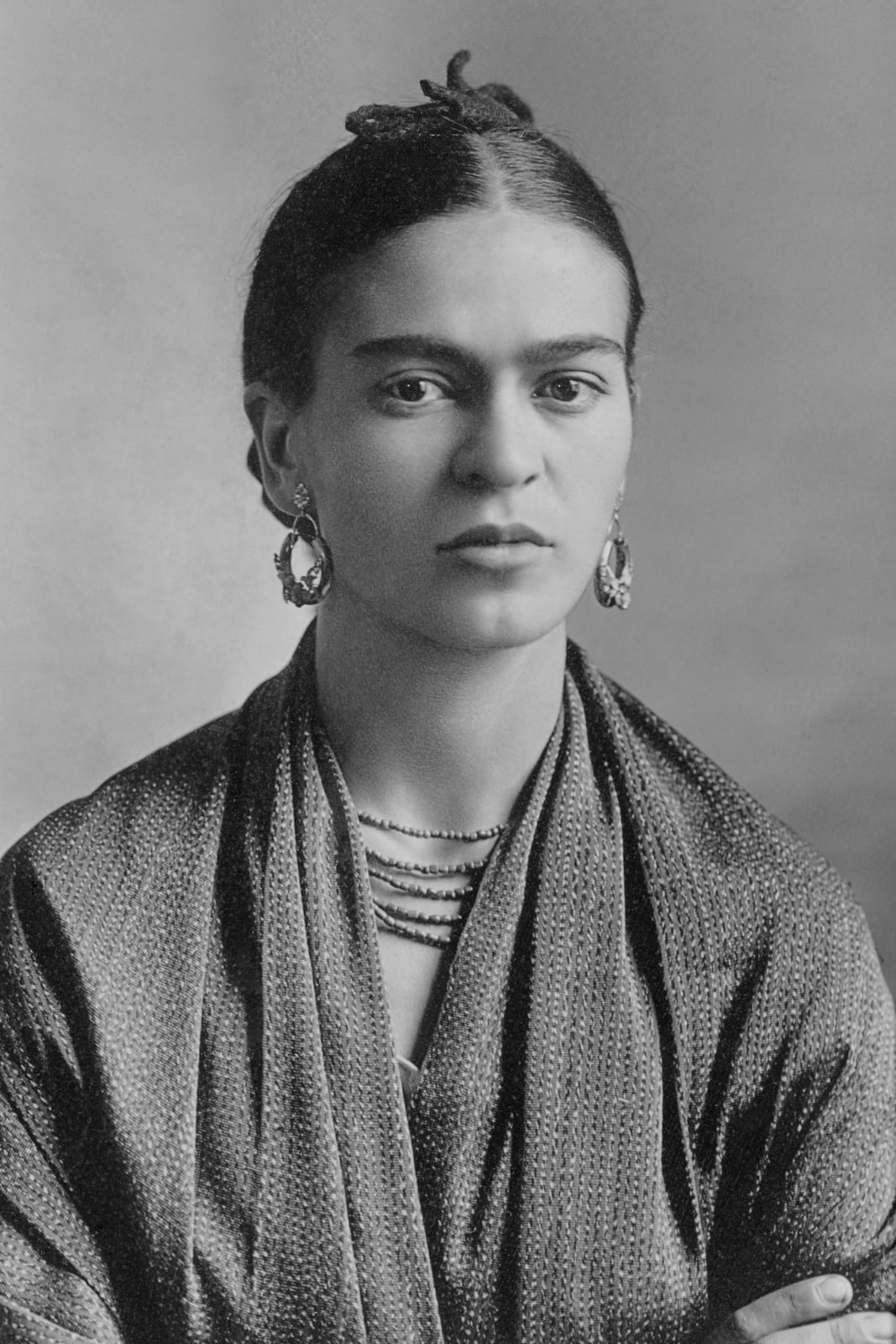

Edgar Degas, Self-Portrait, c. 1855, red chalk on laid paper, National Gallery of Art, Washington, Woodner Collection (1991.182.23); NGA Open Access, CC0 · National Gallery of Art, Washington, Woodner Collection 1991.182.23 (NGA open access), via Wikimedia Commons 'Edgar Degas, Self-Portrait, c. 1855, NGA 73867.jpg' · Public domain (CC0; artist died 1917)
painter · 19th Century
Edgar Degas
1834–1917
Known For
Not yet included in personality matching — the documented evidence doesn't yet cover enough of the personality model. Everything else on this page is fully available.
Trait Constellation
Key Achievements
Degas made the ballet a central subject of his work, painting and drawing dancers in rehearsal, in the wings and in the Opera foyer in oil, pastel and chalk. Jean-Baptiste Faure commissioned The Dance Class, which Degas delivered in 1874 for 5,000 francs. He later told Ambroise Vollard that people called him the painter of dancing girls, but that his chief interest in dancers lay in rendering movement and painting pretty clothes.
Degas modelled The Little Fourteen-Year-Old Dancer in tinted wax, with Marie van Goethem as the model, and dressed it in a real bodice, tutu, stockings, ballet shoes and a wig with a ribbon. It was announced for the 1880 group exhibition but shown only in April 1881, and it is the only sculpture he exhibited in his lifetime. Reviewers were divided: Huysmans called it the only truly modern initiative he knew in sculpture, while others attacked the girl's expression. The work was cast in bronze only in 1921.
In December 1873 Degas joined Monet, Pissarro, Sisley, Morisot, Cezanne and others in forming a cooperative society for unjuried exhibitions, and its first show opened on 15 April 1874 with ten works by him. He showed in the group's exhibitions between 1874 and the last, in 1886, where he exhibited a suite of pastels of women bathing. He objected to being called an Impressionist, and his friend and biographer Lemoisne notes that he never adopted the group's open-air painting.
Beyond the ballet, Degas painted scenes of modern Paris: racecourses (Faure bought four racing scenes in 1873-74), laundresses and women ironing, and cafe-concert singers. In a Cafe (The Absinthe Drinker) was sold in London in 1876 through the dealer Charles Deschamps. His 1886 pastels of women washing, drying and combing their hair were catalogued as a suite of nudes at their toilette.
Moments That Reveal Them
In 1876 Degas told the critic Jules Claretie that he had found a new technique for engraving, while the printmaker Marcellin Desboutin wrote that he talked only of metallurgists, lead casters and lithographers in his search for ways to reproduce his drawings. In 1880 he described the etchings he showed at the fifth group exhibition as 'experiments and states of plates'; one of them, Leaving the Bath, passed through twenty-two states.
Seeking out industrial printers and presenting unfinished states of a plate as part of the show is consistent with a strong taste for experimentation; the Boggs catalogue notes that the pursuit displaced any thought of financial return. Experimentation
Ambroise Vollard recalled that Degas once showed him a small wax dancer he had redone 'for the twentieth time' and said it would be ready for the caster in a day or two. The next day only the original lump of wax remained, and Degas told him he would not take a bucket of gold for the pleasure of destroying it and starting over.
Destroying a nearly finished work to begin again is consistent with perfectionism; it is a single-source anecdote, but Vollard also reports that Degas painted out a figure and took back pictures that were reframed, and the Boggs catalogue records the Little Dancer's repeated delays. Perfectionism
Turning Points
In April 1873 Degas wrote to the painter James Tissot that he had given up plans to show at the Salon. That December he joined the cooperative society, and in March 1874 he wrote that he was 'running the thing with energy' because 'there must be a salon of Realists'. The society's first exhibition opened on 15 April 1874; it lost money and the society was dissolved in May, but Degas went on to show in the group's later exhibitions.
Moving from the official Salon to an unjuried exhibition he helped organise is consistent with a strong need to control how his work was judged and shown; Lemoisne notes he had exhibited at the Salons through the Second Empire. Need for Autonomy
Similar People
People whose overall profiles resemble theirs.


Leonardo da Vinci
Coco Chanel

Yayoi Kusama

Wolfgang Amadeus Mozart

Miles Davis
Opposite Profile
Not a rival — a different profile shape worth a look.
Harriet Tubman
Sources
- Edgar Degas (Q46373) -- verified live via wbgetentities (2026-10-07): en label 'Edgar Degas', description 'French Impressionist artist (1834-1917)', P569 19 Jul 1834, P570 27 Sep 1917, citizenship France (Q142), instance of human, ko label '에드가 드가' (ko description '프랑스의 화가, 조각가'), P18 'Edgar Degas self portrait 1855FXD.jpg'. Orientation only; not used as support for any row.
- Jean Sutherland Boggs, Douglas W. Druick, Henri Loyrette, Michael Pantazzi and Gary Tinterow, Degas (exhibition catalogue: Galeries nationales du Grand Palais, Paris; National Gallery of Canada, Ottawa; The Metropolitan Museum of Art, New York, 1988-89), Internet Archive full text (Degas18341917) -- museum-curators' scholarly catalogue with a dated, documented chronology that quotes Degas's letters (a self source) and the letters, journals and reviews of contemporaries including friendly (Pissarro, Desboutin, Claretie, Huysmans) and hostile (Caillebotte, Gauguin, Wolff, Mantz, Bertall) voices. Read locally: the 'technical invention' section on printmaking, pastel and distemper (pp. 199-200); Chronology II (December 1873 to January 1881) in full, including the 1874 recruitment letter and the 1876-81 Impressionist exhibitions; the essay on Degas and Faure; Chronology III for 1884-85 and the March 1886 planning of the last group exhibition; the Little Fourteen-Year-Old Dancer catalogue entry; Chronology IV for 1895-96 and the 'Photography and Portraiture' essay. The 1988 catalogue is itself a secondary synthesis; letter quotations are taken as the catalogue prints them.
- Ambroise Vollard, Degas: An Intimate Portrait (translated by Randolph T. Weaver; New York: Greenberg, 1927; Crown reprint 1937), Internet Archive full text (degaspor00voll) -- ACQUAINTANCE/DEALER's anecdotal portrait: Vollard sold and discussed art with Degas in his last decades and reports short scenes and sayings, sometimes quoting Renoir; admiring but openly anecdotal and compressed, and a number of its anecdotes are single-source. Read locally in full except the plates: the sections on prejudices and opinions, views on art, methods of work, frames, technical details, Pere Noisy, Delacroix and Corot, old age, the sculptor, the last years. Its antisemitic remarks by Degas and the accounts of his failing sight and hearing were read but are deliberately not used for any row.
- George Moore, Reminiscences of the Impressionist Painters (Dublin: Maunsel / Tower Press Booklets, 1906), Internet Archive full text (reminiscencesofi00mooruoft) -- memoir by an Irish writer who frequented the Nouvelle Athenes cafe in Paris in the 1870s and 1880s; ACQUAINTANCE, ambivalent and at points critical (he ranks Degas's intellect below Manet's gift for painting) and anecdotal, with some hearsay. Read locally: the whole Degas passage (Degas's quips about Whistler, Bastien-Lepage, Roll and Sargent, the Semiramis story, his Ingres collecting, his remark that talent at twenty-five is easy and at fifty is the test).
- Paul-Andre Lemoisne, Degas (L'Art de notre temps, Paris: Librairie centrale des Beaux-Arts, c. 1912), Internet Archive full text (cu31924015726221) -- preface and biographical notice by the Bibliotheque nationale print-room librarian who later compiled the Degas catalogue raisonne; written in Degas's lifetime ('M. Degas') by a scholar who says he had heard him speak, sympathetic but analytic and outspoken about Degas's relation to the Impressionists, plein-air painting and the public. Read locally: the preface and the first biographical sections (to his Rome years and the 1857 self-portrait etching); the later plate notices were not read.
- Paul Lafond, Degas, vol. 1 (Paris: H. Floury, 1918), Internet Archive full text (degaslaf01lafouoft) -- appreciative monograph by a friend of Degas and of the sculptor Bartholome (Bartholome's letters to Lafond are cited in the Boggs catalogue); admiring in tone and general rather than anecdotal. Read locally: the introductory essay (to about p. 35) on Degas's subjects, method of correction and retouching, his devotion to Ingres and Poussin and his copies after the old masters; the rest of the two volumes was not read.
- Joris-Karl Huysmans, 'Degas' in Certains (Paris: Tresse et Stock, 1889), Internet Archive full text (certainsgmoreaud00huys) -- contemporary art critic's essay, a hostile-to-the-establishment, strongly interpretive piece (it reads motives into the 1886 bather pastels; those readings are NOT used); read locally: the Degas chapter, for his description of Degas's withdrawal from public exhibitions, the wording of the 1886 catalogue entry for the nudes and his remark that Degas was an isolated, powerful artist with no clear precedent.
- National Gallery of Art, Washington, open-data record for object 73867, 'Self-Portrait', c. 1855, red chalk on laid paper, 31 x 23.3 cm, Woodner Collection (accession 1991.182.23), with Degas atelier stamp and provenance from the artist's brother Rene De Gas -- read only to identify the portrait drawing used for the profile image (the NGA web page itself is behind a bot wall and was not bypassed); not used for any scored row.