Rosalind Franklin
93% Profile Match
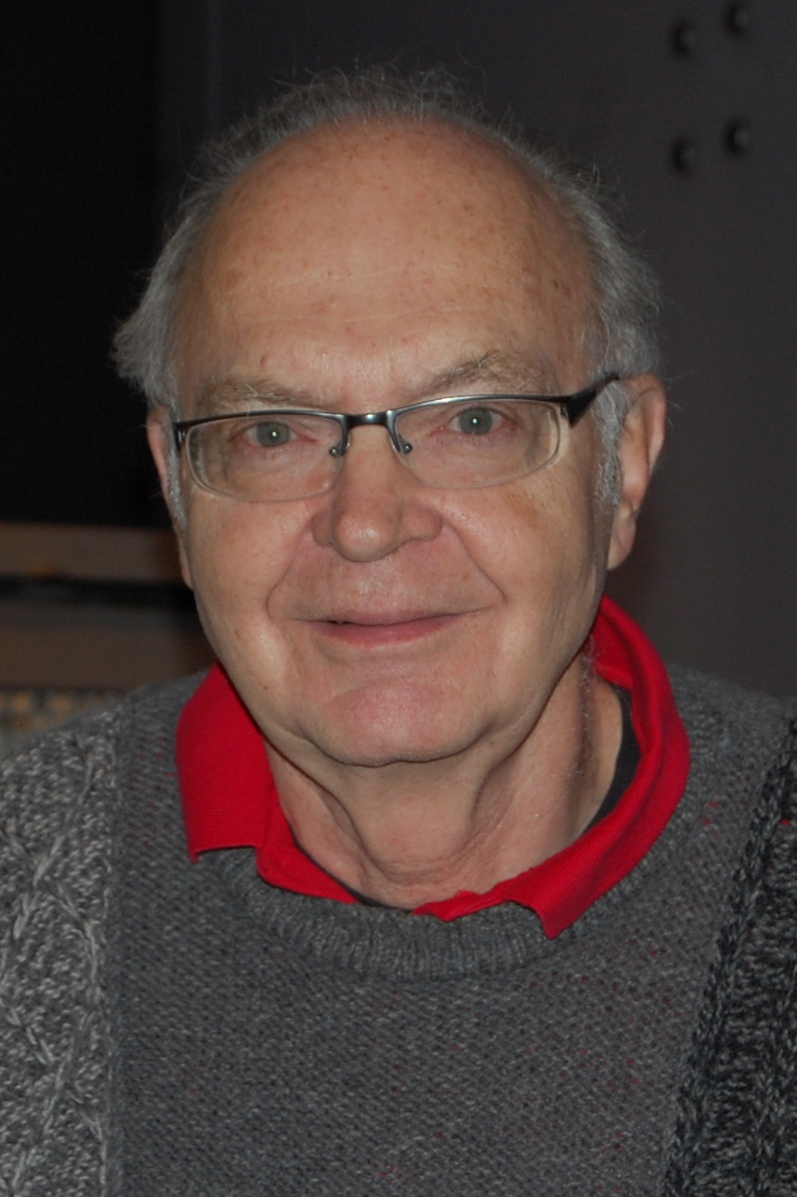
Photo: Alex Handy (Flickr: vonguard), 11 January 2011, CC BY-SA 2.0, cropped from the original · Wikimedia Commons, 'Donald Ervin Knuth (cropped).jpg' -- a Commons crop (3 December 2018) of 'Donald Ervin Knuth.jpg', photograph credited on Commons to Alex Handy (the Flickr source account is 'vonguard', and the Flickr page itself shows only that username, so the real-name credit rests on the Commons upload record) taken 11 January 2011 at the opening of the Computer History Museum's Revolution exhibition; the original was uploaded from Flickr by the Flickr upload bot on 25 January 2011 and confirmed on that date to be licensed CC BY-SA 2.0, and the Flickr page (photos/44451574@N00/5347112697) checked directly shows 'Some rights reserved', CC BY-SA 2.0; the file carries no restriction template and no embedded copyright field; Commons structured data depicts Donald Knuth. Commons crop 797 x 1197 pixels, used as is (under 1200 pixels, never upscaled). · CC BY-SA 2.0
computer scientist · Contemporary
b. 1938
Not yet included in personality matching — the documented evidence doesn't yet cover enough of the personality model. Everything else on this page is fully available.
He began The Art of Computer Programming in 1962 and published its first three volumes in 1968, 1969 and 1973; in 1974 he received the Turing Award for his contributions to the analysis of algorithms and programming-language design, in particular through that series, and Stanford's archives say his work established the analysis of algorithms as an academic field.
In 1977, frustrated by the typography proposed for a new volume of his books, he began developing the TeX typesetting system and the METAFONT font-design system, a detour that took about ten years; the Computer History Museum calls TeX a worldwide standard for technical publishing, and he made both programs freely available.
He developed literate programming, in which a program is written as a document meant for human readers, creating the WEB system and publishing the paper 'Literate Programming' in 1984; the Kyoto Prize citation says the idea influenced the entire field of information science.
Knuth pays one 'hexadecimal dollar' ($2.56) to anyone who finds an error in his books; Salon reported in 1999 that he had written more than $10,000 in such checks and Stanford Magazine put the figure above $20,000 in 2006, noting that recipients rarely cash them.
This is consistent with holding already-published work to a continuing standard of correctness. Detail Orientation
In 1986 Jon Bentley asked Knuth for a literate program that finds the most common words in a text; Knuth wrote an intricate WEB program around a hash-trie data structure, and Doug McIlroy's published review praised its discipline but judged it over-built, showing that a six-step Unix pipeline solved the same problem.
This is consistent with a craftsman's standard that builds every part with great care, at a cost one contemporary critic questioned. Perfectionism
In 1990 Knuth took a leave from Stanford and in 1993 retired from teaching to finish The Art of Computer Programming, which he said would need at least 20 years of full-time work, according to Quanta and his own Stanford pages.
This is consistent with arranging his working life around uninterrupted concentration on one long project. Deep Focus
People whose overall profiles resemble theirs.


Not a rival — a different profile shape worth a look.
