Yayoi Kusama
94% Profile Match
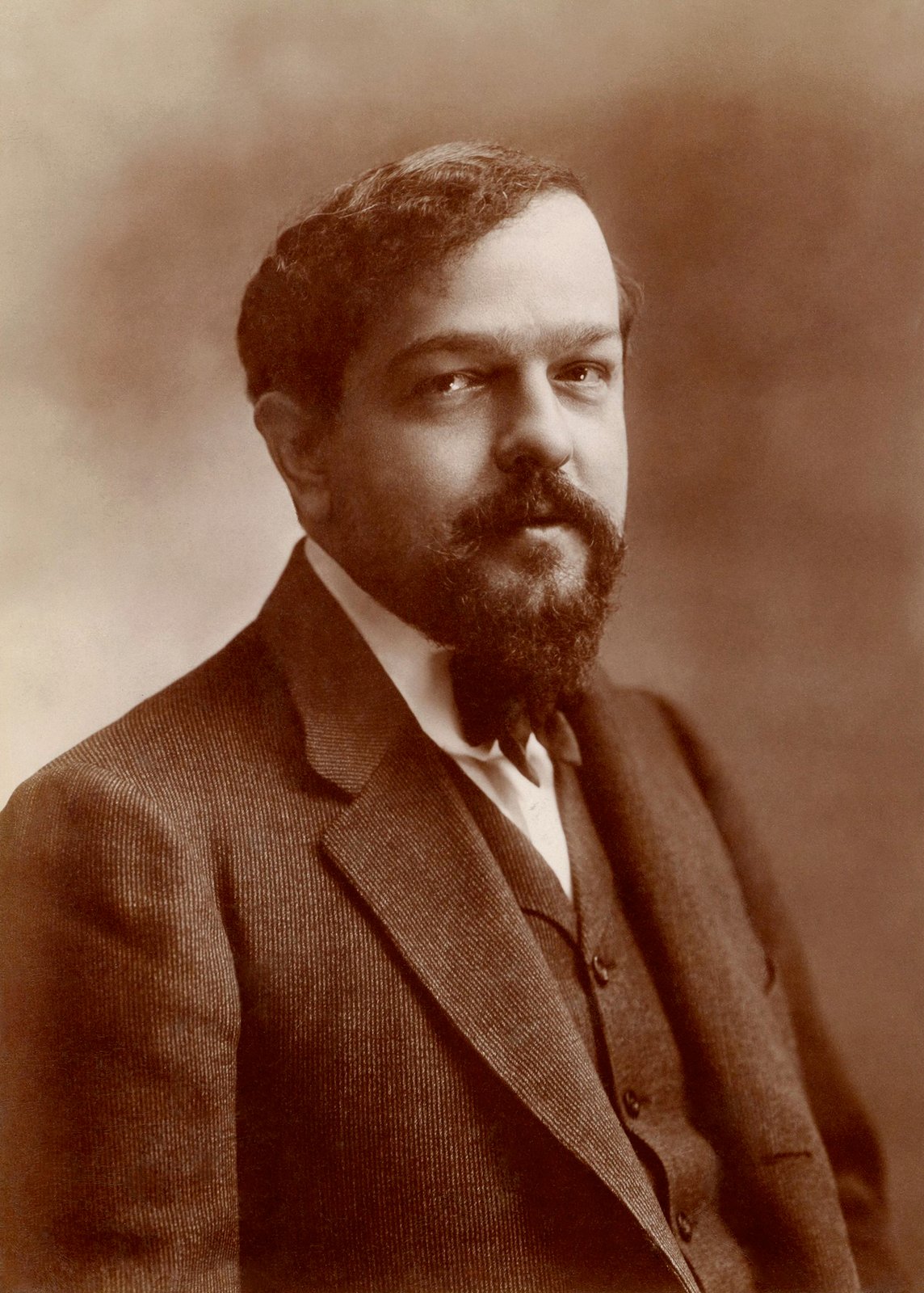
Atelier Nadar, c. 1890-1910, Bibliotheque nationale de France (Gallica); restoration by Adam Cuerden · Atelier Nadar, 'Claude Debussy. Compositeur' (studio demonstration print, albumen print from a gelatin silver bromide glass negative, 22.3 x 16.2 cm, Album de reference de l'Atelier Nadar vol. 13, Atelier Nadar commercial no. 2075), Bibliotheque nationale de France, Estampes et photographie, FT 4-NA-237 (6), digital copy on Gallica btv1b53118843k; digitally restored image by Adam Cuerden hosted on Wikimedia Commons · Public domain (Atelier Nadar photograph, dated 1890-1910 by the BnF; Gallica metadata states 'domaine public'; Commons tag PD-Old-auto-1923 for the restored file)
composer · 20th Century
1862–1918
Not yet included in personality matching — the documented evidence doesn't yet cover enough of the personality model. Everything else on this page is fully available.
Debussy's orchestral Prelude to the Afternoon of a Faun, inspired by Stéphane Mallarmé's poem, was first played at the Société Nationale in Paris on 22 December 1894 under Gustave Doret and was encored. According to Debussy's later account, Mallarmé, hearing it before the performance, said it prolonged the emotion of his poem and set its scene more passionately than colour. Within a few years other Paris conductors were programming it.
Debussy set Maurice Maeterlinck's play Pelléas et Mélisande as a continuous opera, working on it from 1892-93 until the orchestration was written in early 1902. It opened at the Opéra-Comique in Paris on 30 April 1902 under André Messager, with Mary Garden as Mélisande. The vocal line follows the rhythms of French speech and the orchestra is deliberately restrained; Romain Rolland counted the first night among the notable dates of the French lyric stage, and Léon Vallas records its 175th performance in June 1926.
The three orchestral Nocturnes (Nuages, Fêtes, Sirènes), first played at the Lamoureux concerts on 9 December 1900, and La Mer, three symphonic sketches begun in 1903, finished in March 1905 and first performed on 15 October 1905, use the orchestra as a palette of divided, muted and solo colours rather than of massed instrument families. Reception of La Mer was divided: one respected reviewer found the sea less deeply felt than in Pelléas, while Louis Laloy praised a new, firmer style.
Alongside the orchestral works Debussy wrote a body of chamber and piano music. His String Quartet was first played at the Société Nationale on 29 December 1893 by the Ysaÿe quartet; Estampes was premiered by Ricardo Viñes on 9 January 1904; two series of Images appeared in 1905 and 1907 and two books of twelve Préludes in 1910 and 1913, with their evocative titles printed at the end of each piece rather than at its head. The critic Emile Vuillermoz, a champion of his music, credited him with renewing piano writing after Liszt and Chopin.
Having won the Prix de Rome in 1884, Debussy was entitled to a concert of his Rome submissions. He wanted the orchestral suite Printemps included, a work the Académie des Beaux-Arts had criticised in 1887 for 'vague impressionism' and for its unusual key and wordless chorus. The Académie would not allow it on the programme; Debussy refused to accept the exclusion and gave up the concert in 1890. La Damoiselle élue then waited until 1893 for a public performance, and Printemps was not published until 1904.
Giving up a concert rather than accept a cut in his own programme is consistent with a strong need for autonomy, and the long wait for his Rome works to be heard shows what that choice cost. Need for Autonomy
In a letter to Ernest Chausson in the summer of 1893, Debussy said that the fountain scene of Pelléas's fourth act, which he had thought finished, was 'not at all' what he wanted: it resembled another composer's duet, and the ghost of Wagner, 'old Klingsor', appeared at a turn of the music. He tore it up and began again in search of more personal phrases, adding that he had found silence itself could serve as a means of expression. The letter is known from Vallas's quotation; Laloy confirms that the fourth-act duet was the first part he wrote.
Discarding a scene he thought finished because it echoed Wagner is consistent with a perfectionist standard applied to originality, and it is one episode in a score he reworked for about a decade. Perfectionism
In summer 1892 Debussy bought Maeterlinck's play Pelléas et Mélisande, began reading it that evening and, according to Laloy, decided the next day to set it to music; Pierre Louÿs, to whom he first confided the plan and who then read the play, did not hide his surprise. The two went to Ghent, where Maeterlinck gave Debussy full licence to cut the text and to have the work staged as he saw fit (Vallas dates the decision and the visit to 1893). The choice set aside an earlier opera on the Cid story, Chimène, and committed Debussy to a project that took about ten years.
Holding to an unusual subject after a close friend's surprise is consistent with independent thinking, and the decision tied up a large part of his following decade. Independent Thinking
People whose overall profiles resemble theirs.


Not a rival — a different profile shape worth a look.