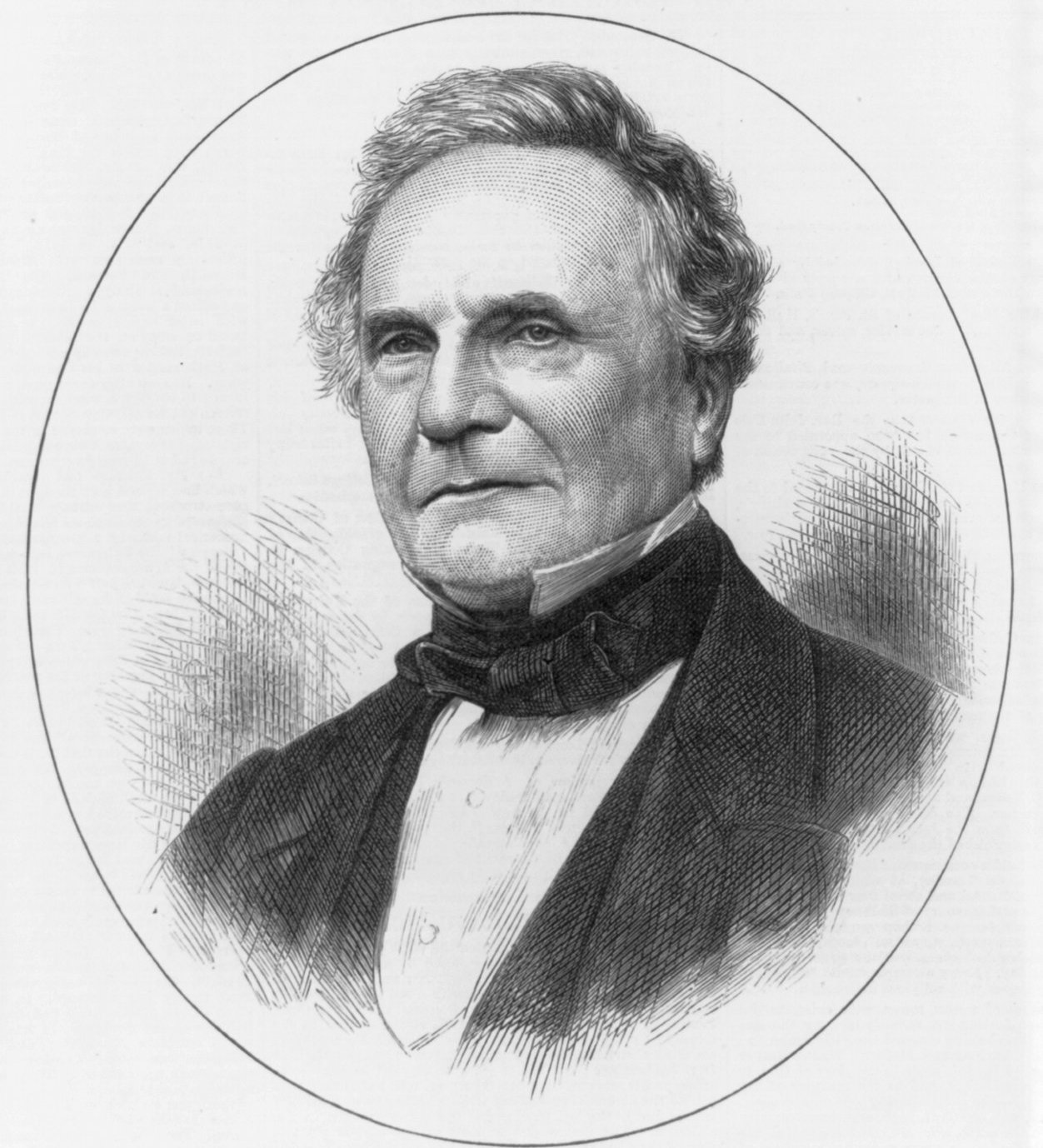

'The late Mr. Babbage', wood engraving (attributed on Commons to Thomas Dewell Scott) after an 1860 photograph, The Illustrated London News, 4 November 1871, p. 424; Library of Congress Prints and Photographs Division, no known restrictions on publication; masthead and caption cropped · Library of Congress, Prints and Photographs Division (LC-USZ62-66023; wood engraving from The Illustrated London News, 4 Nov. 1871, v. 59, p. 424), via Wikimedia Commons · Public domain
Trait Constellation
Key Achievements
From 1821 Babbage designed a Difference Engine to calculate and print mathematical tables by the method of differences, with Treasury funding and the toolmaker Joseph Clement building the parts. Work stopped in 1833 and the machine was never completed, but a demonstration section assembled in 1832 still works. Between 1847 and 1849 he designed a simpler Difference Engine No. 2.
From 1834 he designed the Analytical Engine, a general-purpose calculating machine controlled by punched cards, with a 'Store' for numbers kept separate from a 'Mill' that did the arithmetic. It was never built. Luigi Menabrea described it in 1842 from Babbage's explanations in Turin, and Ada Lovelace's 1843 English translation added extensive notes of her own.
As a Cambridge student around 1812 he helped found the Analytical Society, which promoted Continental calculus notation. In 1820 he, John Herschel and George Peacock published an English translation of Lacroix's calculus textbook, and he later held the Lucasian professorship of mathematics at Cambridge from 1828 to 1839.
Moments That Reveal Them
The 1834 Edinburgh Review reported that Babbage could not keep track of every simultaneous motion in the Difference Engine by memory alone. He devised a 'mechanical notation', described in an 1826 paper, that traced each motion back to its source and charted what every part was doing at each moment. Clashes between parts could then be found on paper before anything was built.
Building a symbolic map of the whole mechanism before cutting metal is consistent with this profile's high systems-thinking score. Systems Thinking
In 1830 Babbage published Reflections on the Decline of Science in England, a book-length public criticism of how the Royal Society was run, including comments on its named officers. George Airy's autobiography, written by a rival, records that around the same time Babbage belonged to a 'reforming party' that pushed changes to the Greenwich Observatory's Board of Visitors.
Challenging the scientific establishment openly and by name offers one example of the high tolerance for conflict recorded in this profile. The Computer History Museum's account suggests the same habit cost him support he later needed. Conflict Tolerance
Turning Points
In 1833 Clement stopped work on the Difference Engine and dismissed the workmen after a dispute over payments and his charges for moving the works. A statement drawn up from Babbage's papers in 1843 and Samuel Smiles's life of Clement tell it from opposite sides. After years of requests for a decision, the government withdrew in November 1842, and Babbage went on designing the Analytical Engine with draftsmen he paid himself.
Carrying on at his own expense after public funding ended sits alongside the persistence scored in this profile. The same period shows that persistence did not bring an engine to completion in his lifetime. Persistence
Similar People
People whose overall profiles resemble theirs.


Alan Turing

Leonardo da Vinci

Ada Lovelace

Rosalind Franklin

Carl Jung
Opposite Profile
Not a rival — a different profile shape worth a look.
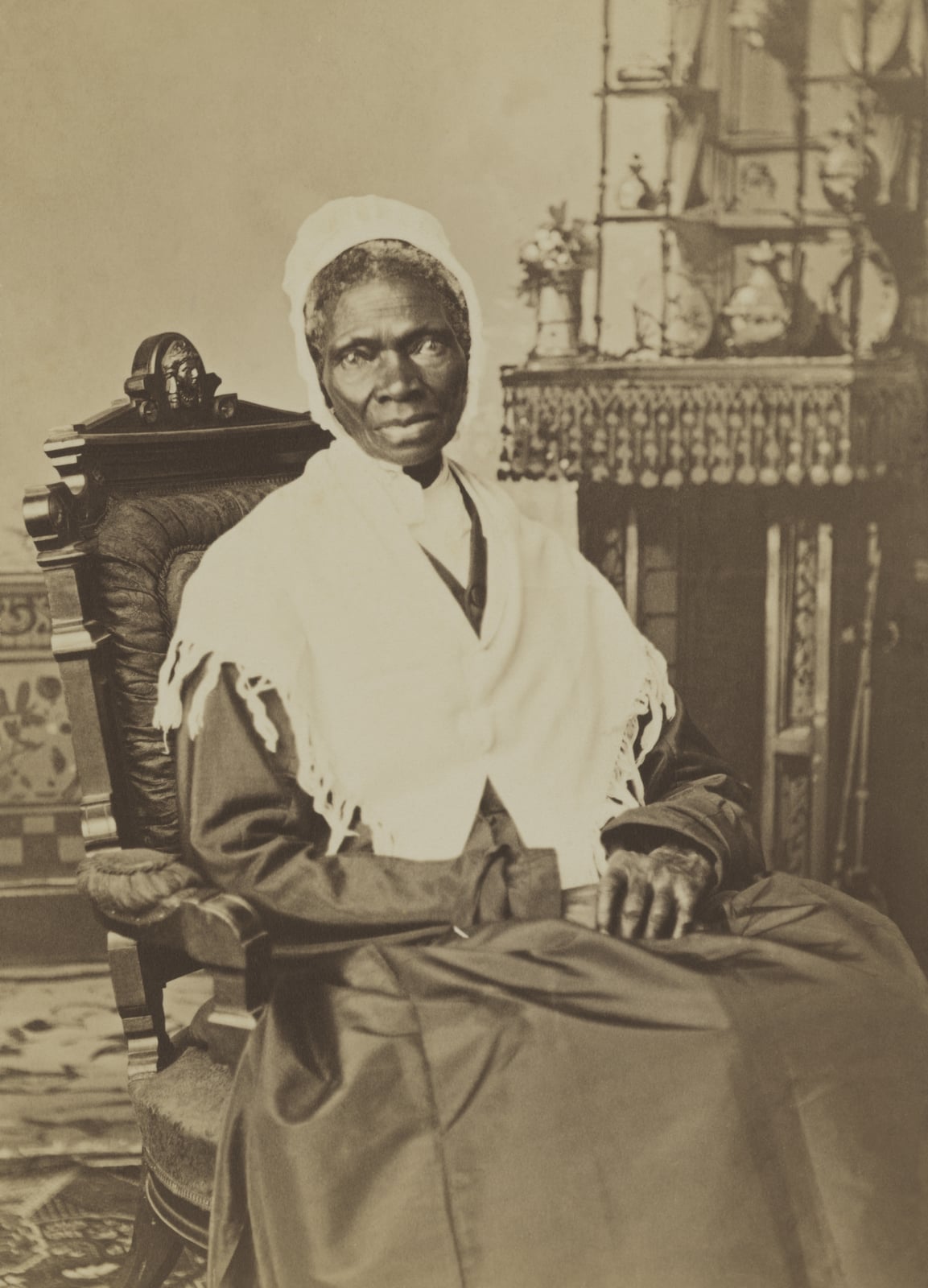
Sojourner Truth
Sources
- Charles Babbage (English Wikipedia) -- orientation only (identity, dates, occupations); not used as support for any scored row. The Korean Wikipedia page 'ko:찰스 배비지' was confirmed to exist via the Wikidata sitelink (title only).
- Charles Babbage (Q46633) -- identity verified live through the Wikidata API (wbgetentities: labels, descriptions, claims, sitelinks): en label 'Charles Babbage', description 'English mathematician, philosopher, and engineer (1791–1871)', ko label '찰스 배비지', born 1791-12-26, died 1871-10-18, citizenship United Kingdom of Great Britain and Ireland (Q174193), P18 'CharlesBabbage.jpg' and 'Charles Babbage - 1860.jpg', kowiki title '찰스 배비지'. Orientation only.
- Charles Babbage, Passages from the Life of a Philosopher (London, 1864), Project Gutenberg #57532 full text downloaded and read locally -- SELF (autobiography; one self perspective, written in old age and openly aggrieved). Read: ch. II (Childhood), ch. IV (Cambridge: Lacroix purchase 1811, Analytical Society), ch. V (Difference Engine No. 1: origin 1812-13 anecdote, 1819-22 models, the wheel-cutter episode), ch. VIII (Analytical Engine: workshops, forge and foundry, drawing office, carrying the tens by anticipation, retaining the chief draftsman), ch. XXV (Railways: the 1838-39 Great Western experimental carriage). Never the sole support for a row.
- 'Statement relative to the Difference Engine, drawn up by the late Sir H. Nicolas from the Author's Papers' (dated August 1843), reprinted as ch. VI of Passages from the Life of a Philosopher (1864), Gutenberg #57532, read in full (pp. 68-96 of the original) -- SELF/ADVOCATE perspective (compiled by the antiquary Sir Harris Nicolas from Babbage's own papers and letters to the Treasury 1823-42; it quotes Babbage's letters of 1830, 1836, 1838, 1841-42 and records the 1833 stoppage by the engineer Joseph Clement, the 1834-38 requests for a decision, the Government's 4 Nov. 1842 withdrawal and the 11 Nov. 1842 interview with Peel). Treated as part of the same self perspective as the autobiography; never sole support.
- Charles Babbage, Reflections on the Decline of Science in England, and on Some of Its Causes (London, 1830), Project Gutenberg #1216 full text -- SELF. Structure and the sections ch. IV 'State of the Royal Society in particular' (sections on the presidency, secretaryships, funds, medals, causes, plan for reforming the Society) and ch. V 'Of Observations' (hoaxing, forging, trimming, cooking) read. Used only as the dated public act itself (an 1830 book-length public criticism of the Royal Society's officers and management), with non-self corroboration from Airy and the Computer History Museum.
- 'Babbage's Calculating Engine', Edinburgh Review no. CXX (July 1834), Art. I, anonymous review-essay conventionally attributed to Dionysius Lardner (Gutenberg #71292 lists it under Babbage's name; the text speaks of 'Mr Babbage' in the third person and Smiles 1863 cites it as 'Dr. Lardner's account'). Full text read, especially the passages on the drawings and mechanical notation and the closing section on the 1829 Royal Society committee report and the 1833-34 suspension. CONTEMPORARY JOURNALIST/SCIENCE-WRITER perspective: sympathetic and evidently briefed ('upon authority on which the most perfect reliance may be placed'), but it openly criticises Babbage's withdrawal from dealing with Government; it also summarises the 1829 Royal Society committee report (Herschel, Baily, Brunel, Donkin, Rennie et al.), which was not opened directly.
- Samuel Smiles, Industrial Biography: Iron Workers and Tool Makers (London, 1863), ch. XIII on Joseph Clement, Project Gutenberg #404 full text; the Clement/Difference Engine passage and its footnote read -- INDEPENDENT VICTORIAN BIOGRAPHER writing Clement's life (the engineer's side of the 1833 dispute; admiring of Clement, not of Babbage). Gives the 1823 engagement of Clement, the 400 sq ft of drawings, the cost figures, the dispute over Clement's charges for moving the works and his withdrawal with the tools.
- Autobiography of Sir George Biddell Airy, ed. Wilfrid Airy (Cambridge, 1896), Project Gutenberg #10655 full text; every Babbage passage read (1819-20 Lacroix translation and Examples by Herschel, Peacock and Babbage; the 1826 Lucasian election; the c.1830 'reforming party' on the Greenwich Board of Visitors; Airy's 15 Sept. 1842 opinion to Goulburn that the engine was 'worthless'). CONTEMPORARY, ADVERSARIAL perspective (Airy, Astronomer Royal, was a rival and a critic; journal-based entries edited by his son). Used only for dated facts, not for his judgements of the engine.
- L. F. Menabrea, 'Sketch of the Analytical Engine invented by Charles Babbage' (Bibliothèque Universelle de Genève, Oct. 1842), trans. with Notes A-G by Ada Augusta, Countess of Lovelace (Taylor's Scientific Memoirs vol. III, 1843), Fourmilab transcription downloaded; Menabrea's memoir read in full, Lovelace's Note A read (including her passage on the two engines and the suspension), the remaining Notes only skimmed -- Menabrea: CONTEMPORARY SCHOLAR, non-self, writing from Babbage's explanations during his 1840 visit to Turin; Lovelace's Notes: CLOSE COLLABORATOR/SUPPORTER (insider, sympathetic). Used for the conception and generality of the Analytical Engine and for the fact that Babbage presented his designs in Turin; the Notes' defence of him on the suspension is treated as partisan.
- Computer History Museum, 'The Babbage Engine' web exhibit (curatorial text associated with the Difference Engine No. 2 replica project, Doron Swade), pages 'Charles Babbage (1791-1871)', 'The Engines' and 'A Brief History' read in full (downloaded) -- INSTITUTIONAL/SCHOLARLY perspective, independent of Babbage, openly critical of his conduct ('prickly', 'rotten publicist', 'virulent public criticism'); its 'first computer pioneer' framing is NOT adopted. Used for dated design facts (1821 start, 1832 demonstration piece, 1833 stoppage, 1834 Analytical Engine, 1847-49 Difference Engine No. 2, experimental Analytical Engine piece at his death) and for documented range of his inventions and interests. Personal bereavements described there are NOT used.