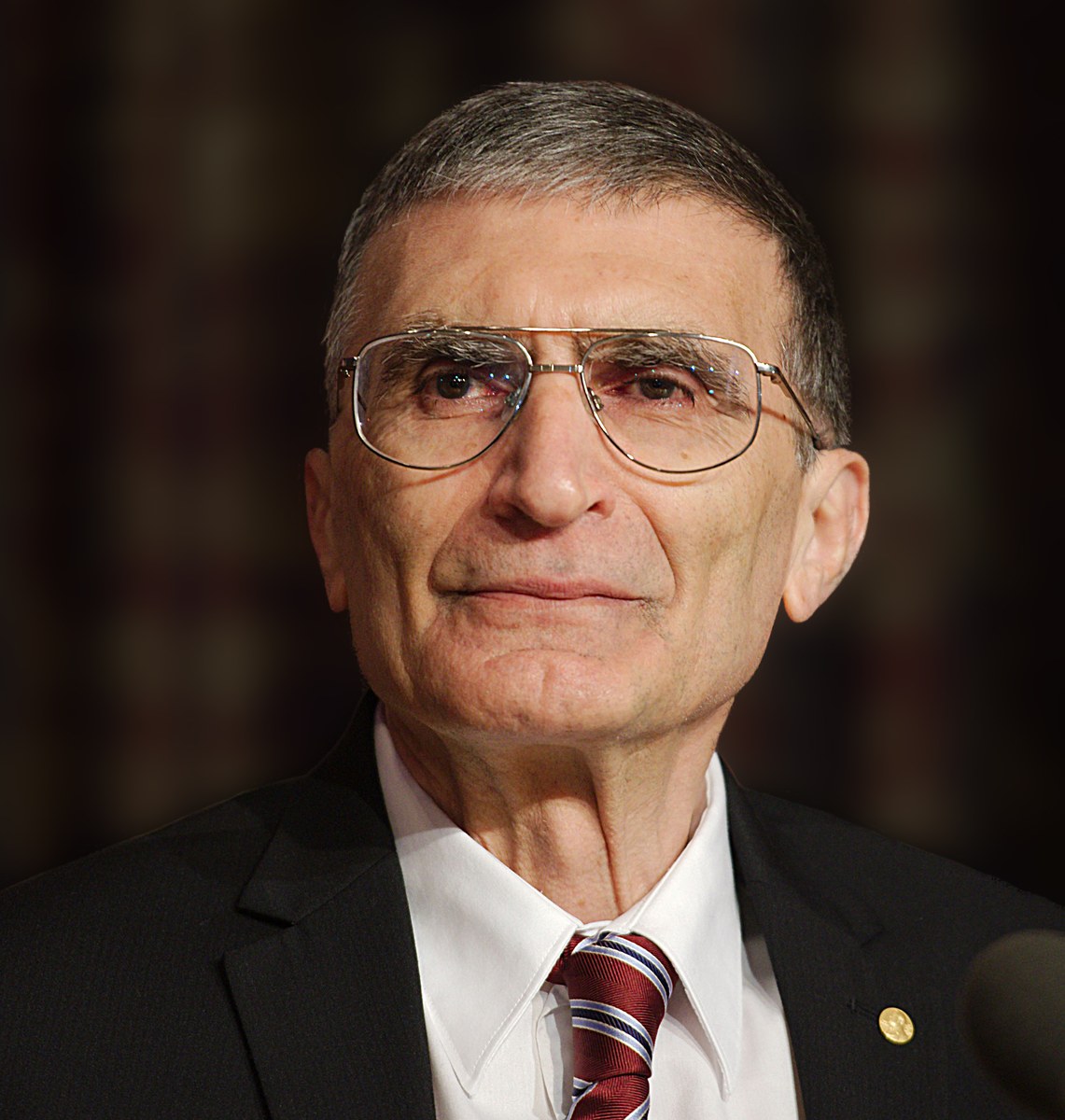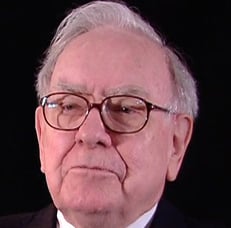

Photo: Holger Motzkau, 2015, Wikimedia Commons, CC BY-SA 3.0 · Photograph of Aziz Sancar at the Nobel Prize week press conference at the Royal Swedish Academy of Sciences, Stockholm, 7 December 2015, by Holger Motzkau (Wikimedia Sverige Nobel-week series); Commons file 'Aziz Sancar 0060.jpg', original 3132 x 3293, uploaded by the photographer as own work. Downscaled to 1141 x 1200 for the site; not upscaled. · CC BY-SA 3.0
scientist · Contemporary
Aziz Sancar
b. 1946
Known For
Not yet included in personality matching — the documented evidence doesn't yet cover enough of the personality model. Everything else on this page is fully available.
Trait Constellation
Key Achievements
He worked out how nucleotide excision repair cuts damaged DNA, showing in 1983 that purified UvrA, UvrB and UvrC make dual incisions around a UV lesion, and later reconstituted the human reaction; he shared the 2015 Nobel Prize in Chemistry with Tomas Lindahl and Paul Modrich for the mechanisms of DNA repair.
As a doctoral student he cloned the gene for photolyase, the enzyme that repairs UV damage with visible light, and later showed that it carries two light-absorbing cofactors and works through a flavin electron-transfer cycle.
His lab found two human genes related to photolyase, which proved to be cryptochromes, and with collaborators showed they are essential parts of the mammalian circadian clock.
Moments That Reveal Them
To clone the photolyase gene he first needed a mutant lacking it; the screen failed on the first attempts and he reports it took about 11 months to isolate one.
This is consistent with a researcher who kept repeating a difficult experiment until it worked, though the account is largely his own. Persistence
After his group reported in 1993 that humans lack photolyase, photolyase-like human genes turned up in 1995; they had no repair activity, and he proposed they were clock proteins and tested that idea.
This is consistent with a scientist who reinterpreted his own earlier conclusion when new genes appeared, as told in his own account. Belief Updating
Turning Points
In 1996 he proposed that the two photolyase-like human proteins be named cryptochromes and tested whether they act in the circadian clock, moving his lab from DNA repair into clock biology.
This is consistent with a researcher who extended his work into a neighbouring field and learned it from scratch. Cross-Domain Range
Similar People
People whose overall profiles resemble theirs.


Alan Turing

Ada Lovelace

Rosalind Franklin

Emmy Noether

Marie Curie
Sources
- Aziz Sancar (Q15118973) -- verified live via the Wikidata API (2026-10-30): English label 'Aziz Sancar', description 'Turkish geneticist; Nobel Prize in Chemistry 2015', Korean label '아지즈 산자르', born 1946-09-08, no death date, citizenship Turkey, United States and a third value, P18 'Aziz Sancar 0060.jpg'. Orientation only; not used as support for any row.
- NobelPrize.org, 'The Nobel Prize in Chemistry 2015 - Advanced information: Scientific Background, Mechanistic studies of DNA repair' (Royal Swedish Academy of Sciences, Nobel Committee for Chemistry; PDF, 15 pages), read in full for the Sancar sections. CANONICAL SIGNIFICANCE SOURCE: it credits Sancar with the Maxicell technique, the 1983 reconstitution of UvrA, UvrB and UvrC dual incision in nucleotide excision repair, the two chromophores and light-driven mechanism of photolyase, and states in its summary that Lindahl (base excision repair), Modrich (mismatch repair) and Sancar (nucleotide excision repair, plus the mechanism of photoreactivation) made the discoveries; it also notes that James Cleaver identified many human repair factors and that Richard Wood reconstituted human excision repair in parallel with Sancar. Prize committee text; independent of Sancar.
- NobelPrize.org, 'Aziz Sancar - Biographical' (autobiography written by Sancar for the Nobel Foundation), read in full: the Nobel Foundation's own record of his training in Istanbul and rural medical practice, the PhD with Claud Rupert at the University of Texas at Dallas, the postdoctoral work with Dean Rupp at Yale, the UvrABC dual-incision finding, photolyase, transcription-coupled repair, human excision repair, checkpoints and cryptochrome. SELF-REPORT: first-person and partly nationalistic in tone; its political and patriotic passages are not scored; every behavioural claim taken from it is marked as self-reported and cross-checked against the committee and the PNAS profile where possible.
- Nick Zagorski, 'Profile of Aziz Sancar' (Proceedings of the National Academy of Sciences, 8 November 2005), read in full: the NAS profile written when Sancar was elected, covering the repeatedly failing phr mutant experiment, the cloning of the photolyase gene, the cold reception from three DNA-repair labs, his hiring at Yale nominally as a technician, and how a test of whether cryptochrome was a photoreceptor ended up showing it was an essential clock component. Independent science-writer profile, but its behavioural anecdotes are told largely in Sancar's own words, so they are treated as lightly corroborated self-report.
- Encyclopaedia Britannica, 'Aziz Sancar' (Kara Rogers, fact-checked by Britannica editors, updated September 2026), read in full: Turkish-American biochemist known for mechanistic work on nucleotide excision repair; states the 2015 Nobel Prize in Chemistry was shared with Tomas Lindahl and Paul Modrich; lists the uvrABC excision nuclease, reconstitution of the human excision nuclease, the role of defective repair in xeroderma pigmentosum, DNA damage checkpoints, photolyase and the cryptochromes in the circadian clock. Reference biography; orientation and shared-credit confirmation.
- UNC School of Medicine, Biochemistry and Biophysics, 'Aziz Sancar receives 2015 Nobel Prize in Chemistry' (news release, October 2015), read in full: his work on nucleotide excision repair, the cisplatin finding, the 2015 whole-genome repair map by his team, the shared prize with Lindahl and Modrich, and tributes from the dean and the cancer-centre director. Employer news release; admiring and institutional.
- UNC School of Medicine / UNC Health Newsroom, 'The Enduring Legacy of Dr. Aziz Sancar' (October 2025), read in full: ten years after the prize he still teaches the graduate molecular biology course, reports training more than 35 students and 55 postdocs, a former postdoctoral trainee (Laura Lindsey-Boltz) describing his advice about when to abandon a project, his statement that photolyase work excited him more than the Nobel-winning work, and his credit to trainees Lindsey-Boltz and Selby. Employer news feature; admiring; the foundation and cultural-centre passages are not scored.
- David Kroll, 'This Year's Nobel Prize In Chemistry Sparks Questions About How Winners Are Selected' (Chemical & Engineering News, 11 November 2015). Only the opening paragraphs could be opened (the body is behind a login): they report that some in the research community regretted that pioneers of DNA repair were skipped over and complained that Nobel press materials implied the three laureates had 'discovered' DNA repair. The named critique of Philip Hanawalt's omission reached the agent only through a search-engine summary of the article and is not relied on in any row. Used only as the counter-voice on credit.
- Wikimedia Commons file page 'File:Aziz Sancar 0060.jpg' (photograph by Holger Motzkau, 7 December 2015, Nobel Prize week press conference), checked for the portrait only.