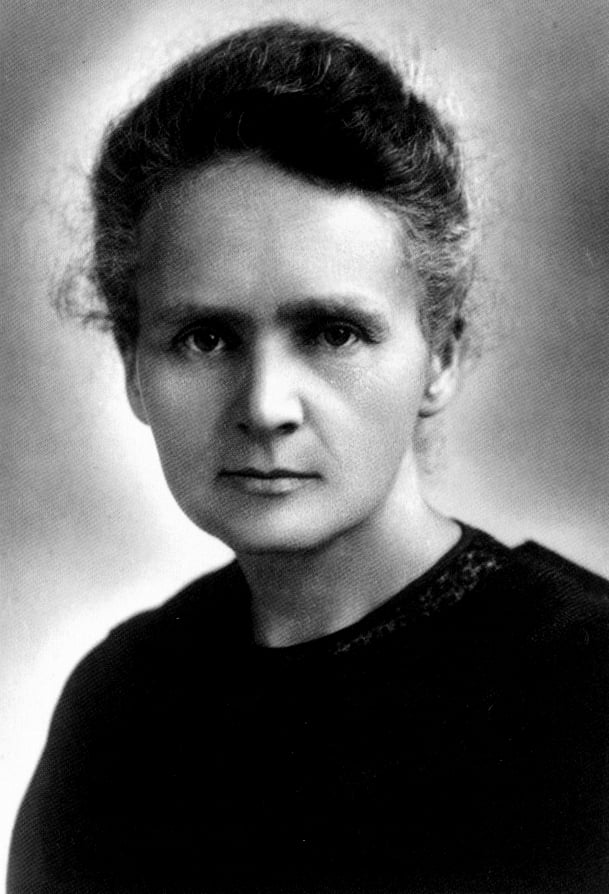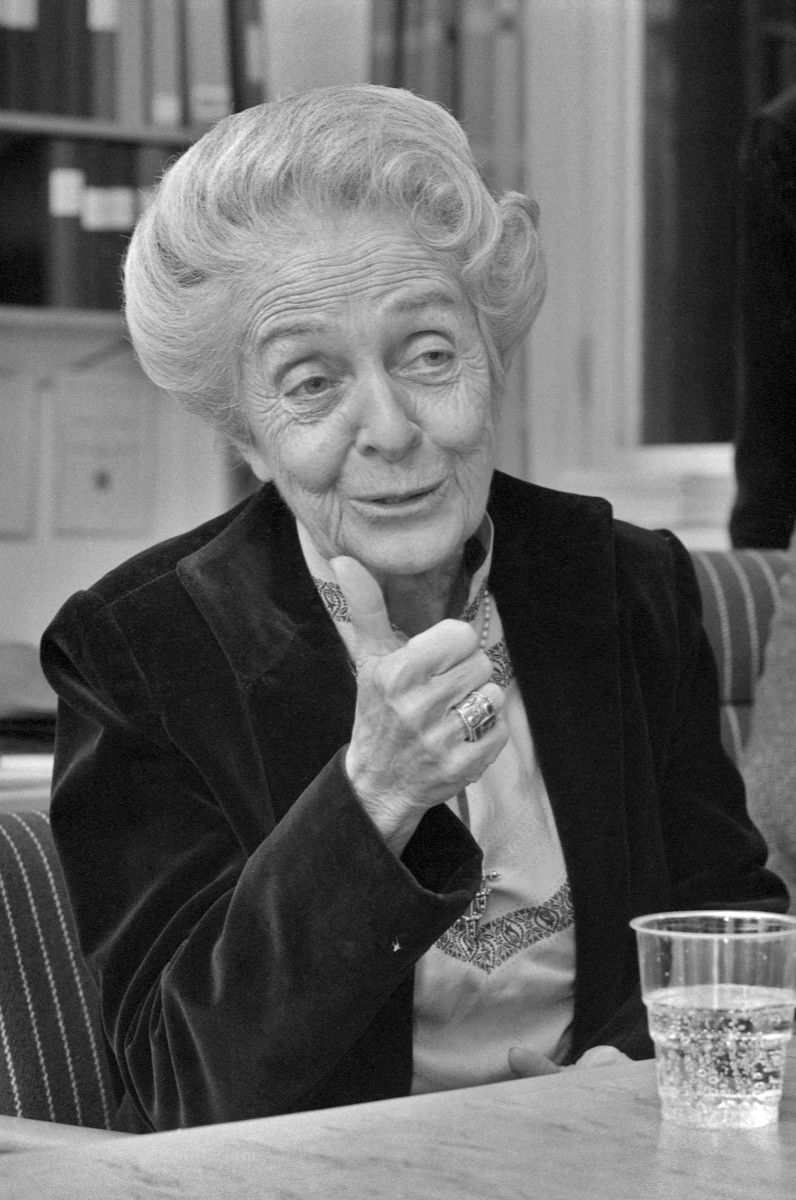

Photograph: Firma Hagblom-Foto (Kurt Hagblom), Lund, 12 December 1986; Lund University Library (Alvin), Public Domain Mark; restored by Adam Cuerden; downscaled from the original · Lund University Library (Alvin record alvin-record:240038), press photograph 'Nobelprisdam besöker Lund - Rita Levi-Montalcini (medicin/fysiologi)' by Firma Hagblom-Foto (Kurt Hagblom per Wikimedia Commons), Lund, Sweden, 12 December 1986, from the Hagblom-Foto negative collection donated to the library in 2012; used through the Wikimedia Commons restoration 'Rita Levi-Montalcini (1986).jpg' by Adam Cuerden (a Commons and English Wikipedia featured picture; original JPEG 2517 x 3796 pixels, black-and-white); the full frame was downscaled once to 796 x 1200 (never upscaled, not cropped). · Public Domain Mark (No Known Copyright), as stated in Lund University Library's Alvin record; Wikimedia Commons tag PD-copyright holder (Universitetsbiblioteket, Lunds universitet)
생물학자 · 20세기
리타 레비몬탈치니
1909–2012
주요 업적 분야
아직 성격 매칭에 포함되지 않았습니다 — 기록된 근거가 성격 모델 전체를 다루기에는 충분하지 않습니다. 이 페이지의 다른 모든 내용은 자유롭게 확인하실 수 있습니다.
핵심 특성
주요 업적
1952년 세인트루이스의 빅토어 함부르거 연구실에서 레비몬탈치니는 생쥐 종양을 닭 배아에 이식하면 종양과 직접 닿지 않아도 감각신경과 교감신경이 자란다는 것을 보였고, 종양이 주변으로 퍼져 나가는 신경 성장 촉진 인자를 내놓는다고 결론지었다. 그녀는 이 인자를 측정하는 배양 검정법을 개발했으며, 1953년 연구진에 합류해 이를 정제한 생화학자 스탠리 코언과 함께 신경 성장 인자(NGF)를 발견했다. 노벨 총회는 NGF를 이후 잇따라 발견된 성장 조절 신호 물질들 가운데 맨 처음 발견되어 규명된 것의 하나로 설명한다.
이 성장 인자 발견의 공로로 레비몬탈치니와 코언은 1986년 노벨 생리의학상을 공동으로 받았고, 같은 해 앨버트 래스커 기초의학연구상도 함께 받았다. 노벨 총회는 이 발견이 기초과학에 새로운 분야를 열었으며, 이후 새로운 성장 인자를 찾아낸 모든 연구 집단이 두 사람이 낸 길을 따라간 것이라고 밝혔다.
그녀의 발생학 연구는 발달 중인 신경세포가 표적 조직에 의존한다는 점을 시사했다. 1940년대 초 토리노에서 사지를 제거하면 신경세포가 생겼다가 죽는다는 것을 알아냈고, 1949년 함부르거와 함께 이를 넓혔으며, 1960년에는 바버라 부커와 함께 NGF 항혈청이 신생 생쥐의 교감신경계 대부분을 파괴한다는 것을 보였다. 노벨 총회는 발달 과정에서 신경세포가 넘치게 만들어지고 NGF를 내는 표적에 닿은 것만 살아남는다고 설명하는데, 이 생각은 신경영양 가설로 알려져 있다.
삶의 장면들
1940년대 초 토리노에서 레비몬탈치니는 침실에 차린 작은 실험실에서, 임시로 만든 부란기와 바느질 바늘로 만든 수술 도구, 농장에서 사 온 수정란으로 빅토어 함부르거가 했던 닭 배아의 사지 싹 제거 실험을 되풀이했다. 그녀는 여러 시점에 걸쳐 배아를 살펴 신경세포가 처음에는 늘어나다가 나중에 죽는다는 것을 확인했고, 사라진 사지가 신경세포가 형성되도록 하는 인자가 아니라 이미 생긴 세포를 유지하는 데 필요한 인자를 내놓지 못한 것이라고 결론지었는데, 이는 함부르거와 다른 해석이었다.
발표된 결론을 더 촘촘한 자료로 다시 시험하고, 자료를 따라 다른 설명에 이르는 방식과 일치한다. 분석적 엄밀성
1952년 종양 추출물을 닭 배아에 주사하는 방법으로는 이식한 생쥐 종양이 일으키던 신경 성장을 재현하지 못하자, 레비몬탈치니는 종양이 생긴 생쥐 두 마리를 핸드백에 넣고 리우데자네이루로 날아가 헤르타 마이어의 조직 배양 실험실에서 연구했다. 자신의 연구 시설에는 그럴 만한 설비가 없었기 때문이다. 여러 차례 부정적인 결과가 나온 뒤, 종양 조각에 닿지 않게 곁에 둔 닭 배아 신경 조직에서 약 10시간 만에 신경 섬유가 빽빽한 후광 모양으로 뻗어 나왔다.
자신의 연구실에 없는 수단을 다른 곳에서 찾아내 실험을 해내는 모습과 일치한다. 자원 활용 성향
전환점
1946년 빅토어 함부르거는 전쟁 중에 발표된 레비몬탈치니의 닭 배아 사지 제거 연구 논문을 읽고, 서로 다르게 나온 결과를 함께 따져 보자며 그녀를 세인트루이스의 워싱턴 대학교로 한 학기 동안 초청했다. 그녀는 1947년에 도착했고, 한 학기는 약 30년으로 이어졌으며, 함부르거와 함께 낸 1949년 논문과 이후의 신경 성장 인자 연구가 이곳에서 나왔다.
같은 자료를 두고 해석이 갈릴 때, 다른 해석을 가진 연구자와 함께 실험하며 결론을 가리려는 모습과 일치한다. 협업 성향
비슷한 인물
전체적인 프로필이 이 사람과 닮은 사람들이에요.
출처
- Rita Levi-Montalcini (Q185007) -- verified live via the Wikidata API (2026-10-15): English label 'Rita Levi-Montalcini', description 'Italian neurologist (1909-2012)', Italian and Korean labels present, instance of human, born 22 April 1909 in Turin, died 30 December 2012, citizenship Italy, the Kingdom of Italy (to 1946) and the United States, employer Washington University in St. Louis, educated at the University of Turin; a name search returns only this person as a human (other hits are schools, an asteroid, a crater and a family-name page). Orientation only; not used as support for any row.
- The Nobel Assembly at the Karolinska Institute, press release for the 1986 Nobel Prize in Physiology or Medicine (awarded jointly to Stanley Cohen and Rita Levi-Montalcini 'for their discoveries of growth factors') -- CANONICAL SIGNIFICANCE SOURCE: the Assembly's account that nerve growth factor (NGF) and epidermal growth factor were the first of many growth-regulating signal substances to be discovered and characterized; that Levi-Montalcini, then in Viktor Hamburger's laboratory in St. Louis, showed in 1952 that mouse tumours transplanted to chick embryos induced growth of sensory and sympathetic nerves without direct contact and concluded that the tumour released a nerve growth-promoting factor; that she developed the culture bioassay for NGF (the ganglion 'halo'); that the biochemist Stanley Cohen joined the group in 1953, purified the active extract, found the unexpected snake-venom activity and the mouse salivary-gland source (1958) and made antibodies; that excess nerve cells are produced in development and only those reaching a target that makes NGF survive; and that all groups that later found new growth factors followed in the tracks of Levi-Montalcini and Cohen. Award-body citation, honouring in tone (its statement that she moved to St. Louis in the early 1950s conflicts with the 1947 arrival in other sources). Read in full.
- Nobel Foundation, 'Rita Levi-Montalcini - Biographical' (the autobiographical essay she wrote at the time of the 1986 award, published in Les Prix Nobel 1986) -- SELF EVIDENCE: her own chronology (medicine at Turin, the home research unit in her bedroom from 1940 inspired by a 1934 paper by Hamburger, the move of the laboratory to a country cottage, Hamburger's invitation to St. Louis, professorships there to 1977, a research unit in Rome from 1962 and the directorship of the CNR Institute of Cell Biology 1969-1978). Used only for orientation and chronology and to check dates against other sources; never as sole support for any row or card. Its family, wartime and refugee-camp passages were not used, and its date for the racial manifesto (1936) conflicts with other sources (1938). Read in full.
- Lasker Foundation, 'Growth factors - NGF and EGF' (1986 Albert Lasker Basic Medical Research Award to Rita Levi-Montalcini and Stanley Cohen: citation and narrative) -- award-body account that her initial observation of nerve fibres growing into tumour tissue led to studies concluding that a soluble substance released by the tumour caused the effect, that tumour tissue implanted in the egg membrane without contact still drove nerves into inappropriate organs, that she devised a simple in vitro assay still in use, that she pursued increasingly refined NGF studies in collaboration with Cohen and others, and that her work was done without techniques later investigators took for granted. Its wording credits her with finding the same substance in snake venom and mouse salivary glands, which the Nobel press release, Cohen and the PNAS profile attribute to Cohen. Honouring in tone (promotional adjectives not used). Read in full.
- Diana Lutz, 'Obituary: Nobel Laureate Rita Levi-Montalcini', The Record, Washington University in St. Louis, 8 January 2013 -- university obituary: her 1947-1977 research at Washington University; the repeat of Hamburger's limb-bud experiments in her makeshift bedroom laboratory, where studying the nerve cells at more frequent intervals led her to a different conclusion (cells proliferate and then die for lack of a maintenance factor); the fertilised eggs bought from neighbouring farms; an early curriculum vitae in the university archives listing 1940-1945 as a private laboratory; Hamburger's invitation in 1946; the tumour-bearing mice flown to Rio de Janeiro; Cohen's snake-venom surprise and the 1959 antiserum; the little recognition the work received at first; colleagues' recollections (Dehner, Allen, Woolsey); and the controversy over the Nobel committee's exclusion of Hamburger. Institutional obituary with named colleagues, admiring in tone; its note that she became director of the Institute of Cell Biology in 1962 conflicts with her own date of 1969. Read in full.
- Washington University in St. Louis, 'Remembering Rita Levi-Montalcini', The Source, 10 October 2013 -- announcement of a memorial gathering with colleagues' and a former student's recollections: that Hamburger invited her in 1946 so that they could reconcile their disparate findings, that she became a full professor in 1958 and then established a research centre in Rome, and a student's account of her as a demanding but fair teacher. Short institutional item, admiring in tone; only the invitation and the professorship were used. Read in full.
- Bernard Becker Medical Library, Washington University School of Medicine, 'Rita Levi-Montalcini (b. 1909)', Missouri Women in the Health Sciences biographies (2004-2009) -- library biography: the bedroom laboratory equipment in Turin, Hamburger's interest in two of her articles in foreign journals, her acceptance in September 1947 of his invitation to collaborate, her time at Washington University, the laboratory she established at the Higher Institute of Health in Rome in the early 1960s and the CNR Laboratory of Cell Biology she established in 1969, and her honours. Institutional biography, admiring in tone; its dates for her associate professorship (1951) and for the end of her CNR directorship (1979) differ from her own account (1956 and 1978). Read in full.
- Mo Costandi, 'Obituary: Rita Levi-Montalcini', The Guardian (Neurophilosophy), 1 January 2013 -- press obituary by a neuroscience writer (also reproduced by the Society for Neuroscience): her repetition of Hamburger's experiments in a bedroom laboratory with tools made from sewing needles and watchmaker's tweezers and her different reading of the results (survival of newborn cells), the Bueker tumour result Hamburger showed her, her method for quantifying the tumour effect, Cohen's snake-venom and salivary-gland work, the neurotrophic hypothesis, Cohen's remark that she worked at great intensity, her strict work schedule to the end of her life and a last paper in 2012. Independent obituary, admiring; its date for the start of the Cohen collaboration (1952) and its '25 years' for the isolation of NGF are not used. Her marital status, UN ambassadorship and Senate seat were not used. Read in full.
- Alison Abbott, 'Nobel Laureate Rita Levi-Montalcini dies at 103', Nature news blog, 31 December 2012 -- journalist's short obituary: a makeshift bedroom laboratory, her single-minded devotion to the study of how nerves grow, the discovery of NGF carried out mostly in the United States, the research institute she created in Rome (opened in 2005) which, in the writer's judgement, did not become the legacy she hoped for because of inappropriate management, and a foundation for scientific education of women in Africa. Independent journalism with a critical note on the institute; her Senate seat and parliamentary activity were not used. Read in full.
- Nature editorial, 'Self-inflicted damage', 20 January 2010 (with the correction of 27 January 2010) -- journal editorial on the European Brain Research Institute (EBRI) in Rome: the 2002 launch spearheaded by Levi-Montalcini, the institute's international board, and the editorial's account that in November 2009, as president, she began unilateral procedures to dismiss the board and have it replaced by a commissioner (the correction states that any appointment would be made by the local prefecture), that board members called this contrary to the by-laws, and that the editorial found her stated reasons unconvincing, and, separately, a dispute with one board member over alleged late payment of bills. An opinion piece by an independent journal, critical in tone; her side of the dispute and its outcome were not available in the sources read, so it is used only for the documented facts above and the editorial's inferences about motives or the effect of her age were not used. Read in full.
- Nicholette Zeliadt, 'Rita Levi-Montalcini: NGF, the prototypical growth factor', PNAS Classic Profile, 2013 (110:4873-4876) -- science-writer profile with named colleagues' comments (Cattaneo, Capsoni, Manca, Calissano, Chao, Snyder, Mobley): the bedroom laboratory (microscope, makeshift incubator, surgical instruments forged from sewing needles), her silver-stain work and different reading of Hamburger's limb-removal data, the 1949 joint paper, her repetition of Bueker's tumour experiment and the chorioallantoic-membrane control, the 1952 trip to Rio de Janeiro with tumour-bearing mice to learn tissue culture, Cohen's snake-venom surprise and salivary-gland source, the 1960 antiserum experiments with Barbara Booker that answered doubts about NGF's physiological role, her late project at the EBRI (about 2007-2012), and its note that she founded the EBRI in 2002. Independent science-writer profile, admiring, with several details traceable to her autobiography; her health, family and early-life passages were not used. Read in full.
- Stanley Cohen, 'Origins of growth factors: NGF and EGF', Journal of Biological Chemistry (Reflections), 2008 (283:33793-33797) -- the co-laureate's first-hand account of the NGF work as seen from the biochemist's side: that Hamburger and Levi-Montalcini sought a biochemist for the problem, that because each side knew little of the other's field they interacted but never argued, that she repeated Bueker's tumour experiment and found sensory and sympathetic fibres entering the tumour and reaching tissues they should not enter, that she placed the tumour on the chorioallantoic membrane to show a soluble diffusible agent, that she devised a hanging-drop culture assay, that she injected the purified venom protein into the yolk sac of chick embryos, and the antiserum experiments. First-hand colleague testimony (not her own), friendly in tone; the EGF half of the article was not used. Read in full for the NGF part.
- L. Coutinho and H. A. G. Teive, 'Rita Levi-Montalcini: the neurologist who challenged fascism', Arquivos de Neuro-Psiquiatria, 2023 (81:95-98) -- scholarly biographical article: her training and career chronology, the Rio de Janeiro stay of September 1952 to January 1953 (permission from Carlos Chagas Filho, work in Hertha Meyer's laboratory because her own facilities lacked tissue-culture capacity, two sarcoma-bearing mice in her handbag, several negative results before the cultures responded), the initial scepticism towards NGF and the delayed recognition, and the 2002 co-founding of the EBRI with Pietro Calissano. Secondary historical article relying on her Nobel autobiography and other retellings, admiring in tone; its persecution framing and her political and social passages were not used. Read in full.
- Accademia Nazionale delle Scienze detta dei XL, 'Rita Levi-Montalcini. A life with neurons' (note introducing Pietro Calissano's 2017 book) -- short academy note quoting the introduction by the neuroscientist who worked with her from 1965: that he saw her every day for more than four decades and that her personality was a mixture of intuitive skills and a total, almost monastic dedication to work. Institutional blurb quoting a close colleague, admiring; used only for that one characterisation. Read in full.
- Wikimedia Commons file page 'Rita Levi-Montalcini (1986).jpg' -- checked for the portrait's file, creator and licence: 'Rita Levi-Montalcini during a visit to Lund, Sweden, in 1986', date 12 December 1986, source University Library, Lund University (Alvin record 240038), author Kurt Hagblom, Firma Hagblom-Foto, restored by Adam Cuerden (a Commons and English Wikipedia featured picture, December 2025), licence tag PD-copyright holder (the copyright holder, Universitetsbiblioteket, Lunds universitet, released it into the public domain), original JPEG 2517 x 3796 pixels. Not used for any scoring.
- Lund University Library, Alvin record alvin-record:240038, 'Nobelprisdam besöker Lund - Rita Levi-Montalcini (medicin/fysiologi)' -- the institution's own record of the press photograph (read through the Internet Archive capture of 13 January 2026 of the record's image-viewer page, because the live Alvin site serves a bot-check page to scripts and that check was not bypassed): photographer 'Firma Hagblom-Foto', origin Lund, Sweden, 1986-12-12, press-photo assignment for the newspaper Arbetet, negative from the Hagblom-Foto collection (about 1,200,000 negatives, donation 2012), 'Licensing of the work: Public Domain Mark (No Known Copyright)', and Alvin's general statement that all digitized materials in Alvin may be downloaded and used freely. No conflicting rights notice was found. Not used for any scoring.