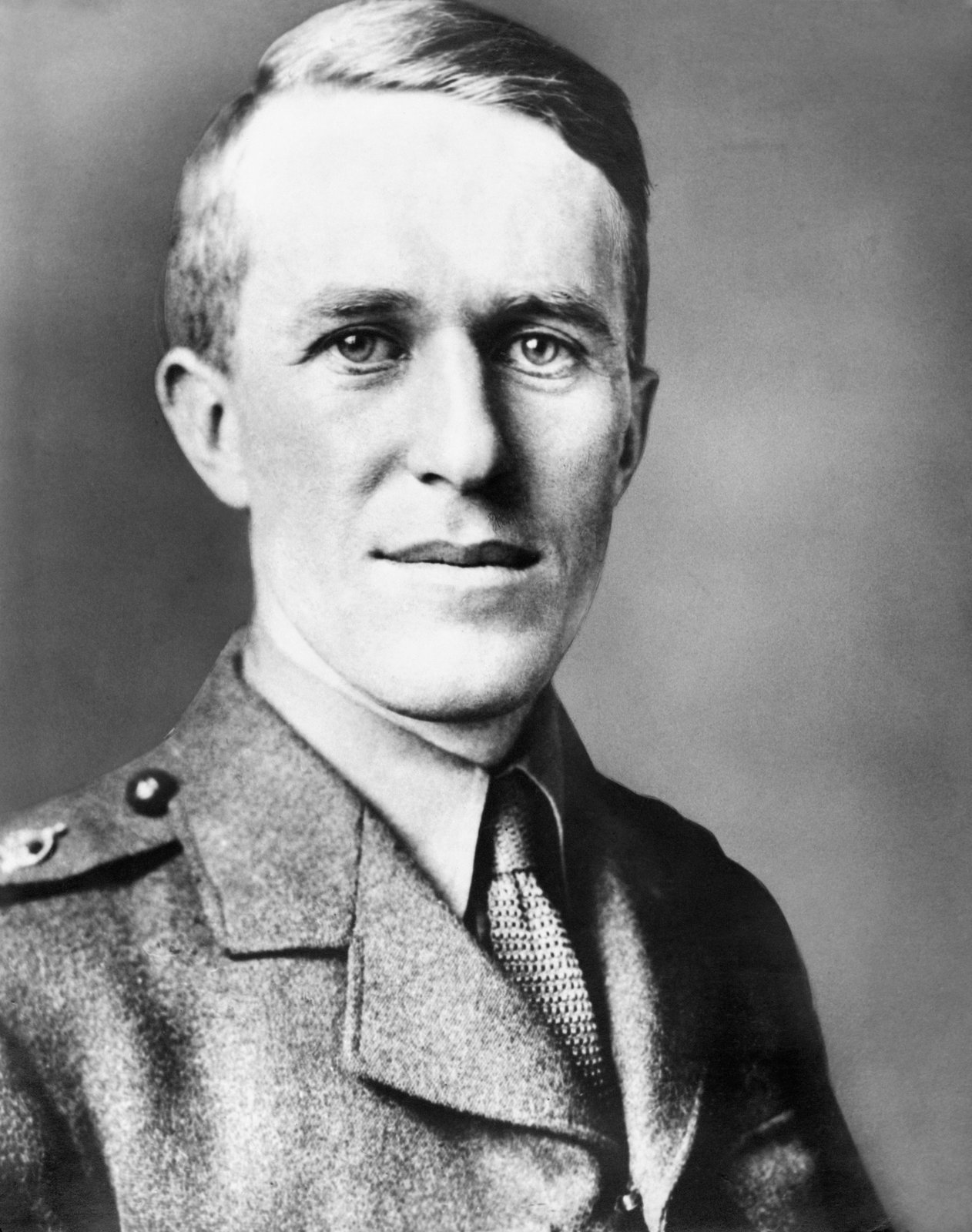
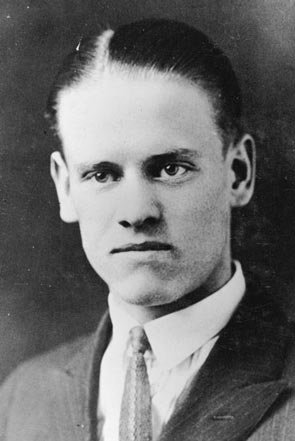

Philo Farnsworth, yearbook portrait, The Banyan (Provo: student body of Brigham Young University, 1924); photographer not credited (Commons: unknown author); public domain in the United States because published before 1931; downloaded from Wikimedia Commons and re-encoded, not resized · The Banyan (Brigham Young University yearbook, Provo, Utah), 1924 volume -- yearbook portrait in the 'Fourth Years' (high-school seniors) section, via Wikimedia Commons (cleaned crop of the same photograph, Commons source credit to the Utah State Historical Society 'I Love History' page) · Public domain (PD-US-expired)
핵심 특성
주요 업적
1934년 여름 판즈워스의 연구소는 필라델피아 프랭클린 연구소에서 자사의 전자식 텔레비전 시스템을 일반에 공개하는 시연을 열어, 입장료를 낸 관람객에게 옥상과 건물 곳곳의 공연자와 풍경을 중계했다. 시연 기간은 자료에 따라 열흘에서 약 3주까지 서로 다르게 기록되어 있다.
1939년 판즈워스의 회사와 RCA는 특허 사용권 계약을 체결했고, RCA는 지속적인 로열티를 지급하기로 했다. 그로스(Gross)는 이를 RCA의 통상 방침에서 벗어난 이례적 결정이라고 설명한다. 회사 후원자였던 에버슨(Everson)은 협상이 1939년 5월부터 9월까지 이어졌으며 회사 사장과 특허 담당 책임자가 이끌었고 판즈워스 본인은 메인 주에 있었다고 적었다.
레멜슨-MIT에 따르면 1950년대부터 세상을 떠날 때까지 핵융합이 판즈워스의 주된 연구 관심사였다. 마리엇 도서관의 자료 안내서(finding aid)는 그가 ITT에서 직원들과 함께 '퓨저(fusor)'라 부른 실험용 핵융합 관 여러 개를 만들었으나 반응은 약 30초를 넘지 못했으며, 1967년에는 이 연구를 브리검영 대학교로 옮겼다고 적고 있다.
삶의 장면들
1926년 여름, 아직 성년이 되지 않았던 판즈워스는 샌프랜시스코의 크로커 퍼스트 내셔널 은행에서 은행가들에게 자신의 구상을 설명했다. 그 자리에 있던 에버슨에 따르면 판즈워스는 움직이는 부품이 없는 방식이라고 설명했고, 신문의 망점 사진을 이용해 초당 얼마나 많은 화소를 전송해야 하는지 보여 주었으며 은행가들의 질문에도 답했다. 은행 측 기술자가 이미 그의 명세서를 검토해 둔 상태였고, 은행가들은 이 연구를 후원하기로 했다.
에버슨은 이 자리에서 판즈워스가 기계식 주사 방식으로는 필요한 속도를 낼 수 없다고 주장했다고 회상한다. 이는 자신의 접근법을 당시 주류 방식과 분명히 대비시키는 태도와 부합하지만, 이 말은 후원자가 23년 뒤에 기록한 것이다. 독립적 사고
그로스는 웨스팅하우스와 RCA에 관련된 기술자 블라디미르 즈보리킨이 판즈워스의 샌프랜시스코 연구소를 방문한 시점을 1930년으로 보며, 이는 투자자들이 판즈워스에게 기업 파트너를 찾으라고 촉구한 뒤의 일이었다. 에버슨은 즈보리킨이 며칠간 머물렀고, 판즈워스와 후원자들이 모든 것을 보여 주는 일이 상당한 위험임을 알면서도 그렇게 하기로 했으며, 즈보리킨이 클리프 가드너(Cliff Gardner)가 수상관을 만드는 모습을 보여 달라고 청했다고 기록했다.
이 일화는 협력 관계의 가능성을 얻기 위해 경쟁자에게 계산된 노출을 감수하려는 태도와 부합한다. 다만 그 추론은 판즈워스 본인의 말이 아니라 에버슨의 서술에서 나온 것이다. 위험 감수
전환점
필라델피아의 필코 공장에서 약 2년을 보낸 뒤 판즈워스는 1933년에 그곳을 떠나 필라델피아 인근에 자신의 회사와 연구소를 세웠다(에버슨은 새 연구소를 1934년으로 적는다). 그로스는 새 회사 덕분에 그가 외부의 간섭 없이 수상관을 개량할 수 있었다고 말하고, 에버슨은 필코의 생산 목표가 선행 연구로 폭넓은 특허 체계를 구축하려던 판즈워스의 목표와 달라졌다고 설명한다.
이 결별은 자신의 연구 방향을 스스로 통제하려는 성향과 부합하지만, 필코 자체의 목표와 재정 사정도 영향을 미쳤다. 자율성 욕구
비슷한 인물
전체적인 프로필이 이 사람과 닮은 사람들이에요.
출처
- Philo Farnsworth (English Wikipedia; lead section read via the MediaWiki API, the rest of the article via a WebFetch summary) -- orientation only (identity, dates, occupations); not used as support for any scored row. The Korean Wikipedia article title 'ko:필로 판즈워스' was confirmed through the Wikidata sitelink and the ko.wikipedia API (page exists, id 2048950).
- Philo Farnsworth (Q360098) -- identity verified live through the Wikidata API (wbgetentities: labels, descriptions, claims, sitelinks): en label 'Philo Farnsworth', en description 'American inventor (1906-1971)', ko label '필로 판즈워스', born 1906-08-19, died 1971-03-11, citizenship Q30 (United States), occupation Q205375 (inventor), P18 'Philo T Farnsworth.jpg' (not used; see provenance). Orientation only.
- George Everson, 'The Story of Television: The Life of Philo T. Farnsworth' (W. W. Norton, 1949) -- Internet Archive (Prelinger Library) scan; the full OCR text was downloaded with curl and read locally: the summer-1926 financing meeting and Green Street laboratory chapters, the 1927-1931 development, backer-demonstration, Zworykin-visit, Philco, multipactor and Franklin Institute chapters, the patents, Baird/Fernseh, television-standards and 'R.C.A. Licenses' chapters (about half of the 500 KB text; the family, banking, network, war-time and research chapters were only searched by keyword). FIRSTHAND but FRIENDLY: Everson was one of the three original partners and a backer and writes as Farnsworth's champion, so it counts as ONE affiliated perspective. His chronology is unreliable in places (he places the Zworykin visit in 1931 and the Franklin Institute show in 1935; other sources give 1930 and 1934).
- Benjamin Gross (historian of science, Linda Hall Library), 'Philo Farnsworth', Scientist of the Day, 19 August 2021 -- a concise scholarly biography covering the 1926-1927 backing, the San Francisco laboratory, the 1929-1930 search for a corporate partner and Zworykin's 1930 visit, Philco (1931), the 1933 founding of Farnsworth Television Inc., the 1934 Franklin Institute demonstration, the 1932-35 interference case, the 1939 RCA royalty agreement, Fort Wayne, ITT (1949) and the later fusion effort. Non-self, secondary, largely neutral in tone; downloaded with curl and read in full (contains health remarks that are not used).
- Tim J. Sturgeon, 'Philo Farnsworth and the Invention of Electronic Television', FoundSF (adapted from the author's Master's thesis on Silicon Valley history) -- read in full. Non-self secondary that leans on Everson (1949) and a 1967 piece by Morgan (not opened) but also quotes radio engineer Ralph Heintz's own 1982 recollection of working with Farnsworth (the only outside firsthand collaborator voice reached here, and only second-hand). Contains a birth-year error (1909), so it is used with care.
- Evan I. Schwartz, 'Who Really Invented Television?', MIT Technology Review, 1 September 2000 -- the author of 'The Last Lone Inventor' (2002) in a magazine feature built on interviews with Pem and Kent Farnsworth (family) and the director of the David Sarnoff Collection; advocacy-leaning in tone. Read in full via curl. Used only for the 1931 buy-out offer/refusal and clearly attributed; the family's account of RCA pressure on Philco is not used. Same author as the book, so ONE Schwartz perspective, built on family testimony.
- Philo T. and Elma G. Farnsworth papers, MS 0648, University of Utah Marriott Library Special Collections (finding aid on Archives West; processed by Keith J. Morgan, 1993) -- the Historical Note and container listing were downloaded and read. An institutional finding aid, but the collection was purchased from Elma Farnsworth in 1991 and includes her memoir, so the Historical Note is effectively drawn from family-supplied material (weak independence); used only for dated career facts (the 1927 laboratory, the 1949 sale to ITT, the 1965-67 fusion programme and the 1967 move to Utah).
- ExplorePAHistory.com (WITF / Pennsylvania Historical and Museum Commission), 'Philo T. Farnsworth (1906-1971) Historical Marker' -- the 'Behind the Marker' essay, read in full. A derivative educational summary (its bibliography lists Abramson, E. Farnsworth, Fisher, Schatzkin and Schwartz, none opened); it repeats an unsourced claim of an RCA ultimatum to Philco, which is NOT used. Used only for the 1931 Philco move and the 1933 break with Philco, and to cross-check the Franklin Institute demonstration.
- The Franklin Institute, 'Franklin Firsts: Live Football Broadcast in 1934' -- institutional page on Farnsworth's August 1934 demonstrations at the Institute (about 20 days, camera on the roof, 75-cent admission). Read in full via curl; its 'first' framings are not adopted, and the length of the run is given differently elsewhere (ten days to three weeks).
- Lemelson-MIT Program, 'Philo Farnsworth' inventor profile -- a short institutional biography that says fusion was his main interest from the 1950s until his death and that a 1965 patent covered an array of 'fusors' that produced a reaction of about thirty seconds. Read in full via curl; its priority claims about television are not used.
- Engineering and Technology History Wiki (IEEE), 'Farnsworth's Image Dissector' (page last edited 10 April 2019) -- a short neutral note on the tube's operation, its low light sensitivity and Farnsworth's later improvement of it. Read in full via curl; its patent-battle remarks are not used.
- H. Bert Jenson, review of Donald G. Godfrey, 'Philo T. Farnsworth: The Father of Television' (University of Utah Press, 2001), Utah Historical Quarterly 70:2 (Spring 2002), pp. 177-179 -- PDF downloaded from USU Digital Commons and read in full. A reviewer's summary of another author's biography (Godfrey's book itself was not read); used only for the reviewer's general remark on the work ethic that runs through Godfrey's narrative. The review also calls the book an exuberant last word in the 'father of television' debate, which is a reason for caution.