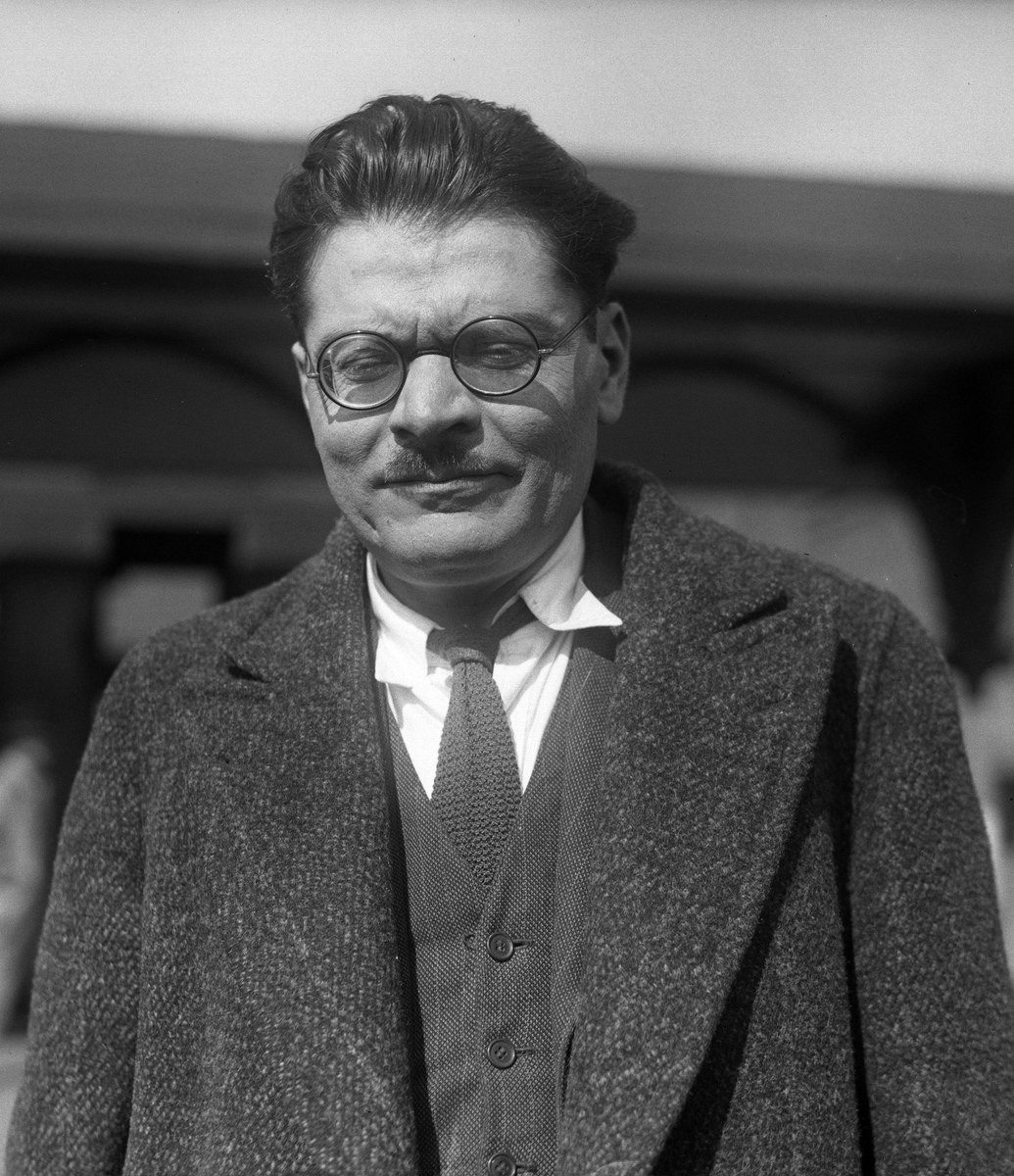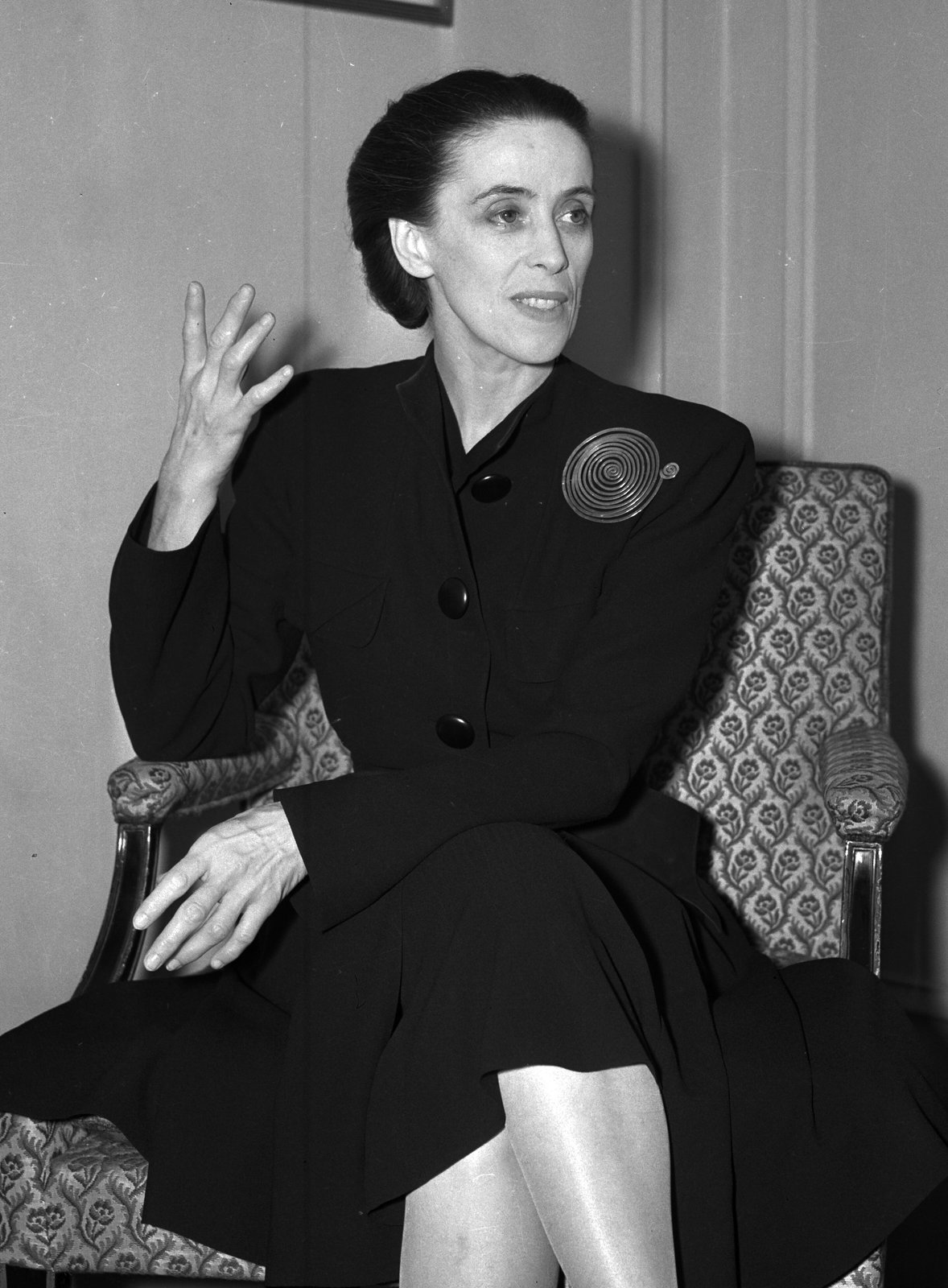

Photo: Los Angeles Times, 20 March 1930; Los Angeles Times Photographic Archive, UCLA Library Special Collections (via Wikimedia Commons) · Los Angeles Times photograph of Orozco on his arrival at a Los Angeles train station, 20 March 1930, published with a Los Angeles Times article of 21 March 1930 (page A9); glass negative in the Los Angeles Times Photographic Archive, UCLA Library Special Collections (identifier uclamss_1429_b3720_G3540). The file is the original 3774 x 4375 scan downscaled to 1035 x 1200 with no cropping and no upscaling. · Public domain in the United States (published in 1930, more than 95 years ago); UCLA Library also offers the scan under CC BY 4.0
화가 · 20세기
호세 클레멘테 오로스코
1883–1949
주요 업적 분야
아직 성격 매칭에 포함되지 않았습니다 — 기록된 근거가 성격 모델 전체를 다루기에는 충분하지 않습니다. 이 페이지의 다른 모든 내용은 자유롭게 확인하실 수 있습니다.
핵심 특성
주요 업적
그는 리베라, 시케이로스와 함께 1920년대 멕시코시티 국립예비학교 벽화로 멕시코 벽화 운동의 시작을 이끈 화가 가운데 한 사람이며, 브리태니커는 그를 프레스코로 작업한 20세기의 가장 중요한 벽화가로 꼽는다.
1930년대 말 그는 과달라하라 오스피시오 카바냐스 예배당의 프레스코를 그렸고, 그중 '불의 인간' 돔 벽화를 유네스코는 20세기 벽화의 걸작 중 하나로 평가한다.
미국에서는 포모나 대학의 〈프로메테우스〉(1930)와 다트머스 대학의 24개 패널 〈아메리카 문명의 서사시〉(1932-34)를 그렸으며, 국가 사적지가 된 이 벽화는 멕시코 벽화를 미국 관객에게 알리는 데 기여했다.
삶의 장면들
1940년 6월 그는 관람객에게 열린 현대미술관 전시실에서, 어떤 순서로도 돌리거나 재배열할 수 있는 석고 패널 여섯 장에 프레스코를 그렸다.
이는 고정된 벽면 구성을 반복하기보다 프레스코 형식의 한계를 시험한 예술가의 모습과 일치한다. 창의적 독창성
1930년 포모나에서 그는 숙련된 미장공 곁에서 약 2제곱야드 단위로 진짜 프레스코를 그렸고, 색이 고르게 마르도록 매일 같은 시각에 작업을 시작했다.
이는 프레스코의 기술적 규율을 작업의 일부로 여긴 화가의 모습과 일치한다. 숙련 지향
전환점
1927년 멕시코 정부가 벽화가들에 대한 후원을 거두자 그는 뉴욕에 정착해 포모나, 뉴스쿨, 다트머스의 벽화로 명성을 쌓았고, 1934년 멕시코로 돌아와 순수미술궁에 〈카타르시스〉를 그렸다.
이는 멕시코에서의 국가 후원에 의존하던 데서 국제적 입지를 쌓은 뒤 귀국하는 쪽으로 옮겨간 전환과 일치한다. 성취 욕구
비슷한 인물
전체적인 프로필이 이 사람과 닮은 사람들이에요.
출처
- José Clemente Orozco (Q332041), verified live via the Wikidata API (2026-11-01): label 'José Clemente Orozco', description 'Mexican artist (1883-1949)', born 23 November 1883, died 7 September 1949, country Mexico, Korean label 호세 클레멘테 오로스코. Orientation only; not used as support for any row.
- Encyclopaedia Britannica, 'José Clemente Orozco' (full article body read; last updated 3 September 2026). CANONICAL SIGNIFICANCE SOURCE: calls him the most important 20th-century muralist to work in fresco; he joined Rivera, Siqueiros and others in the 1923-27 National Preparatory School murals that began the Mexican muralist movement; he judged his early murals there too derivative of European traditions and destroyed many; Cortés and Malinche (1926) shows a monumentality unprecedented in Mexican art; the negative reaction to his House of Tears paintings (1917) and the withdrawal of government patronage in 1927 each sent him to the United States, where he worked to build an international reputation; Prometheus at Pomona (1930); the New School murals are faulted for a 'slavish' use of 'dynamic symmetry'; Dartmouth (1932-34) was shaped by Byzantine mosaics; he returned to Mexico in 1934 and painted Catharsis. Encyclopedic and partly critical; the superlatives are retrospective.
- PBS American Masters, 'José Clemente Orozco' career timeline, read in full: night classes at the San Carlos Academy; odd jobs including architectural drafting and hand-tinting portraits; caricaturist for opposition newspapers; The House of Tears (1916) first solo show, ignored or attacked by critics; in the United States 1917-1919 painted cinema posters and dolls to earn a living; National Preparatory School murals (1923), where students defaced his work; Prometheus (1930); The Epic of American Civilization (1932-34, 24 panels); Hospicio Cabañas; Dive Bomber and Tank (1940) for the Museum of Modern Art; Supreme Court murals (1941) that drew an outcry for removal and survived; The Apocalypse (1944); Allegory of the Nation (1948), his only outdoor mural; a 1947 retrospective in Mexico. Public-television biography; the nickname 'Sistine Chapel of the Americas' is popular framing and is not used.
- UNESCO World Heritage Centre, 'Hospicio Cabañas, Guadalajara' (Outstanding Universal Value statement, read in full): in the late 1930s the chapel was ornamented with frescoes by José Clemente Orozco, 'one of the greatest Mexican muralists of the time'; the murals are 'considered great masterpieces of Mexican art'; El Hombre de Fuego (The Man of Fire) in the dome is 'considered to be one of the masterpieces of 20th century mural painting' with profound cultural influence beyond the Americas (criterion ii); the property was inscribed for the architecture and the murals. Institutional heritage listing; retrospective praise.
- U.S. National Park Service, 'The Epic of American Civilization Murals' (National Historic Landmark, designated 2013), read in full: Orozco was a visiting lecturer in the Dartmouth art department in May 1932; the 24 true-fresco panels (about 3,200 square feet) cover four walls of the Baker Library reserve reading room, painted 1932-34; the theme responded to the Mexican Civil War and World War I and to nationalism and industrialisation; placement in a college founded to educate Native Americans was intentional; Orozco with Rivera and Siqueiros helped introduce Mexican mural art to the United States and so helped inspire the New Deal mural movement. Federal heritage page; does not discuss controversy.
- Dartmouth Alumni Magazine, 'History of the Project' (November 1933, by the chairman of the college art department), read in full: Dartmouth commissioned Orozco in June 1932 for a fresco in the Baker Library reserve room; a small 'Release' panel was first painted to demonstrate true fresco; while painting it he proposed an 'Epic of Civilization on the American Continent'; the trustees approved it on educational grounds; he was made visiting professor of art, taught 'by doing' with the reading room as his lecture hall, worked almost entirely alone apart from a plasterer, and the job took about two years with about half spent painting. Contemporary, but written by the department that hired him, so promotional and admiring; no criticism appears in it.
- Dartmouth course website (SPAN 7, Winter 2017), student post 'Authorization of the Orozco Murals', read in full: professors Packard and Lathrop invited Orozco with President Hopkins' support; a Rockefeller family fund paid for the project; alumni, including a telephone-company president in a letter of 3 June 1932, objected that a college gives official approval to art on its walls; some viewers disliked the panels on education and Christ; the criticism came close to the fresco being painted over but the college kept the murals open. A student course blog quoting archived records; used only as the counter-voice for the controversy, not for any claim about Orozco's own response, which it does not record.
- TIME magazine, 'Art: Wall Man' (13 October 1930), read in full: Orozco painted a fresco about 25 by 35 feet of Prometheus in the Pomona College dining hall; true fresco worked in sections of about two square yards beside a master plasterer, each day's section begun at the same hour because fresco 'has much to do with the time of day'; at the New School for Social Research he worked from a scaffold with a small brush; when Pomona could offer only $500 he reportedly asked 'Have you got a wall?'; the Los Angeles Times critic Arthur Millier and the Denver Times critic Arnold Ronnebeck praised the Pomona wall. Contemporary independent press; the quotation is a reported anecdote.
- Museum of Modern Art press release and press-conference invitation, 17-18 June 1940 (MoMA press archives PDF), read in full: the museum commissioned Orozco to paint a fresco, 'The Dive Bomber', on its gallery wall as part of Twenty Centuries of Mexican Art; true fresco on six plaster panels attached to the wall so that it could later be shown elsewhere; visitors could watch each afternoon; Orozco said the panels could be turned or rearranged in any order and that a picture must be capable of being looked at from any direction; asked about political meaning he said none was intended and that each viewer can draw their own meaning; he expected the work to take about four weeks. Institutional publicity, partly in Orozco's own reported words; it states he had no formal art training, which Britannica contradicts (Academy of San Carlos), so that line is not used.
- Pomona College Museum of Art, exhibition page on Orozco's 'Prometheus' (Frary Dining Hall), read in full: Orozco chose the Greek myth of Prometheus as suited to the college; the central panel is credited to Orozco and the flanking panels to Orozco and Jorge Juan Crespo de la Serna; the page marks the mural's 80th anniversary and preservation efforts and says few current students know its history. College museum page; thin on technique and reception.