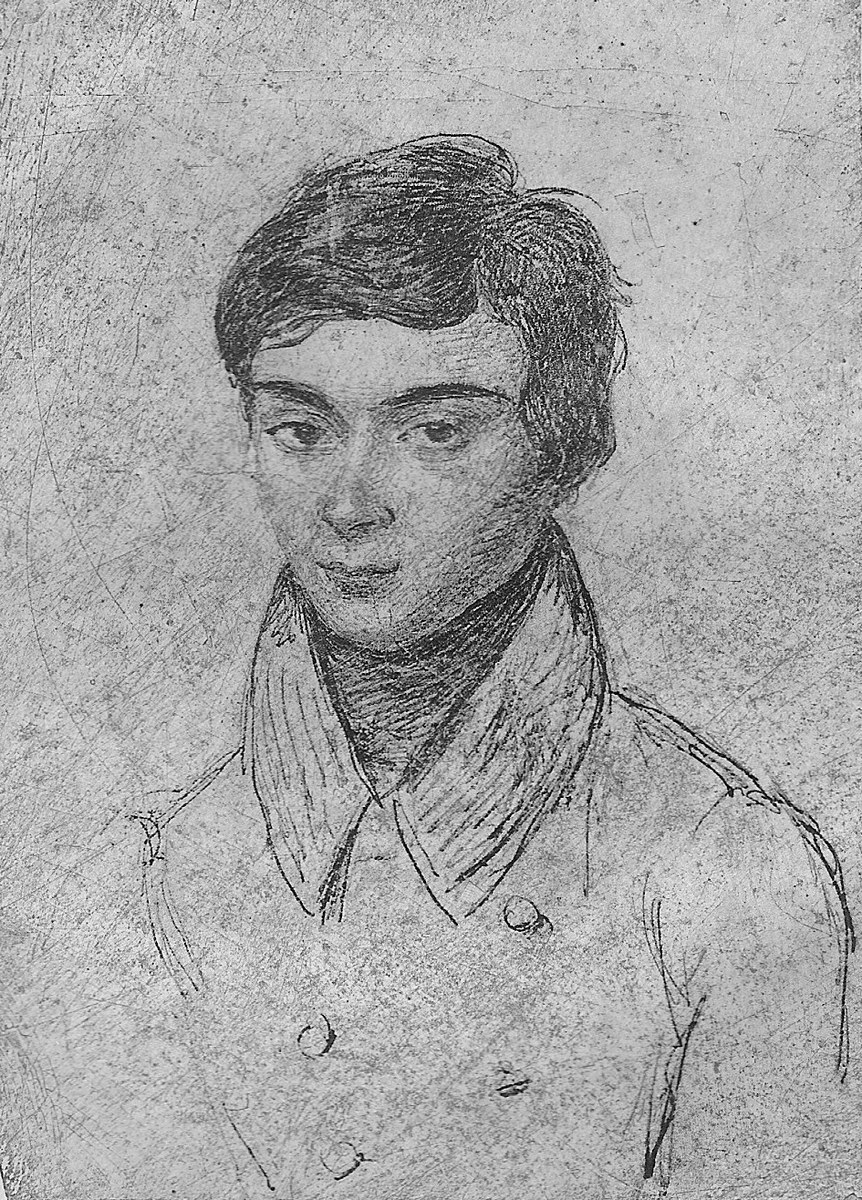
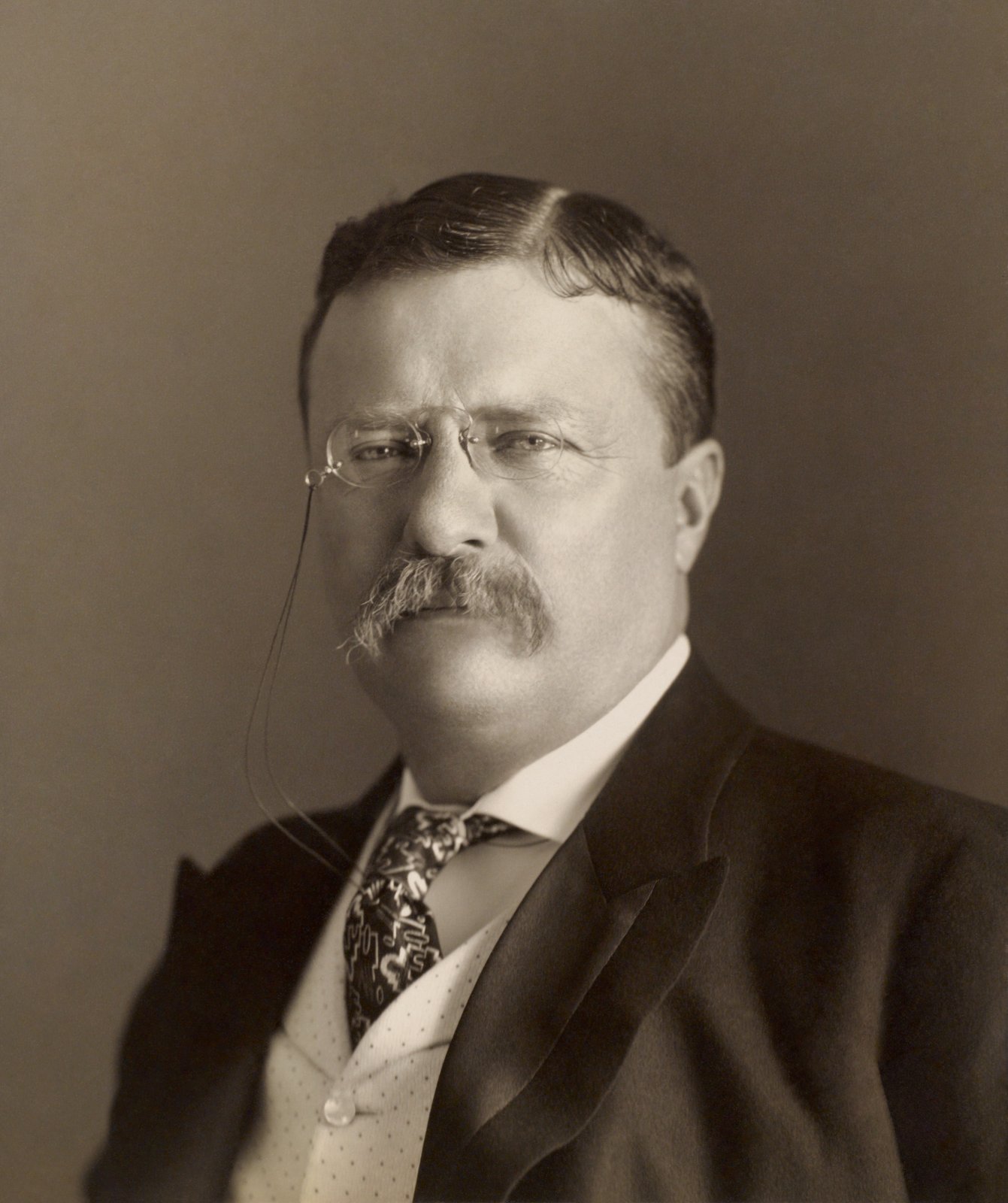
Unknown artist, portrait of Evariste Galois at about fifteen, about 1826, first published in P. Dupuy, La vie d'Evariste Galois (1896); scan via Wikimedia Commons · Pencil portrait of Evariste Galois at about fifteen or sixteen, drawn from life about 1826 by an unknown artist, kept by his niece Madame Guinard (daughter of his elder sister) and first published as a reproduction in Paul Dupuy, 'La vie d'Evariste Galois', Annales scientifiques de l'Ecole normale superieure, 1896, whose text says the portrait was made from nature when he was fifteen or sixteen. The file is a scan of the drawing from Wikimedia Commons, downscaled from 945 x 1316 to 862 x 1200 pixels; no upscaling and no retouching. · Public domain (anonymous drawing of about 1826, first published in France in 1896; public domain in the United States by publication before 1931 and expired in France before 1996)
수학자 · 19세기
에바리스트 갈루아
1811–1832
주요 업적 분야
아직 성격 매칭에 포함되지 않았습니다 — 기록된 근거가 성격 모델 전체를 다루기에는 충분하지 않습니다. 이 페이지의 다른 모든 내용은 자유롭게 확인하실 수 있습니다.
핵심 특성
주요 업적
방정식의 군(群)과 연결해 대수방정식이 거듭제곱근으로 풀리는 조건에 결정적인 답을 내놓은 프랑스의 수학자로, 그의 이론은 오늘날 갈루아 이론이라 불리며 현대 대수학의 기초를 이루었다.
100쪽이 채 되지 않는 저작에서 그는 '갈루아 허수'를 도입했고, 유한체 이론의 선구가 된 글과 타원적분·아벨적분에 관한 결과도 남겼다.
그의 연구는 생전에 과학아카데미에서 분실되거나 받아들여지지 않았고(그는 1832년 스무 살에 세상을 떠났다), 1843년 조제프 리우빌이 발표를 알리고 1846년 출간하고서야 알려졌다.
삶의 장면들
수학을 배우기 시작한 첫해에 그는 초급 대수 교과서에 만족하지 못하고 방정식의 해법과 해석함수에 관한 라그랑주의 저작을 직접 찾아 읽었다.
이는 교과서보다 원저자의 저작에서 직접 배우기를 택한 학생의 모습과 부합한다. 독립적 사고
첫 두 편의 논문이 아카데미에서 분실된 뒤에도 그는 1831년 1월 17일 푸아송의 권유로 거듭제곱근 가해성에 관한 논문의 세 번째 판본을 제출했으나, 푸아송과 라크루아는 이 논문이 충분히 명료하지도 충분히 전개되지도 못했다고 보고했다.
이는 난관을 겪은 뒤에도 서술이 독자를 설득하지 못하는 상황에서 연구를 다시 제출하기를 이어간 사람의 모습과 부합한다. 끈기
전환점
1827년 2월 루이르그랑 고등학교에서 첫 수학 수업을 듣기 시작했고, 학업 지도 책임자는 '그를 사로잡은 것은 수학에 대한 열정'이라고 적었으며, 그는 2년이 지나기 전에 연분수에 관한 첫 논문을 발표했다.
이는 한 분야를 만나자 온전히 그쪽으로 몰두한 학생의 모습과 부합한다. 숙련 지향
비슷한 인물
전체적인 프로필이 이 사람과 닮은 사람들이에요.


앨런 튜링

볼프강 아마데우스 모차르트

지그문트 프로이트

오스카 니마이어

쿠사마 야요이
출처
- Évariste Galois (Q7091), verified live via the Wikidata API (2026-11-02): label 'Évariste Galois', description 'French mathematician (1811-1832)', born 25 October 1811, died 31 May 1832, Korean label 에바리스트 갈루아. Orientation only; not used as support for any row.
- René Taton, 'Galois, Évariste', Complete Dictionary of Scientific Biography (hosted on Encyclopedia.com), read in full. CANONICAL SIGNIFICANCE SOURCE: a body of work under a hundred pages that gives 'a definitive answer' to when an algebraic equation is solvable by radicals; by tying the question to the group of the equation (an irreducible equation of prime degree is solvable only if its group is solvable) he helped lay one of the foundations of modern algebra; his May 1829 results went to Cauchy, who asked him to revise in light of Abel; the February 1830 prize memoir was lost on Fourier's death; Poisson's 1831 report judged part of the results to be in Abel's posthumous papers and the rest incomprehensible; Liouville announced the solution to the Academy in September 1843 and published the memoir in the Journal de mathématiques in October-November 1846; the article also credits 'Galois imaginaries' and results on elliptic and abelian integrals. Standard scholarly reference; its praise is retrospective.
- MacTutor History of Mathematics (University of St Andrews), 'Évariste Galois' biography, read in full: his schooling at Louis-le-Grand where the director of studies wrote 'it is the passion for mathematics which dominates him' and Vernier reported 'intelligence, marked progress but not enough method'; the teacher Louis Richard's remark that he 'works only in the highest realms of mathematics'; his first paper on continued fractions (1829); submissions of 1829, 1830 and January 1831 to the Academy (the first two lost); two failed entrance examinations for the École Polytechnique, whose examiner called him 'sometimes obscure in expressing his ideas' but showing 'a remarkable spirit of research'; Poisson's rejection ('neither sufficiently clear nor sufficiently developed to allow us to judge its rigour'); the marginal note 'there is something to complete in this demonstration. I do not have the time'; Liouville's 1843 announcement and 1846 edition; and the point that the story of a last night spent writing out all his mathematics 'appears to have been exaggerated'. Independent university biography; politics, prison and the duel are treated there and are NOT scored here.
- British Society for the History of Mathematics Gresham College lecture handout, 'The Memoirs and legacy of Évariste Galois' (3 November 2011, initialled PMN, Queen's College Oxford; the author of the 2011 European Mathematical Society edition of Galois's writings), read in full: a dated chronology of his education, his April 1829 continued-fractions article, the 1829 and 1830 Academy submissions whose manuscripts are lost, his 'Sur la théorie des nombres' (June 1830) described as containing a precursor of the theory of finite fields, the Premier Mémoire (17 January 1831) described as containing Galois theory, Lacroix and Poisson's negative report of 4 July 1831, and the editions of 1846 (Liouville), 1897, 1906-07, 1962 and 2011. Learned-society handout by a specialist editor; chronology only, no interpretation of character.
- Caroline Ehrhardt, 'La naissance posthume d'Évariste Galois (1811-1832)', Revue de synthèse 131 (2010), pp. 543-568, read in part (abstract, introduction and the passages on the 1831 report and the 1843 Liouville-Libri debate): the Premier Mémoire had not received the Academy's approval in his lifetime; Lacroix and Poisson judged the reasoning 'neither clear enough nor developed enough' and preferred to wait until the author had published his work in full; Liouville's 1846 edition did not fill the gaps the Academy had pointed to; the author argues that the 'rediscovery' of Galois belongs to a wider redefinition of algebra and to a rivalry between Liouville and Libri. Independent historian's article in French; a critical, contextual counter-voice to the heroic account.
- Frédéric Brechenmacher, 'Galois Got his Gun' (arXiv 1111.0655), read in part (introduction and the sections on the public image of Galois): shows that Galois was a public figure from the 1830s on, long before Liouville's 1846 edition, and traces how editions by Liouville (1846), Picard (1897) and Dieudonné (1962) and later celebrations shaped a heroic public image; cites Rothman, Taton and Ehrhardt on the fictionalised biographies. Independent historian of mathematics; used for the reception and legend caveats, not for traits.
- Paul Dupuy, 'La vie d'Évariste Galois', Annales scientifiques de l'École normale supérieure, 3rd series, volume 13 (1896), pp. 197-266 (Numdam scan, OCR text read at the passages on his schooling, his teachers, the lost 1830 memoir and the portraits): the earliest detailed biography, by the school's superintendent, built on the testimony of surviving classmates (Lalanne and Bénard), family papers and the school's archives; reports that Galois found elementary algebra books unsatisfying and turned in his first year of mathematics to Lagrange, that Richard's quarterly notes in the school archives read 'a marked superiority over all his fellow students; he works only on the higher parts of mathematics', and that Liouville said Galois had worked on his theory of equations since his school days. Near-contemporary but written 64 years after his death and partly from classmates' memories, so used as supporting biography only.